
AI Bathroom Vanity Design Generator
A bathroom vanity has to be right to the centimetre, it is the first thing you look at every morning, and every showroom photograph of one is taken in a styled set with nothing of your house in it. This AI bathroom vanity design generator turns a description into a finished unit photographed against a real wall in about thirty seconds — a floating oak box on steel brackets, an old painted washstand, a pegged oak trestle under a concrete trough, a solid block of travertine, a walnut double vanity and cane doors in teak. All six results are below exactly as they came back, including the weave that refused to run diagonally and the second tab that never arrived.
Design a Vanity FreeTry the AI Bathroom Vanity Design Generator — Free
Pick a build, then use the box for what is specific to you — the carcass material and its finish, the width in centimetres and the height to the top of the counter, how many drawers are stacked, whether it takes one basin or two, what the top is made of, and above all the wall and floor it stands against. Each preset already carries the camera height, the stated proportions, the damaged wall that keeps the result photographic and the itemised ban on maker stamps that produced the six pictures below.
AI Bathroom Vanity Design Generator
Choose a build, name your materials, your width and your wall, and get a photorealistic bathroom vanity standing in a real room. Up to 4K.
Six Vanities From the AI Bathroom Vanity Design Generator, Shown Exactly As They Came Back
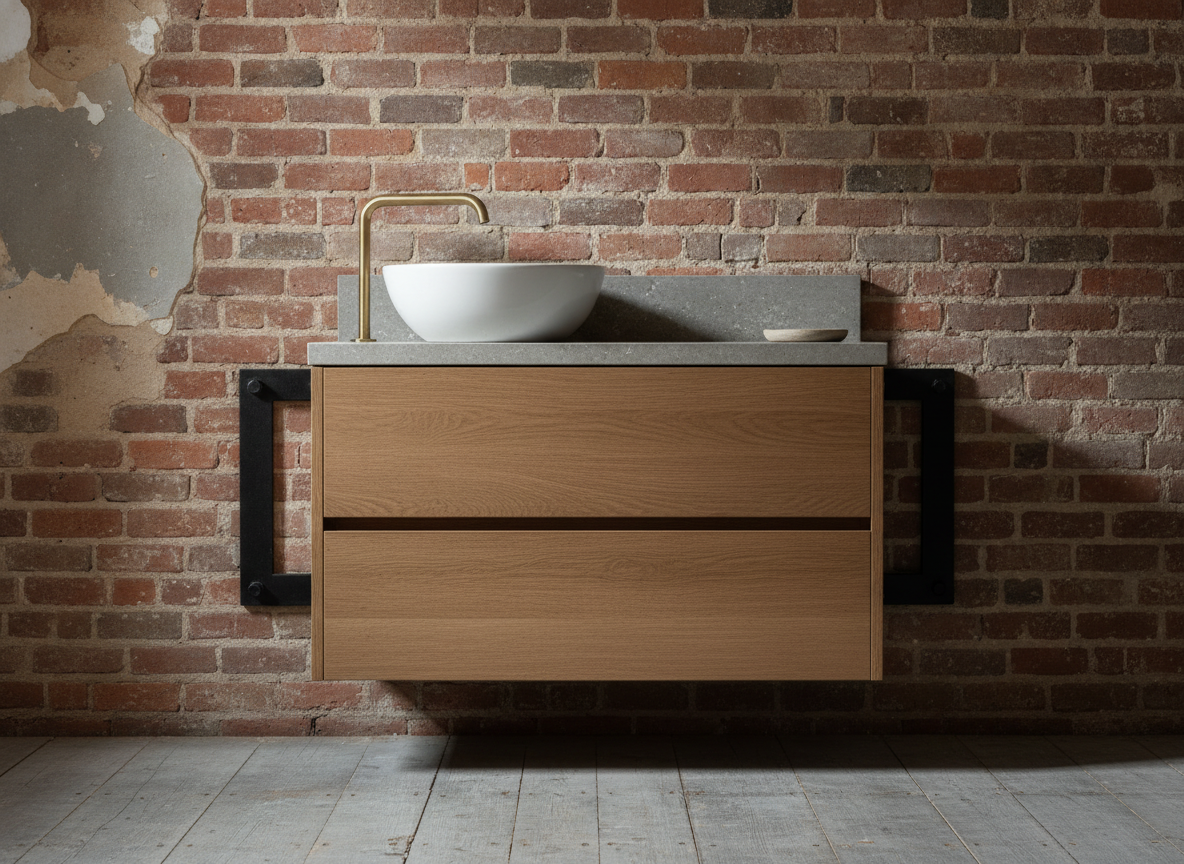
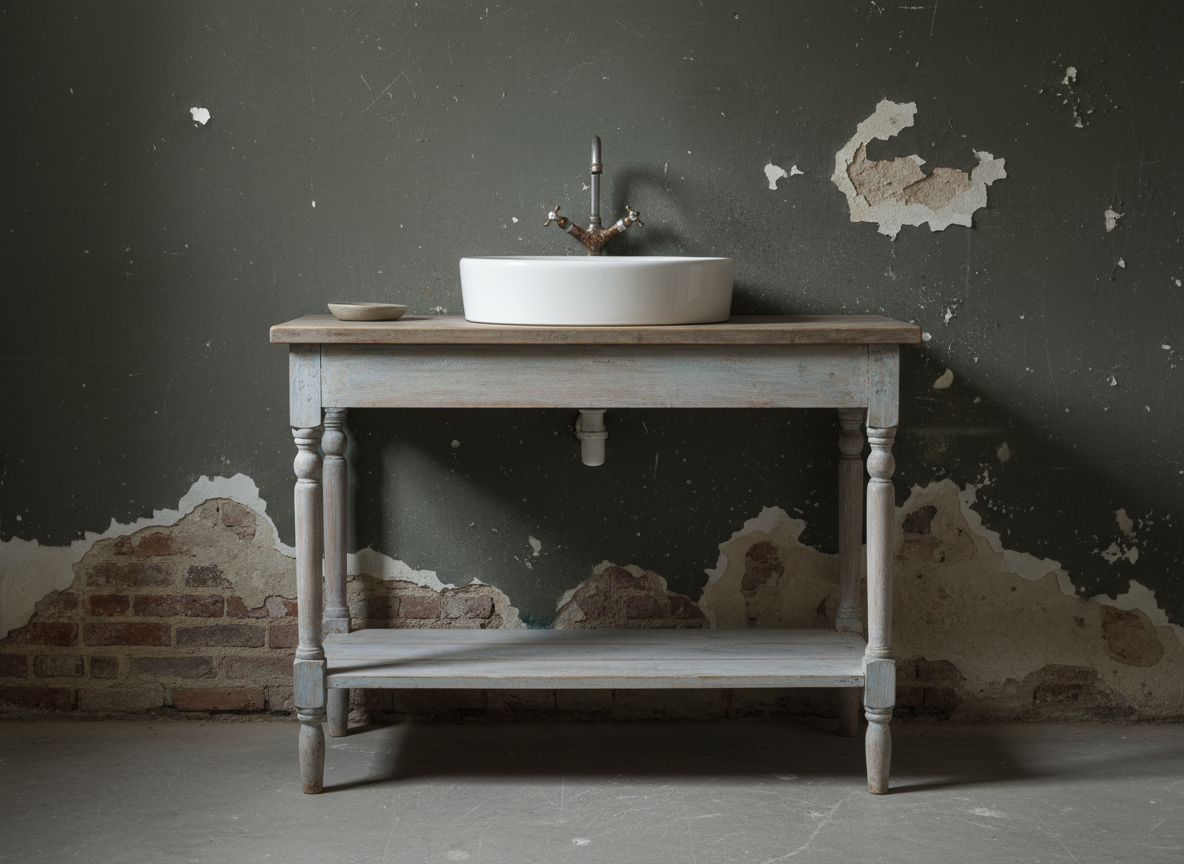
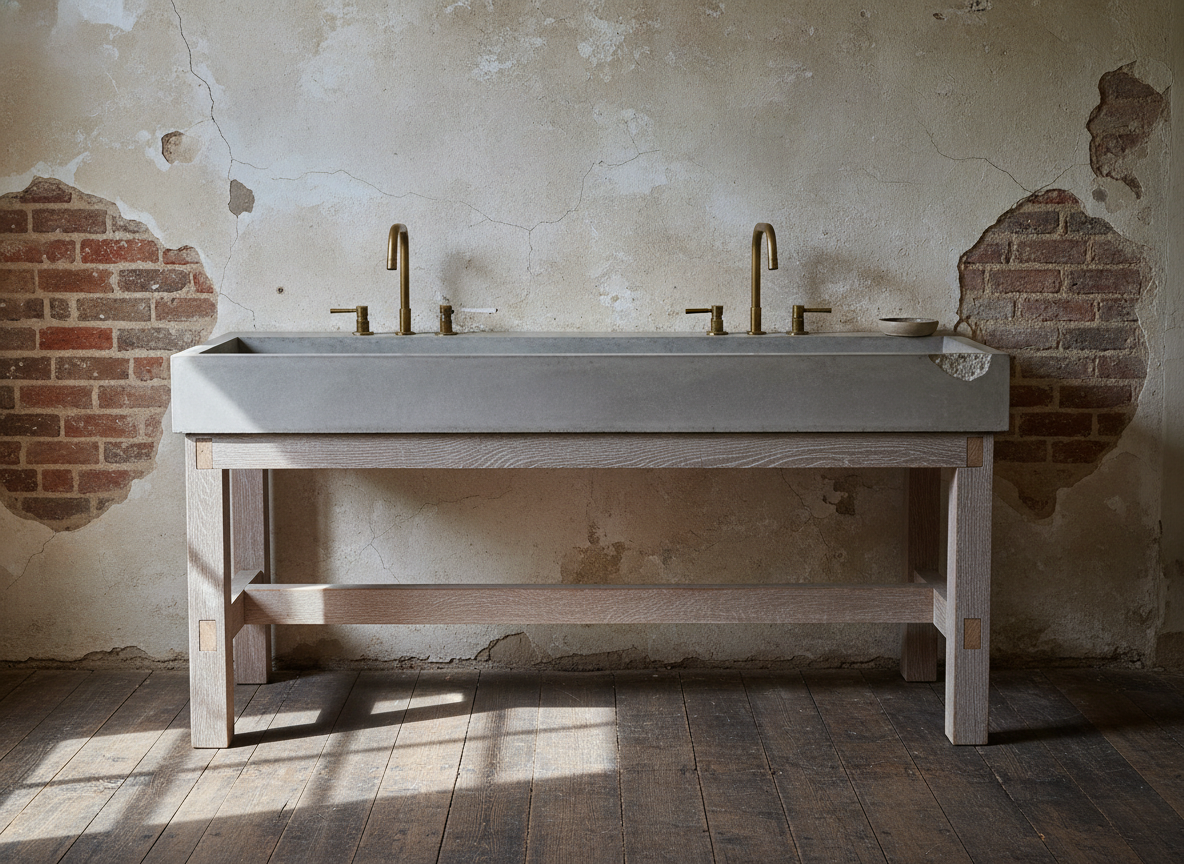
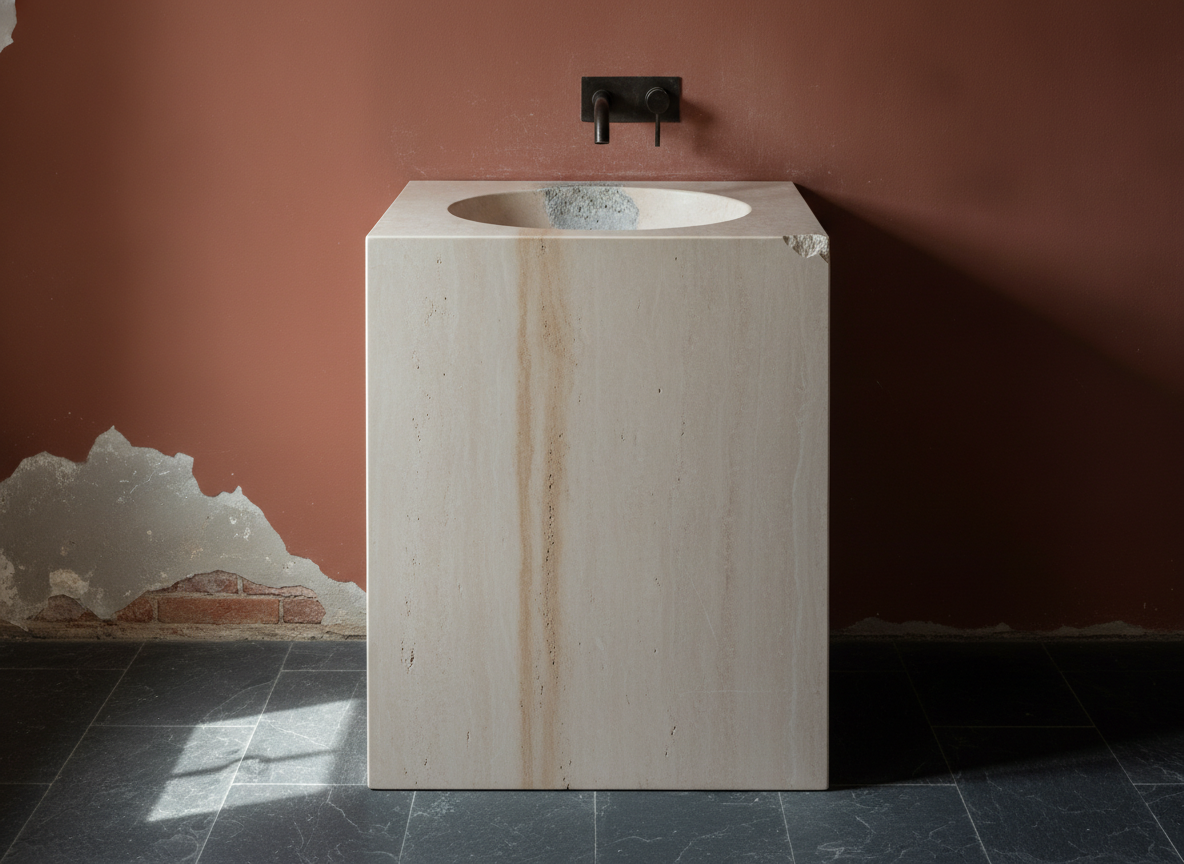
Nothing here was retouched and nothing was run twice. The captions say what the prompt asked for, what arrived and what drifted — the drawer stacks that held, the undivided stone front that finally stayed undivided, the cane weave that refused to run diagonally and the tab pull that went missing.
What the AI Bathroom Vanity Design Generator Gets Right and Wrong
A vanity is a wide, waist-high box with a hard horizontal top, a short stack of drawers and a few small metal fittings. Almost everything learned from this run comes out of those four facts.
Stacks and short rows are dependable
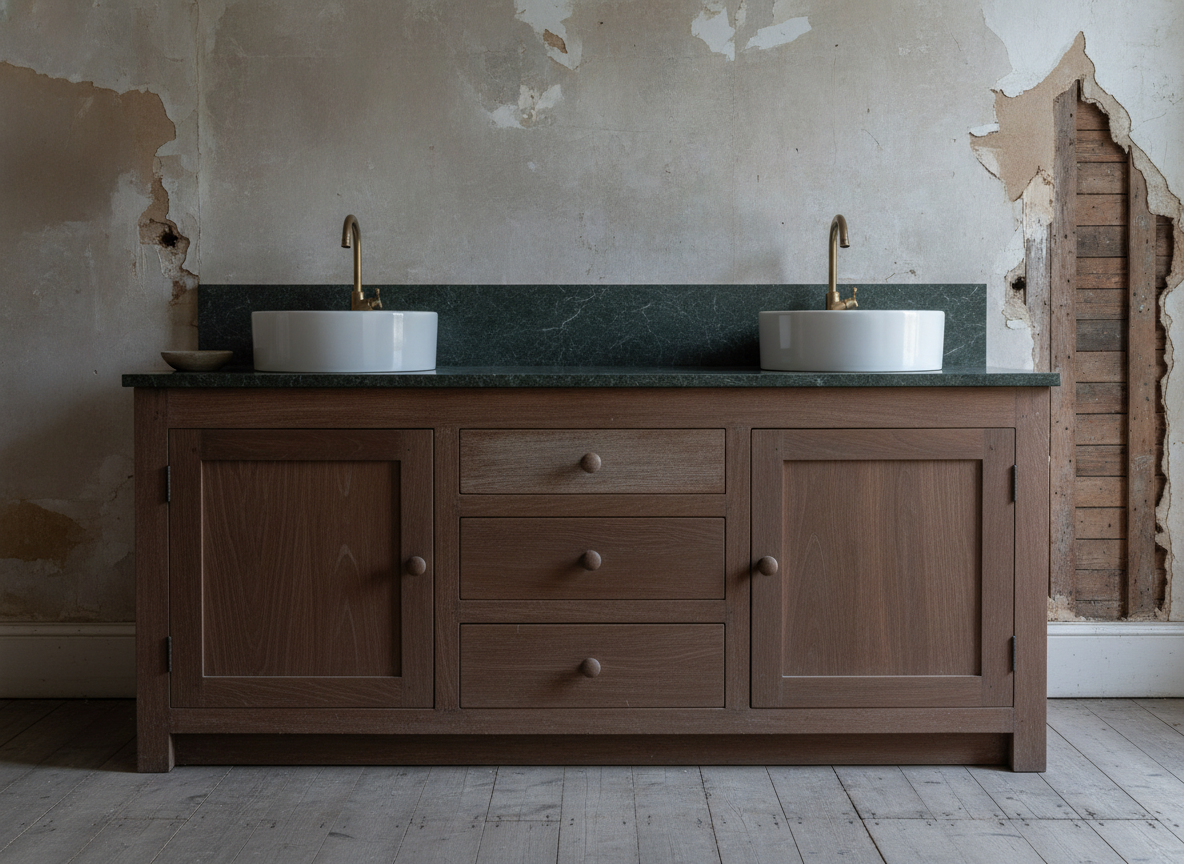
Two drawers stacked, three drawers stacked, two basins side by side, two spouts side by side: every count in this set arrived exactly as written. That matches the rule the rest of this series has converged on — a stack of parts is exact at any number, a row is exact up to about four, and a ring is not worth asking for. For a bathroom vanity that is good news, because almost everything you need to count is either a stack of drawers or a pair of basins. Say the number, say the parts are the same height, and say what divides them.
A wide front splits unless you claim it
Anything much wider than it is tall gets divided vertically by this model whether you want it or not, and banning the division does not work. The travertine block kept its single unbroken front only because the prompt described what is there with a stated extent — one unbroken plane of stone, as wide as the block itself — rather than listing what should be absent. The same wording is what produces a drawer front that runs the whole width of a cabinet instead of arriving as two. Name the thing that is there, never the thing that is missing.
A peg through the timber never fails
Wall brackets, hidden plates and floating shelves all have a habit of going missing or arriving as catalogue hardware. A peg driven right through a joint with both sawn ends standing proud has now worked on every page that has asked for it, including this one, where the pale end grain stands clear of grey oak at each joint of the trestle. The condition is that the whole run of the fixing is visible: the same peg failed on a sister page the moment it ran underneath a closed lid. If a joint has to read, put the fixing somewhere the camera can follow it end to end.
A frame straightens the weave, even when told not to
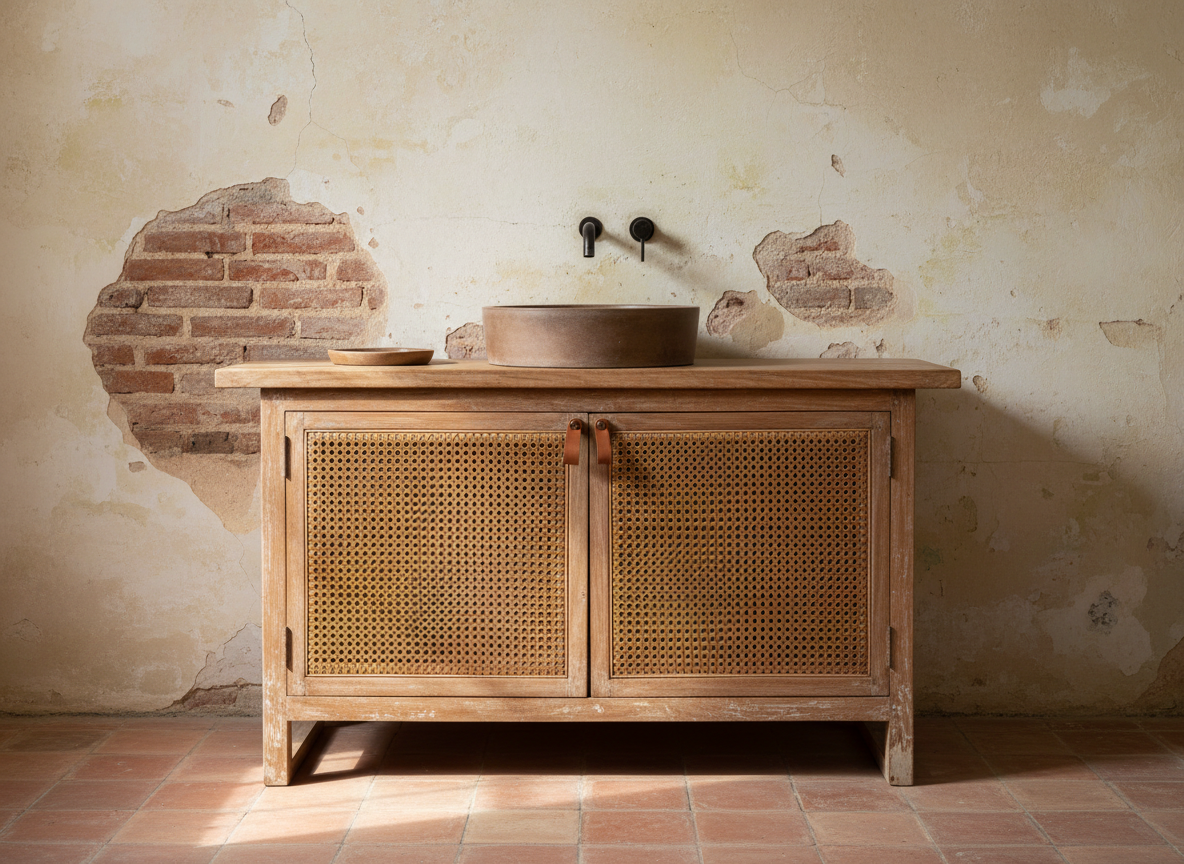
A tight diagonal basket weave renders correctly on a round seat and arrives as ordinary square cane webbing the moment it is set into a rectangular frame. The fix proposed after the first sighting was to state the direction against the frame explicitly — strands running at forty-five degrees to every side. That was tested here on both cane doors and the weave came back orthogonal anyway. Strong surrounding geometry wins outright. If the direction of a weave is part of the design, put it in a shape that has no axis of its own.
Two matching parts, two sentences, still one result
A property given to two matching parts in one phrase reliably lands on only one of them, so both basins, both spouts, both doors and both leather tabs here were written as separate sentences. For the basins, spouts and doors that worked. For the leather tabs it did not, and only one arrived. The pattern seems to be that separate sentences rescue parts that are large enough to be structural and does nothing for small hardware, which the model places by plausibility rather than by instruction. Check small repeated fittings on a crop every time.
Eye level survives a waist-high subject
A vanity is wide, waist-high and topped with a horizontal slab, which is the exact combination that has tipped the camera down over the counter on previous runs. All six frames here held standing eye level, including one on patterned terracotta tiles, which has pulled the camera up before. Two things did it: the height was stated in centimetres rather than described, and the counter was named as something seen edge-on as a band of its own thickness. Never describe a horizontal surface by its pattern, and the camera stays where you put it.
How It Works
Pick the build
Six presets: a floating oiled oak box with two stacked drawers on blackened steel brackets, an old softwood washstand on four turned legs with the blue paint left in the grain, a square-sawn oak trestle pegged right through under a poured concrete trough, one solid block of travertine with a bowl hollowed into its top, a walnut double vanity with a three drawer stack and two basins, and cane doors in a teak carcass. Each one already carries the camera height, the lighting and the anti-clutter wording that produced the pictures in the gallery above.
Add your bathroom
Put the specifics in the box: the carcass material, the top, the basin, the width in centimetres, the height from the floor to the counter, a ratio or a familiar comparison to hold the proportions, and the number of drawers written as a stack. Then spend a sentence on the wall and the floor, because a smooth box under a smooth stone slab needs something behind it that has been through something. A surface with damage and a material showing through keeps the picture photographic; clean tiled plaster turns it into a render.
Check it, then download
About thirty seconds later you have a vanity standing in a room. Before you judge it, check four things on a zoomed crop: did the drawer stack come back at the number you asked for, which it reliably will; did the basin arrive in the shape and the mounting you specified, because sunk basins like to become vessel bowls; did every small fitting arrive, since repeated tab pulls and handles go missing; and has a support or an apron invented itself under the base. Then download at up to 4K.
Writing a Prompt That Produces a Believable Bathroom Vanity
Four habits that separate a vanity worth showing a client from one you regenerate, all learned from the six results above.
Never describe the counter by its pattern
The fastest way to lose your camera position is to describe a horizontal surface by what is on it. Ask for marble with veining running across the whole top and the lens tips down to show you the veining. All six frames here held standing eye level, on a waist-high subject with a stone slab on it, because the top was named as something seen edge-on as a band of its own thickness and the height was given in centimetres rather than described. Say what the counter is made of, then say how thick it looks from the front.
Write your counts as a stack
Two drawers one above the other came back as two and three came back as three, while rows of five and six have been overshot repeatedly across this series. A stack has a structural reason for its number and the model respects that; a row past about four is a guess. Where a design needs several things across a width, break them into a stack and a pair, say the parts are the same height, and name what divides them.
Claim the front, do not ban the split
Anything wider than it is tall gets divided vertically unless you say otherwise, and saying no division, no partition, no divider is ignored. The travertine block kept one unbroken plane of stone across its whole front because the prompt described that plane positively and gave it an extent — as wide as the block itself. The same wording is what produces a single drawer front running the full width of a cabinet. Name the thing that is there.
Refuse the maker stamp by surface
Every real basin has a stamp in the bowl, every real tap has a mark on its body, and a bathroom is normally photographed full of printed bottles. Six generations here came back with none, because the wording names the carriers one at a time: nothing inside the basin, nothing on its rim or underside, nothing engraved on the spout, handle or pipe, nothing on a drawer front, counter edge or bracket. Then it pre-declares the one prop allowed — a plain unglazed dish — instead of listing bottles to ban.
Who Uses an AI Bathroom Vanity Design Generator
Anyone planning a bathroom refit
The vanity sets the tone of the whole room and is usually chosen from a showroom display standing in bright white light against nothing. Generating the same width in oak, painted softwood, walnut and stone, against a wall like your own wall, costs nothing and settles the argument about whether the room wants something floating and light or heavy and standing on the floor.
Joiners and furniture makers quoting work
Six builds in an afternoon is a range to show a client before any timber is bought, and finding out whether they want a trestle or a plinth is free. Just do not read the picture as a cutting list — a sled base came back as a solid apron here, and a basin asked for as sunk into the top arrived sitting on it.
Interior designers presenting a scheme
A cut-out product shot on a mood board says nothing about how a vanity sits under a real wall. A photograph of the proposed unit at a stated width, with a real shadow under it and the floor visible through the gap below, is worth more in a client meeting than a page of catalogue crops, and it takes about thirty seconds to make.
Bathroom showrooms and retailers
Listing images are where a vanity is won or lost, and shooting six finishes means six builds, six deliveries and a studio day. Generating the range first tells you which two are worth photographing properly, and the results are clean enough to use as concept imagery while the real units are still in production.
Renovators working from a half-stripped room
Old bathrooms have plaster off, limewash blistering and tiles missing. Describing the room you actually have produces a far more useful picture than any showroom shot, and this model happens to be at its most convincing against exactly those surfaces — the plaster crumbled back to brick here is the most believable thing on the page.
Design students and portfolio builders
Furniture coursework lives or dies on presentation, and a grey rendered model reads as a grey rendered model. Describing the same vanity as a photographed object — real travertine, raking light, a wall with damage in it, a visible peg through a joint — gives a project board something that looks like it already exists.
AI Bathroom Vanity Design Generator FAQ
Related Design Tools
AI Bathroom Design Generator
The whole room the vanity has to live in — the wall finish, the floor, the shower and the way the light falls — rather than one unit standing on its own against a bare wall.
AI Tile Design Generator
What goes on the wall behind and the floor beneath, and the page to read on why a tile grid is the hardest thing in a bathroom to render — scale drifts within one image and patterns pull the camera up.
AI Dresser Design Generator
The same box with the same stack of drawers at bedroom scale, worth reading next to the counts here for how far a stated number of drawers can be trusted and where handles go missing.
See the Vanity Against Your Own Wall Before the Plumber Arrives
Six builds — a floating oak box on steel brackets, an old painted washstand, a pegged oak trestle, a solid travertine block, a walnut double vanity and cane doors in teak — each photographed at your width, on your floor, against your wall, in about thirty seconds. Up to 4K. Free to start, from $2.99.
Design a Vanity FreeAn AI Bathroom Vanity Design Generator for Widths, Materials and Silhouettes You Can Actually See
A bathroom vanity is the hardest piece of furniture in the house to choose from a picture. It has to be right to the centimetre because the room is small and the plumbing is already where it is. It is the first thing you look at every morning and the last thing you look at every night. It is the one unit in the house where timber, stone and running water meet, so the materials matter more than anywhere else. And every photograph of one is taken in a showroom set lit like a dentist, with a mirror, a stack of folded towels and a wall colour that has nothing to do with your house. The listing gives you a width and a basin type and leaves you to imagine the only two things that actually matter: whether the unit reads light and floating or heavy and standing in your particular room, and whether the materials look like something you want to see wet every day for fifteen years. That is the gap an AI bathroom vanity design generator fills. Describe the build, the top, the basin, the width, the height to the counter and what the wall behind it is made of, and about thirty seconds later you have a photograph of it standing there. Every preset on this page is written that way, and the six results above are published exactly as they came back, drifts included.
The six builds cover the shortlist most people are actually choosing between. A floating box of oiled brown oak with two drawers stacked handleless above each other, carried on chunky blackened steel brackets bolted straight into the mortar joints, with a honed limestone slab and a round white basin on top. An old softwood washstand on four turned legs with an open board shelf underneath and the last of its chalky blue paint surviving down in the grain. A square-sawn reclaimed oak trestle, pegged right through at every joint, carrying a poured concrete slab with a long trough basin and two brass spouts. One solid block of pale travertine with a bowl hollowed into its top and an unbroken front face. A walnut double vanity with a central stack of three drawers, a door to each side and two basins on dark green serpentine. And cane doors in an old teak carcass with a brown stoneware bowl.
What came back teaches more than a feature list. The headline result is about counting, and it is good news for a vanity specifically: every count in this set arrived exactly as written — two drawers stacked stayed two, three stayed three, two basins side by side stayed two, two spouts stayed two. That matches the rule this series has converged on, which is that a stack is exact at any number, a row is exact up to about four, and a ring is not worth asking for. Almost everything you need to count on a bathroom vanity is either a stack of drawers or a pair of basins, which puts the whole design comfortably inside the reliable range. The second result is the undivided stone front. Anything much wider than it is tall gets split vertically by this model whether you want it or not, and banning the split does nothing; the travertine block kept one unbroken plane across its entire face because the prompt described that plane positively and gave it a stated extent. Name the thing that is there, never the thing that is missing.
Three drifts are worth carrying to any bathroom prompt. A basin specified as oval and sunk into a timber top came back round and sitting on the surface as a vessel bowl, which is the strong real-world prior beating an explicit instruction — the same way a nest box insists on being face-mounted. Small repeated fittings go missing even when written in separate sentences: two leather tab pulls were asked for, one per door, in two sentences, and one arrived. And a tight basket weave told explicitly to run at forty-five degrees to the frame around it came back as ordinary orthogonal cane webbing, which means the fix proposed the last time this happened has now been tested and does not work — strong surrounding geometry simply wins. Against all that, two things held perfectly. The text ban produced six generations with no stamp inside a basin, no mark on a spout and no printed bottle anywhere, because the prompt refuses each carrier by name and pre-declares the single prop allowed. And the camera stayed at standing eye level in all six frames on a waist-high subject with a hard horizontal top, which is the exact combination that has tipped the lens down before, because the counter was named as a band seen edge-on rather than described by its pattern. Inside those limits this is a genuinely good way to spend twenty minutes before committing to a unit that has to be ordered, delivered and plumbed in before anybody finds out whether it suits the room.