
AI Garden Gate Design Generator
A garden gate is the one piece of joinery everybody walks past and nobody can picture in advance. It has to suit a wall that is already there, a hedge that is already that height and a path that is already that width, and every catalogue photograph of one is taken against a fence that looks nothing like yours. This AI garden gate design generator turns a description into a finished gate photographed hanging in a real opening in about thirty seconds — braced oak in drystone, an old painted picket between brick piers, a curved-top larch gate, wrought iron between granite piers, a woven hazel hurdle and horizontal cedar slats. All six results are below exactly as they came back, including the four iron bars that arrived as three and the brace that appeared on a gate that never asked for one.
Design a Gate FreeTry the AI Garden Gate Design Generator — Free
Pick a build, then use the box for what is specific to your garden — the timber or the ironwork and its finish, the width from stile to stile and the height in centimetres, whether it is braced or framed, what the hinges and the latch are, and above all what the gate hangs in: a drystone gap, two brick piers, a hedge, a rendered wall. Each preset already carries the camera height, the stated proportions, the damaged wall that keeps the result photographic and the itemised ban on house numbers, plaques and maker marks that produced the six pictures below.
AI Garden Gate Design Generator
Choose a build, name your materials, your width and the wall it hangs in, and get a photorealistic garden gate standing in a real opening. Up to 4K.
Six Gates From the AI Garden Gate Design Generator, Shown Exactly As They Came Back
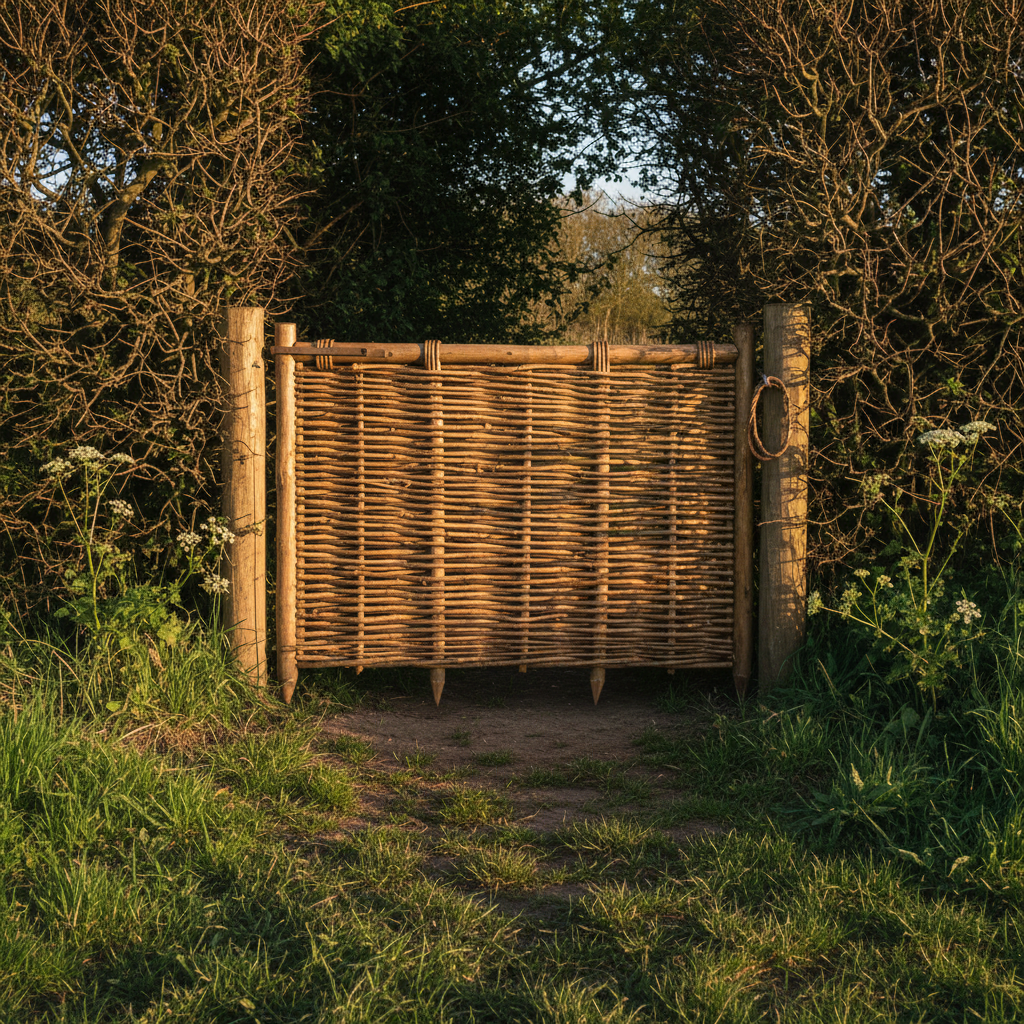
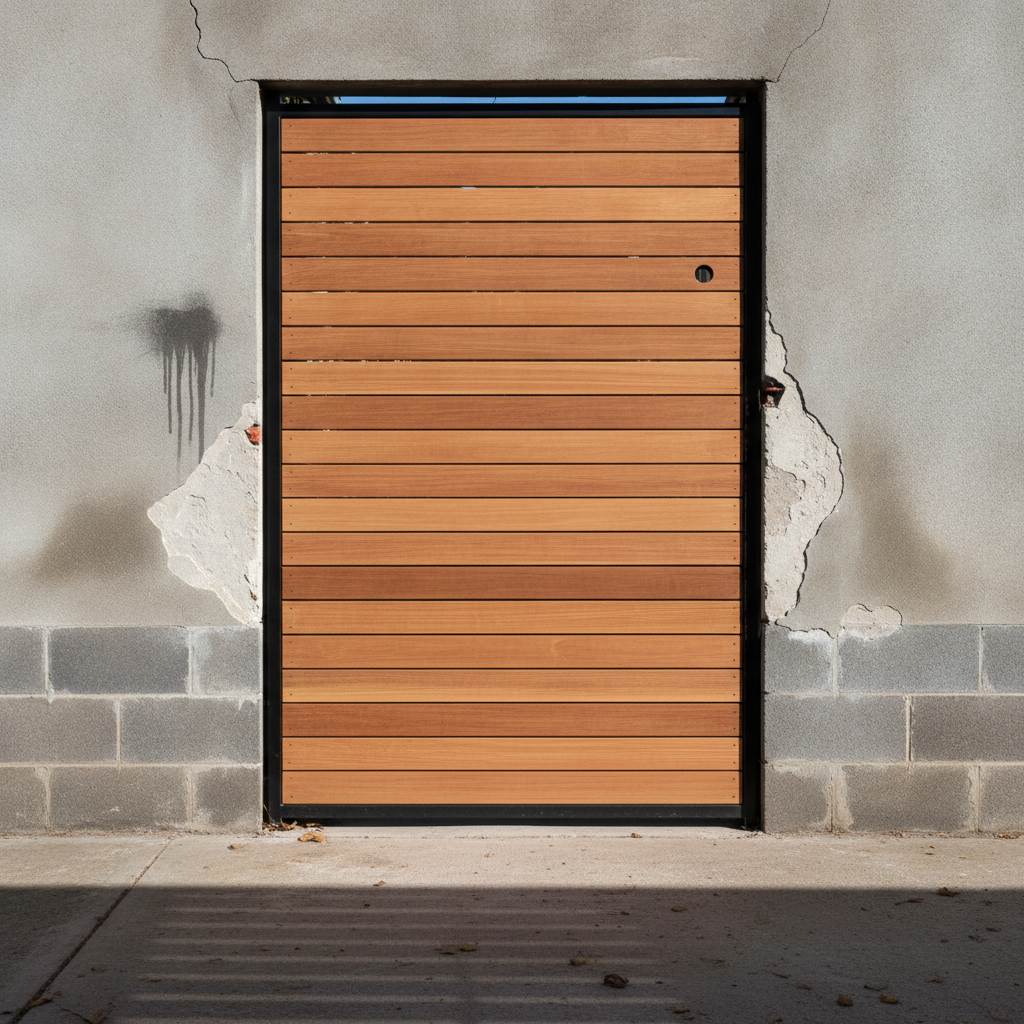
Nothing here was retouched and nothing was run twice. The captions say what the prompt asked for, what arrived and what drifted — the brace that held its angle, the paint that finally looked old, the iron bars that came up short and the hurdle that grew two extra uprights.
What the AI Garden Gate Design Generator Gets Right and Wrong
A gate is a flat frame of repeated members, hung on two hinges, closed with one latch and surrounded by the wall it has to suit. Almost everything learned from this run comes out of those four facts.
A single diagonal member holds, a diagonal texture does not
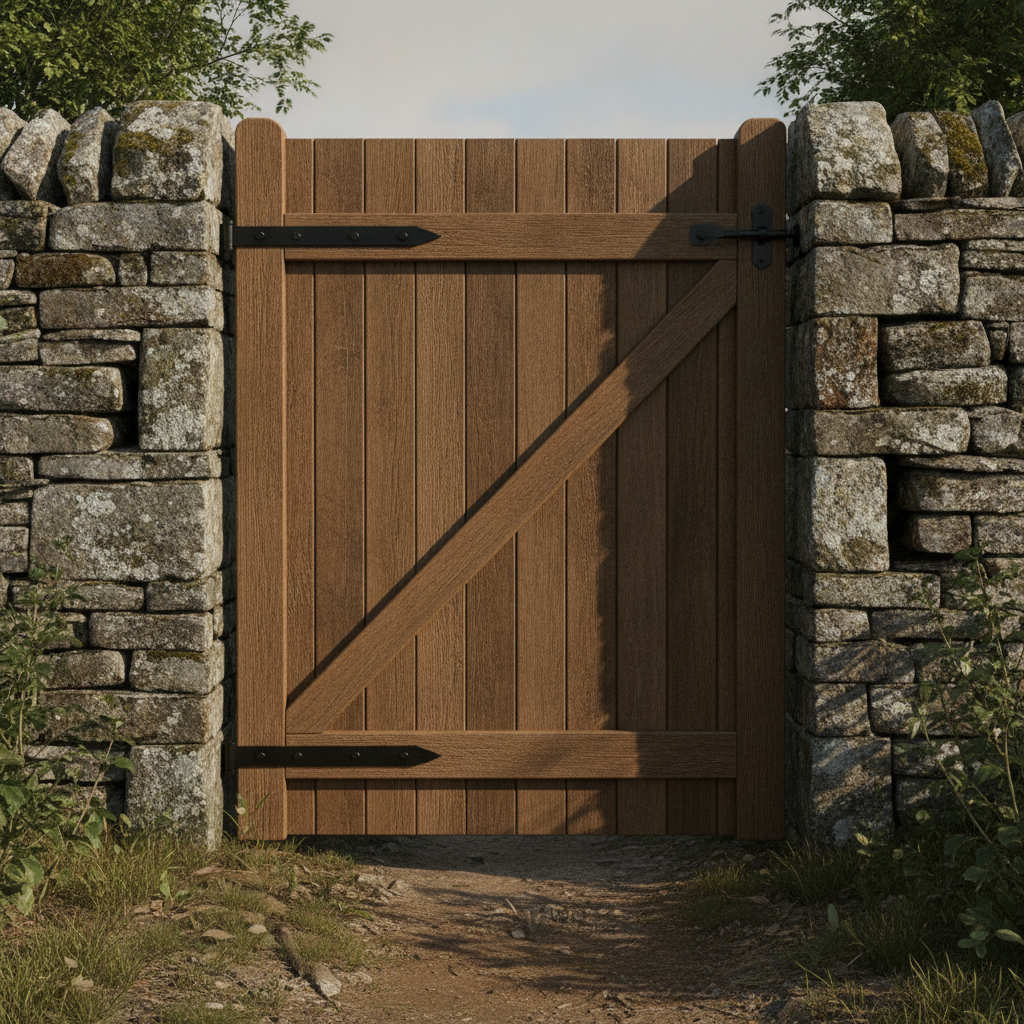
The two previous pages in this series concluded that a rectangular frame straightens anything diagonal inside it, after a basket weave told explicitly to run at forty-five degrees came back as ordinary square webbing twice. A garden gate narrows that rule usefully. One brace running corner to corner inside a rectangle of boards rendered at exactly the slant it was given, first try. The difference is that a brace is a structural member with a reason to be at an angle, and a weave is a surface pattern. Ask for one slanting piece and you will get it. Ask for a slanting field and the frame wins.
A row of uprights is not reliable, even at three or four
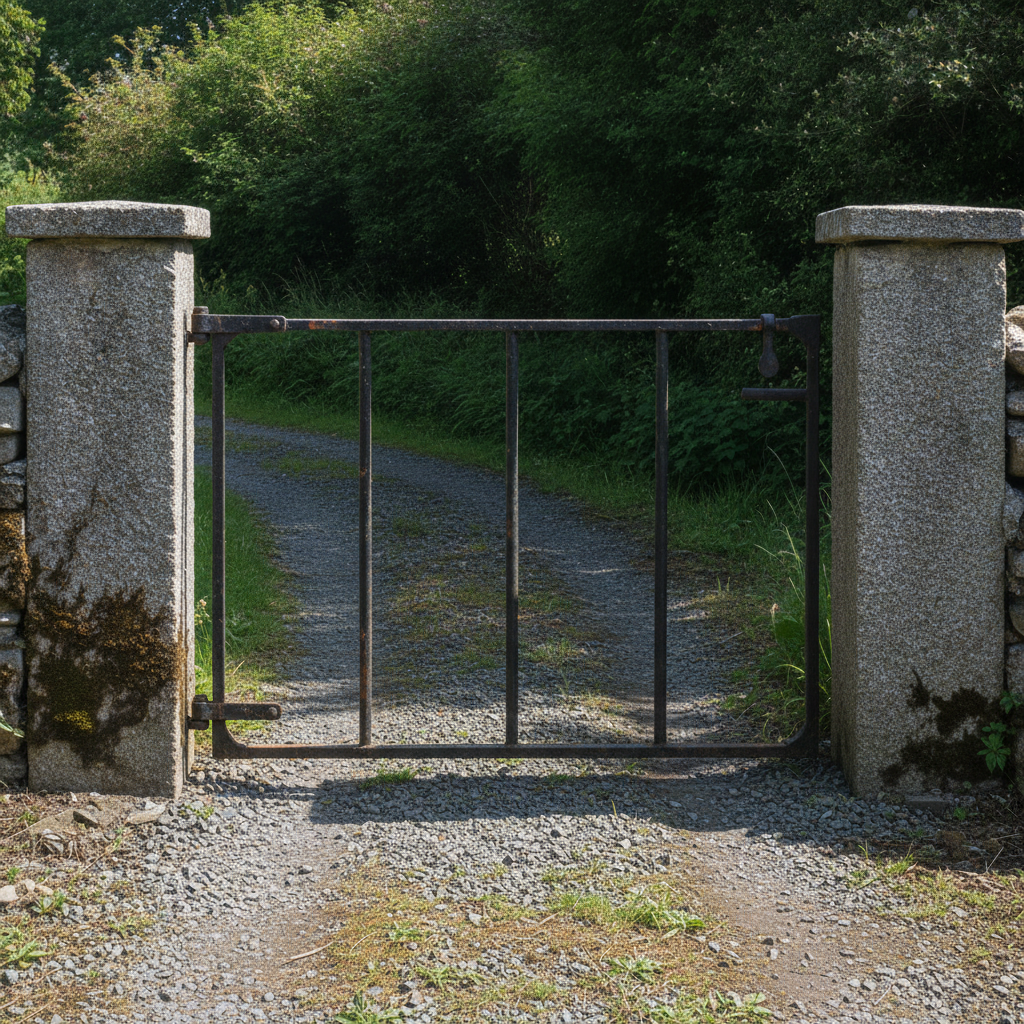
Four iron bars came back as three. Three hazel sails came back as five. Both counts sat inside what the sofa page called the safe range, and both missed in opposite directions in the same run. The pattern underneath is that rows which held before were rows of parts facing the camera, like drawers and cushions, where the number is the design. A row of repeated uprights in an open frame is spaced by what the structure appears to need, so the model sets the number itself. Count on a stack. Do not count on a row of bars, pickets, slats or spindles.
Paint finally wears, if you ask for the right failure
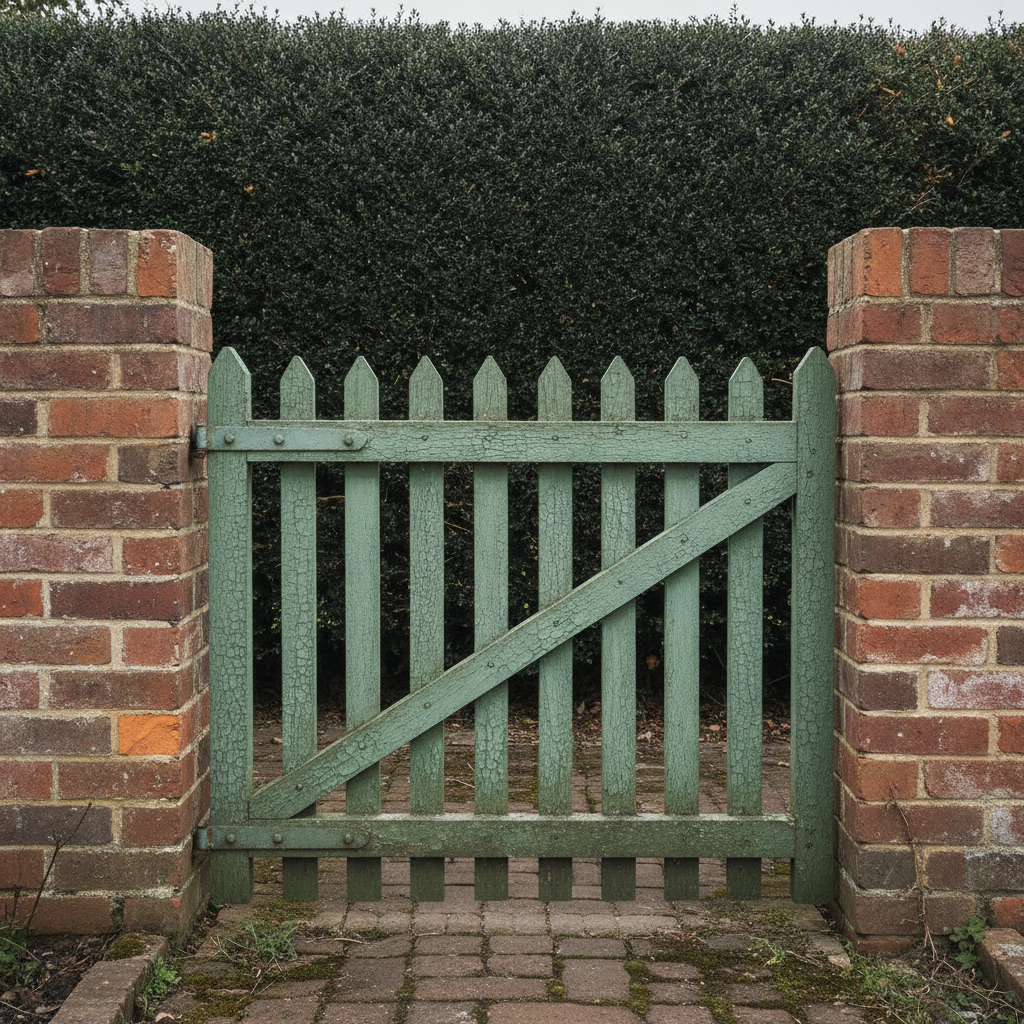
Five pages running have asked for painted timber worn through to bare wood along the edges and got back immaculate paint every time. The picket gate here is the first convincing old painted finish in the series, and the change is in what was asked for: a paint film that is crazed into a fine network, chalked, powdery and thinned to a lighter shade where the sun hits it, still covering every piece of timber with no bare wood showing. That is how paint actually fails outdoors. Ask for the failure the material has rather than the one you picture.
Negatives work on accessories and fail on structure
The slatted cedar gate was told to have no handle on its face and no visible latch, and came back as a clean slab with only the finger hole. The picket gate was never given a brace and grew one anyway, straight across its face. Same model, same run, opposite outcomes. The dividing line is whether the thing you are refusing has a structural job: an accessory can be banned by name, while a member that makes the span look sound will be invented however the prompt is worded. Design around invented structure rather than forbidding it.
A described curve lands its shape but not its size
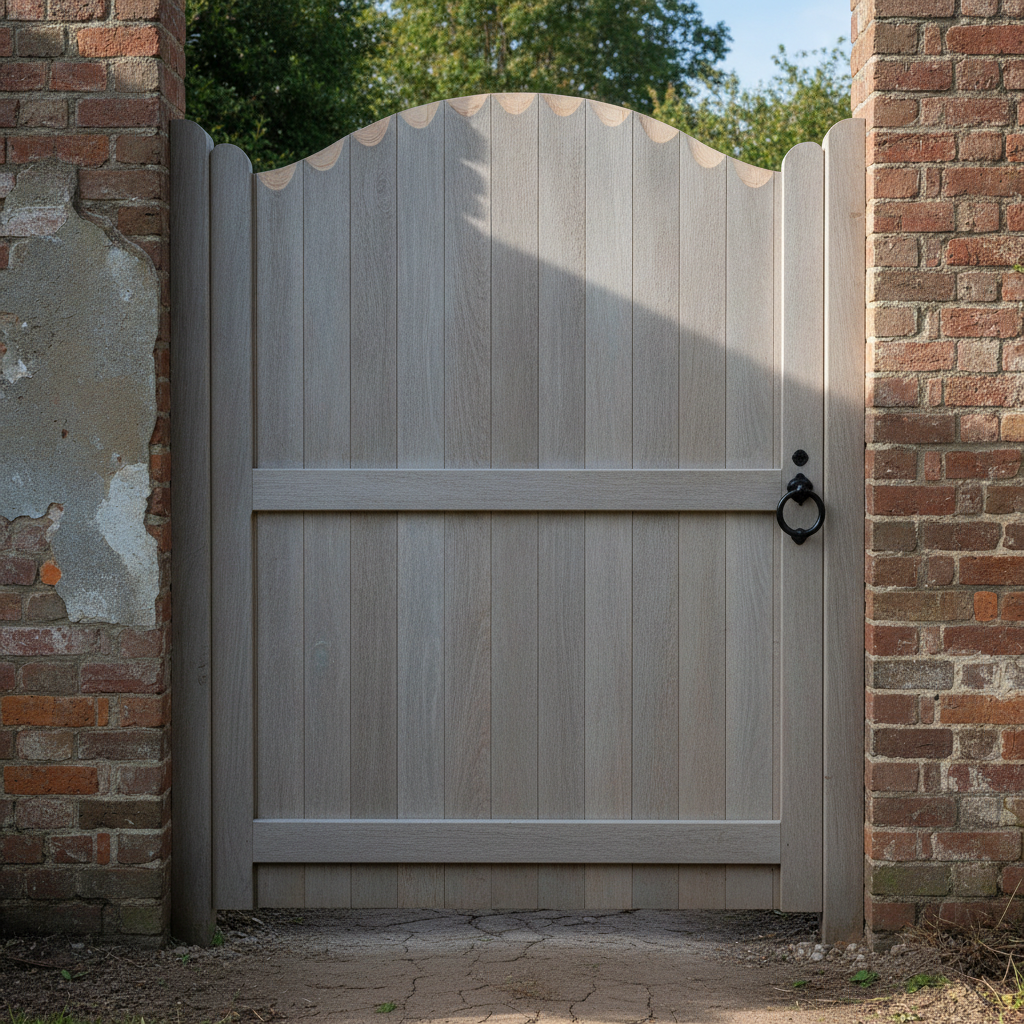
The curved-top gate was written as a curve with two ends level with each other and one highest point exactly at the middle, never naming the letter it resembles, and that part is exact. The stated magnitude, a rise of about a hand, came back several times over, with shoulders at both stiles that were never mentioned. This matches the open-shape finding from earlier pages. Describing the free ends and the high point as objects controls the form reliably. Dimensions inside that form are still an estimate, so state the one you want and expect to regenerate.
Timber with no damage of its own reads as a render
Four of the six frames here are unambiguously photographs. The two that look slightly computer generated are the two with a large, clean, undamaged timber face, the oiled oak and the weathered larch. Every page in this series has found that a damaged wall with a second material exposed is what makes a picture read as a photograph, and this run adds the limit: the wall cannot carry the whole frame on its own when the subject is a big flat plane of new material. Give the gate its own splits, saw marks and weathering as well.
How It Works
Pick the build
Six presets: close-boarded oak with two ledges and one diagonal brace on black strap hinges, an old picket gate in crazed bottle-green paint, a tall curved-top gate in weathered larch with an iron ring handle, a flat-bar wrought iron gate with a drop handle, a woven hazel hurdle tied with willow, and horizontal cedar slats inside a blackened steel frame. Each one already carries the camera, the proportions and the text ban.
Add your opening
Put the specifics in the box: the timber and its finish, the width from stile to stile, the height in centimetres with a comparison such as chest height or over head height, the hinges and the latch, and the thing the gate hangs in. That last one matters most. A gap in a drystone wall, two spalled brick piers, a hawthorn hedge or render blown back to blockwork is what makes the picture look taken rather than rendered.
Check it, then download
About thirty seconds later you have a gate hanging in an opening. Before you judge it, check four things on a zoomed crop: did the number of bars, pickets or slats come back at what you asked for, which it often will not. Did a brace appear that you never asked for. Is the gap under the gate still there. And is there a number or a maker mark anywhere on the latch or the stiles. Then download at up to 4K.
Writing a Prompt That Produces a Believable Garden Gate
Four habits that separate a gate worth showing a joiner from one you regenerate, all learned from the six results above.
Describe the rhythm, not the count
Four iron bars became three and three hazel sails became five, in the same run, from counts that were supposed to be safe. A row of repeated uprights is spaced by what the structure looks like it needs, so the number is the one thing in the design the model insists on choosing. Say the pickets are narrow with a gap about as wide as a picket between them, say the slats are close with a shadow gap, and save your exact numbers for stacked parts, which still hold.
Ask for the failure the material has
Paint has refused to wear on five previous pages because the request was always for paint worn through to bare timber, and the model will give you the paint or the damage but not both. The picket gate here is the first old painted finish in the series that convinces, and all that changed was the kind of failure asked for: crazed into a fine network, chalked, powdery, thinned by the sun, still covering every piece of wood. Name how the material actually ages.
Put one diagonal in, expect a second
A brace told to run from the bottom hinge corner to the top latch corner runs exactly there, which is the first diagonal this series has successfully placed inside a rectangle. The reverse is just as true: the picket gate grew a brace that was never mentioned, because the span looked like it needed one. If you want a gate without a brace, give it something else that explains the span, such as a deep top rail or a visible frame, rather than forbidding the brace.
Refuse the number and the plaque as objects
Every real garden gate carries a number, a name plate, a cast mark on the latch or a sign wired to the rails, and six generations here came back with none of it. The wording that does it names the carriers one at a time, from the stiles and the gate posts to every screw head and washer, and then bans the sign, plaque, letterbox, bell and padlock as objects instead of asking for blank ones. Take the object out of the frame and the lettering goes with it.
Who Uses an AI Garden Gate Design Generator
Anyone replacing a side or front gate
The gate has to suit a wall, a hedge and a house that are all already there, and a catalogue picture taken against a clean fence tells you nothing about that. Generating the same opening with oak boards, painted pickets and a curved top settles the question in ten minutes for nothing.
Joiners and blacksmiths quoting work
Six builds in an afternoon is a range to put in front of a customer before any timber is bought or any bar is cut, and finding out whether they want close boarding or a picket is free. Just do not read the picture as a cutting list, because the number of members is the least reliable thing in it.
Landscape and garden designers
A gate is the full stop at the end of a path and it is almost always drawn as a flat elevation on a plan. A photograph of the proposed gate hung in the client actual wall, with a real shadow across the path and the right light, carries a scheme far better than an elevation does.
Gate and fencing retailers
Listing images are where a gate is won or lost, and shooting six finishes means six builds, six deliveries and a studio day. Generating the range first tells you which two are worth photographing properly, and which style your customers stop scrolling for.
Renovators working from a half-finished boundary
Old boundaries have mortar washed out, render blown off and stones missing. Describing the wall you actually have produces a far more useful picture than any showroom shot, and this model is at its most photographic when the wall behind the gate is damaged and a second material shows through.
Heritage and conservation work
Matching a new gate to an old wall is a matter of proportion, material and how the ironwork sits, and all three are easier argued from a photograph than from a description. Generate the same opening in oak, larch and wrought iron and the right answer is usually obvious at a glance.
AI Garden Gate Design Generator FAQ
Related Design Tools
AI Fence Design Generator
The run of boundary the gate has to match, including the posts underneath and what happens where the ground slopes. Worth generating alongside a gate, because the two are almost never designed together.
AI Pergola Design Generator
The same open frame problem one size up, with rafters instead of pickets, and the page to read next on how far a stated number of repeated members can be trusted in an outdoor structure.
AI Trellis Design Generator
Where the diagonal question started. A trellis is nothing but a grid at an angle, which makes it the clearest test of when this model will hold a slant and when the surrounding frame straightens it out.
See the Gate Hanging in Your Own Wall Before the Timber Is Cut
Six builds — braced oak in drystone, an old painted picket between brick piers, a curved-top larch gate, wrought iron between granite piers, a woven hazel hurdle and horizontal cedar slats — each photographed at your width, in your opening, against your wall, in about thirty seconds. Up to 4K. Free to start, from $2.99.
Design a Gate FreeAn AI Garden Gate Design Generator for Openings, Materials and Proportions You Can Actually See
A garden gate is the smallest piece of joinery in the garden and the hardest one to choose from a picture. It is seen flat on, from a few steps away, several times a day, which means its proportions are noticed in a way no other outdoor structure manages. It has to suit three things that are already fixed: the wall or hedge it hangs in, the width of the path, and the house behind it. And every photograph of one in a catalogue is shot against a clean larch fence in flat light with nothing of your boundary in it, so the picture answers the one question you were not asking. That is the gap an AI garden gate design generator fills. Describe the build, the timber or the ironwork, the width from stile to stile, the height, the hinges and the latch, and above all the opening it hangs in, and about thirty seconds later you have a photograph of it hanging there. Every preset on this page is written that way, and the six results above are published exactly as they came back, drifts included.
The six builds cover the shortlist most people are actually choosing between. A close-boarded gate of oiled oak with two horizontal ledges and a single diagonal brace, hung on two long black strap hinges in a gap in a lichened drystone wall. An old picket gate with pointed tops and a crazed bottle-green paint film, hung between two spalled red brick piers in front of a privet hedge. A tall curved-top gate of silver-grey larch with an iron ring handle, set in an opening cut through damaged brickwork. A flat-bar wrought iron gate with a drop handle and rust bloom, hung between rough granite piers over a gravel track. A woven hazel hurdle bound with willow ties and latched with a plaited loop, in a gap in a hawthorn hedge. And a flush field of horizontal cedar slats inside a slim blackened steel frame, set in render blown back to bare blockwork.
What came back teaches more than a feature list, and two results from this run change rules this series had already written down. The first is the good one. Two earlier pages concluded that a rectangular frame straightens anything diagonal placed inside it, after a basket weave told in plain words to run at forty-five degrees came back as ordinary square webbing twice. A brace is not a weave. One piece of timber told to run from the bottom corner on the hinge side up to the top corner on the latch side rendered at exactly that slant, first try, and the picket gate in the same run grew a brace that was never asked for at all. The rule narrows usefully: a structural member can be placed at an angle, while a diagonal pattern across a surface cannot. The second result is the bad one. A row of exactly four iron bars came back as three, and a hurdle built on exactly three uprights came back with five. Both counts were inside the range earlier pages had called safe, and both missed, in opposite directions, within the same six generations. Rows that held before were rows of parts facing the camera, such as drawers and cushions, where the number is the design. A row of repeated uprights in an open frame is spaced by whatever the structure appears to need.
Three more findings are worth carrying into any outdoor prompt. Paint finally wore. Five pages running have asked for painted timber worn through to bare wood and got back immaculate paint every time, and the picket gate here is the first convincing old finish in the series, because what was asked for was the failure paint actually has outdoors: crazed into a fine network, chalked and powdery, thinned by the sun, still covering every piece of wood with no bare timber showing. Negatives sorted themselves into two kinds in the same run: the slatted gate was told to have no handle and no visible latch and came back as a clean slab, while the picket gate was never given a brace and grew one, which means an accessory can be refused by name and a structural member cannot. And the text ban held completely, with no house number, name plate, cast latch mark or wired-on sign in any of the six frames, because the wording refuses each carrier one at a time and then removes the sign, plaque, letterbox and padlock as objects rather than asking for blank ones. Inside those limits an AI garden gate design generator is a genuinely good way to spend twenty minutes before committing to something that has to be built, hung and lived with every time you walk up the path.