
AI TV Stand Design Generator
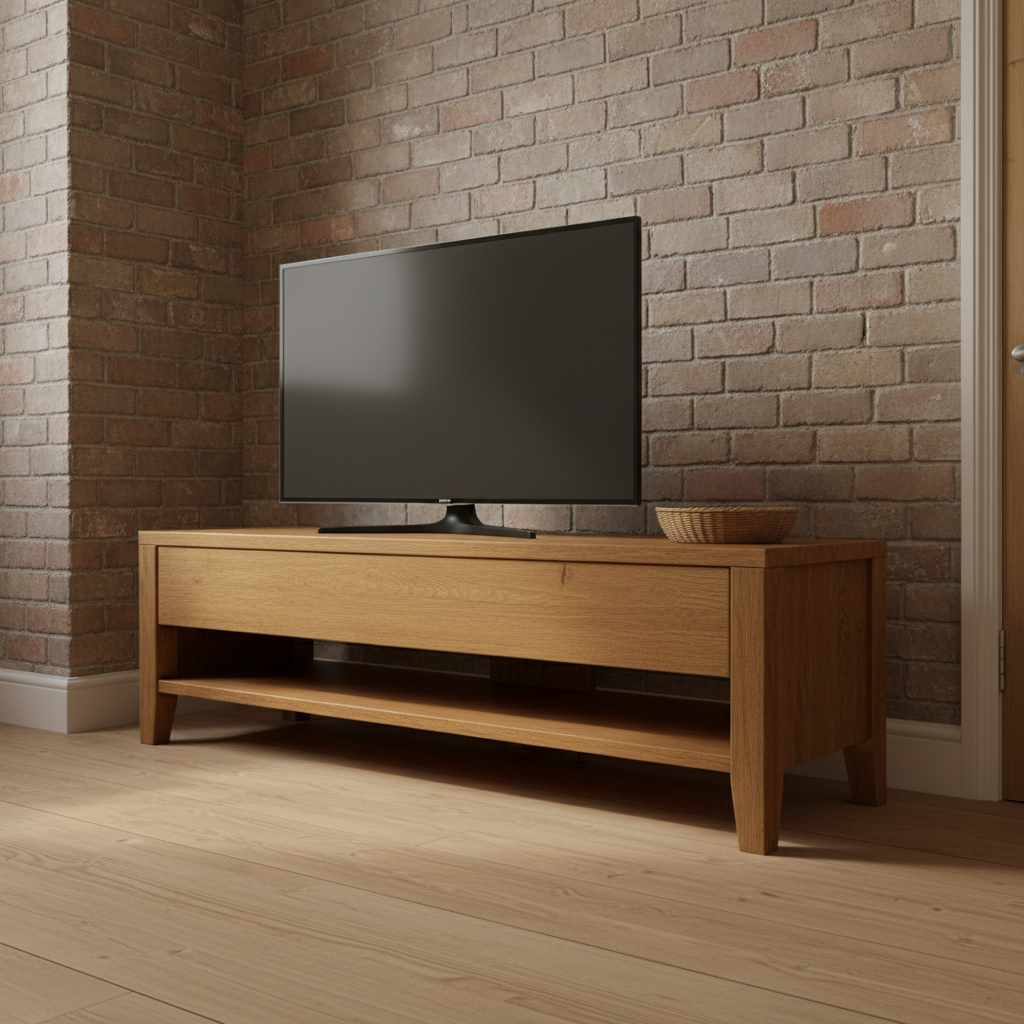
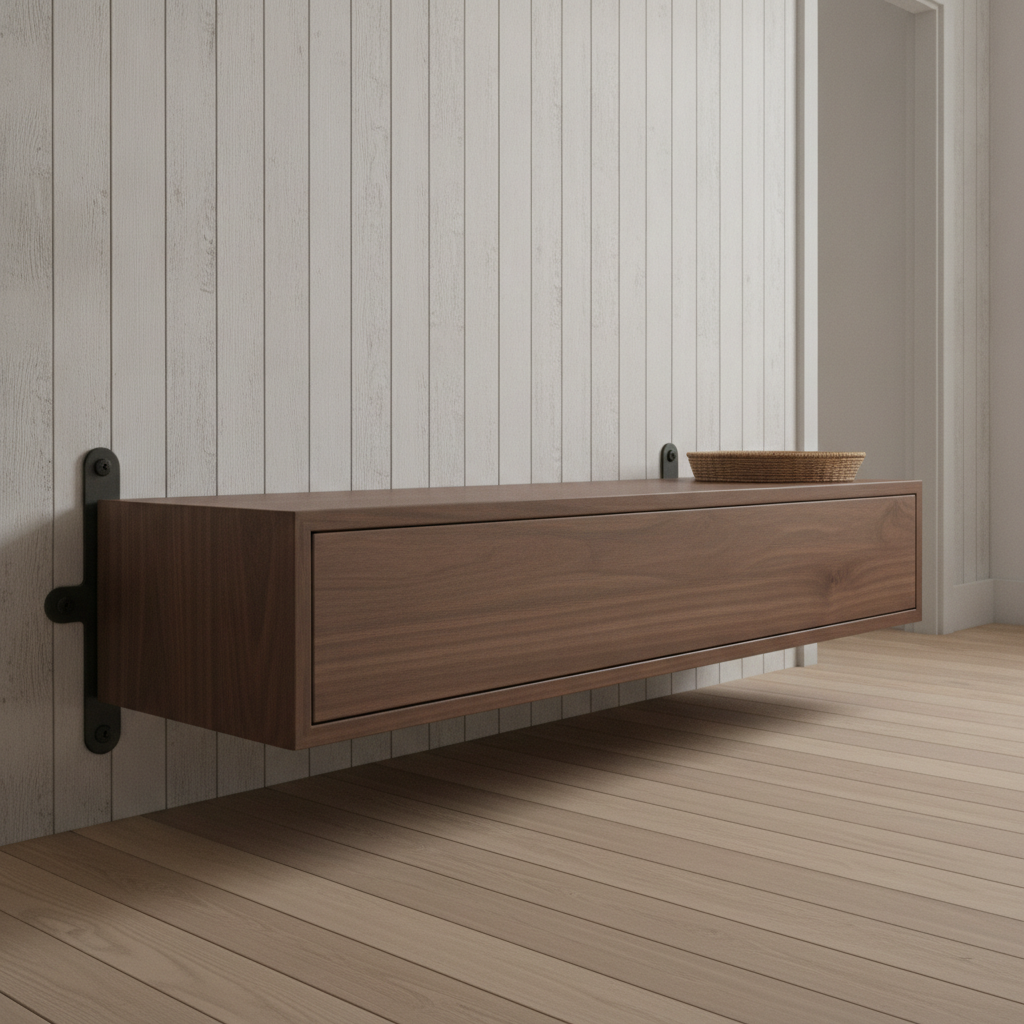
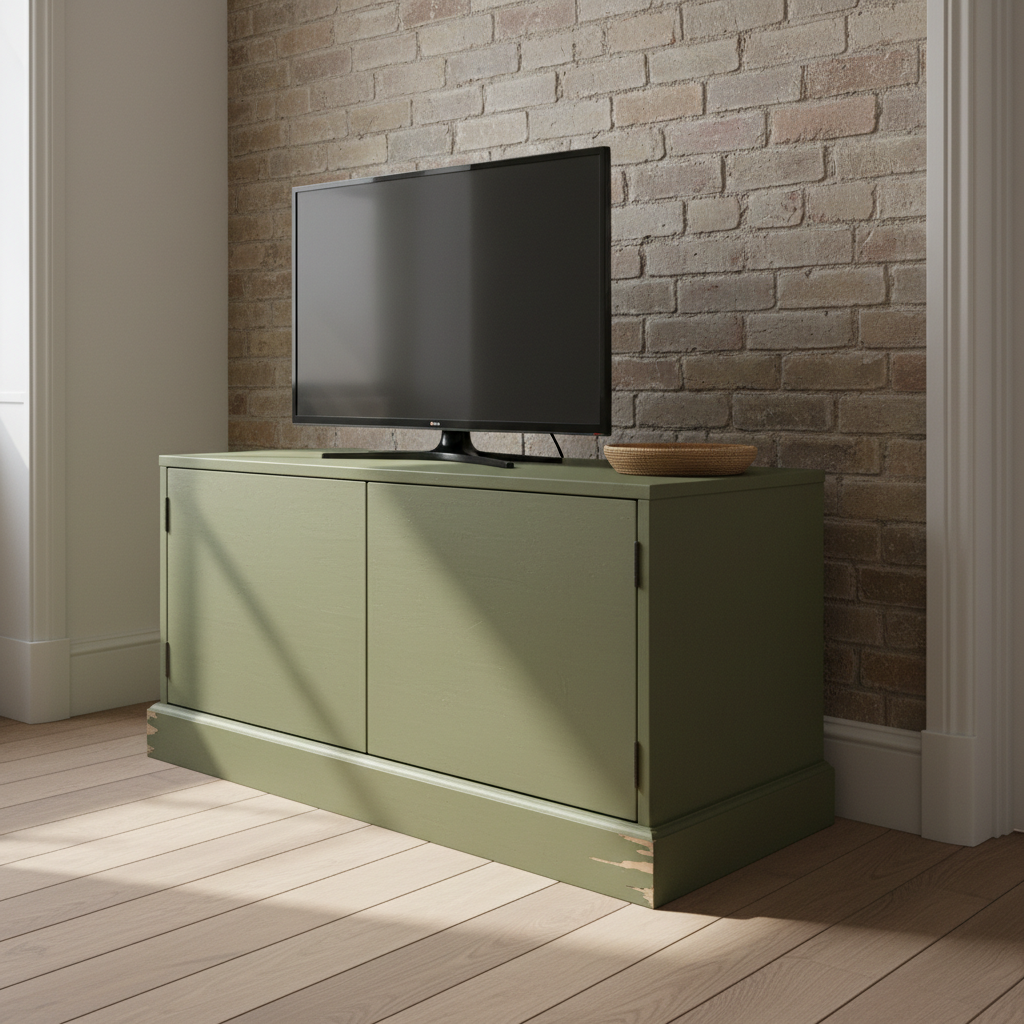
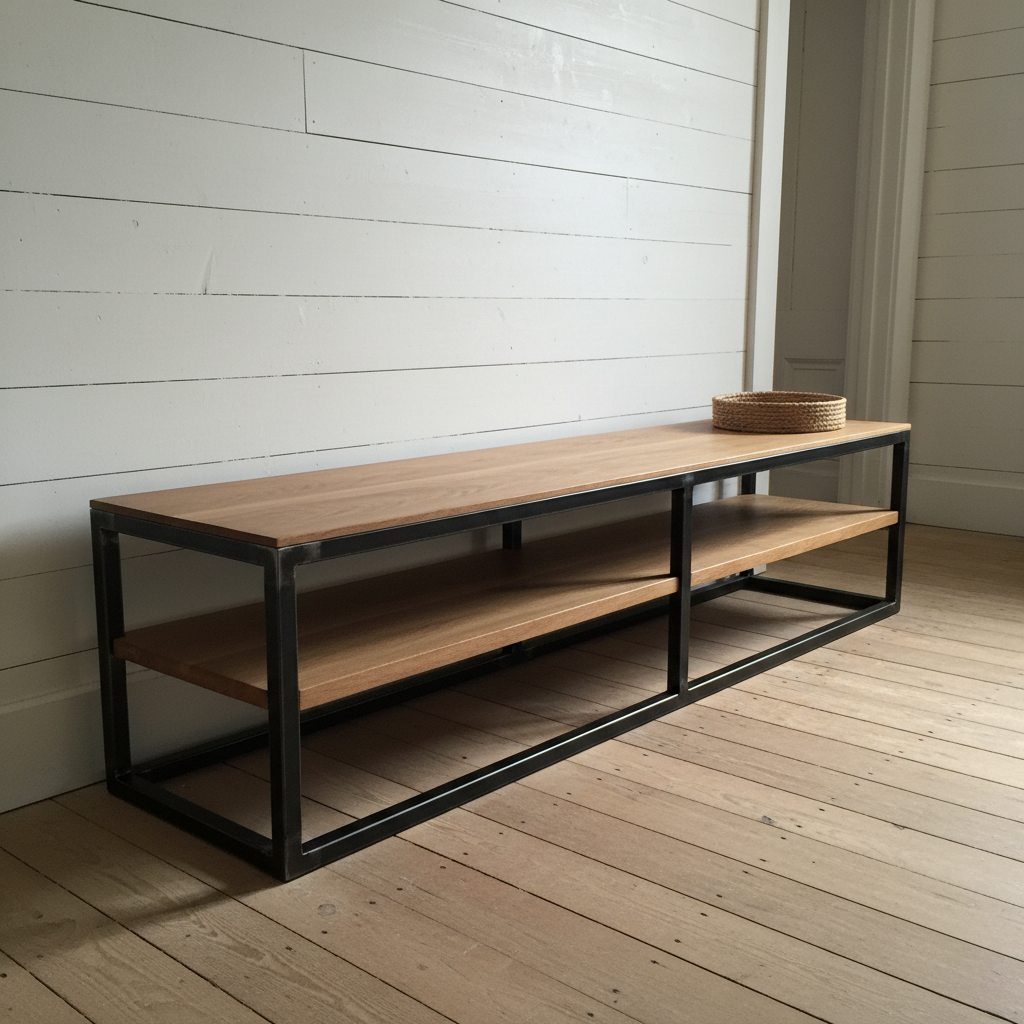
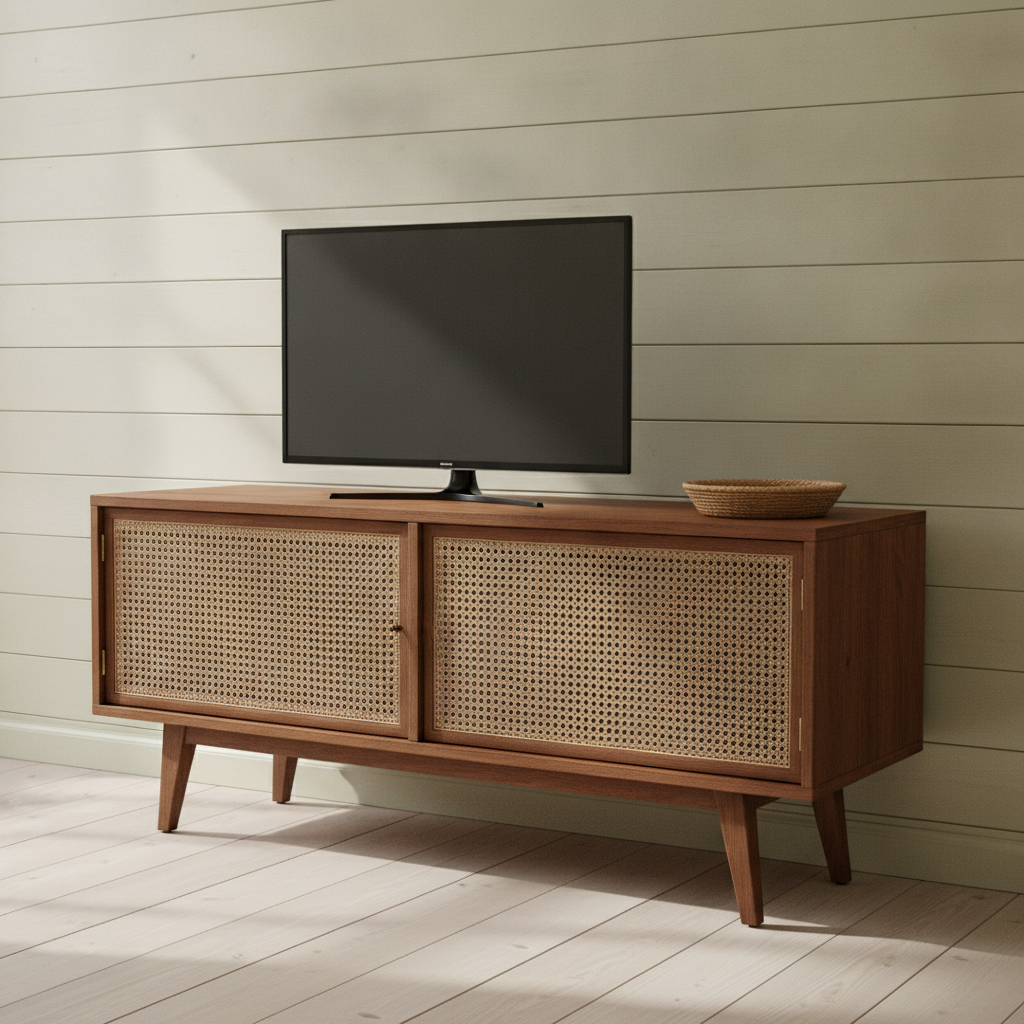
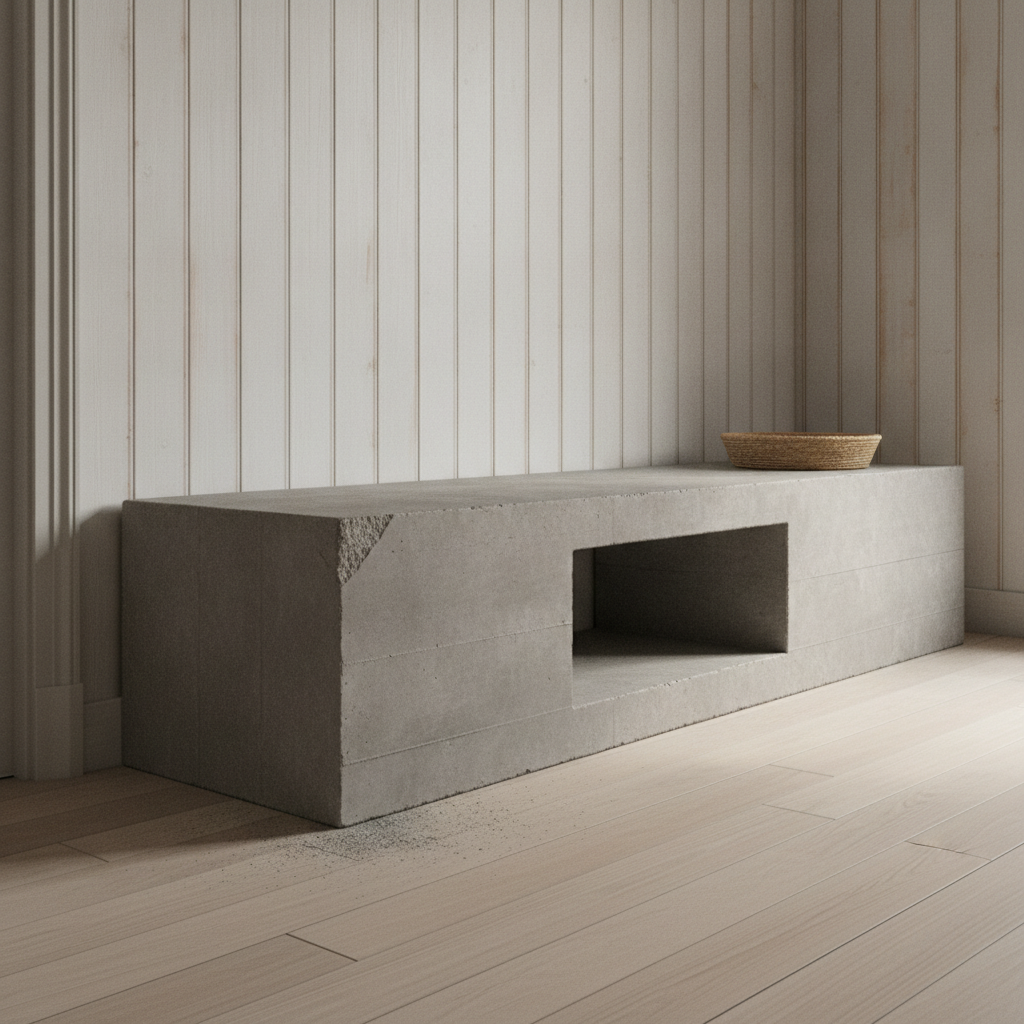
See the media unit against your own wall before you buy timber, steel or stone. This AI TV stand design generator turns a description into a finished unit photographed in place in about thirty seconds: an aged oak long-drawer console, a wall-mounted walnut unit on visible brackets, an olive painted two-door cabinet, a blackened steel and oak open frame, a cane-fronted teak sideboard, and a poured concrete plinth. All six results are below exactly as they came back, with what the prompt asked for and what actually arrived.
Design a TV Stand FreeTry the AI TV Stand Design Generator — Free
Pick a build, then use the box for what is specific to you — oak, walnut, painted softwood, steel, cane or concrete, how long the unit runs along the wall, how low the top has to sit for the screen to be level with your sofa, whether the front is closed, open or half of each, and above all the wall and floor you already have. Each preset already carries the full-width wording that beats the vertical split, the seated-height camera, the clad wall named twice and the no-lettering list.
AI TV Stand Design Generator
Choose a build, name your material, your base and your front, and get a photorealistic media unit standing in a real room. Up to 4K.
Six Units From the AI TV Stand Design Generator, Shown Exactly As They Came Back
Nothing here was retouched. The captions say what the prompt asked for, what arrived, and which wording fixed what — including the details that drifted, the attempts that failed, and the one defect no wording could clear.
What the AI TV Stand Design Generator Gets Right and Wrong
A media unit is a low box three or four times wider than it is tall, carrying the one object on earth that cannot be drawn without a brand on it. Nearly everything interesting in this run came from those two facts.
Width invites a division you did not ask for
This is the finding that separates a TV stand from every other piece of furniture on this site. A nightstand is taller than it is wide and its levels stack obediently; a media unit is three or four times wider than it is tall, and on two of six frames the model split the front vertically anyway — the oak console put a drawer on one half and open shelves on the other, and the steel frame delivered its single lower shelf in two pieces at two different heights. Banning the division in words did not work. Describing the part positively did: one unbroken panel running the entire width of the unit, as wide as the unit itself.
A television always comes back branded
Every frame here that contains a television contains an invented maker's wordmark, a few millimetres wide, dead centre on the bottom bezel. It survived three rounds of escalating instructions: a blanket no-lettering ban, an itemised refusal of logo, wordmark, badge, emblem, symbol and sticker by name, and finally a request for an edge-to-edge screen with no bezel at all for the mark to sit on. The bezel came back regardless, with the mark on it. A television is an object defined by its branding, and this model cannot draw one without one. The only reliable fix is the one used in three of the six frames above: leave the television out.
A stated dimension rescues a drawerless build
Drawer fronts anchor the scale of a piece, and the two builds here with no drawers — the steel frame and the concrete plinth — are exactly the two that should have drifted in proportion. Both came back right, because both carried a real measurement and a ratio: about knee height, roughly fifty centimetres to the top, about three times as wide as it is tall. Give the model a number and a comparison and it holds the silhouette. Leave the proportions implied and a low wide unit tends to arrive as something else entirely.
Handleless doors work if the hinge is the subject
A door described by what it lacks grows a knob. The cane sideboard proved it on the first attempt, sprouting a small pull at the meeting stile. The fix is to make the mechanism the subject of the sentence — each door swings on two small brass hinges at its outer edge, both leaves visible — and then refuse knob, pull, handle, catch, latch, ring, tab and finger plate individually rather than asking for a clean front. Both door builds in the final gallery came back with bare fronts and visible hinges.
Matching parts still need checking against each other
The two wall brackets on the walnut unit each got a complete sentence of their own, naming the same size, the same bolts and the same position, and they still arrived as two different objects: a large T-shaped plate on the left and a small stub on the right. Separate sentences improve the odds but do not settle it. On anything structural — brackets, legs, feet — compare the left-hand part with the right-hand part at full size before you take the drawing seriously. The cane sideboard shows the same pattern in a milder form, with the right-hand legs sitting inboard of the corner they were told to occupy.
Banned props return unless the wall is claimed
A wall socket arrived on the steel frame attempt despite sockets being in the ban list, which is the recurring lesson about media furniture: the scene wants the kit that belongs to it. Saying what is absent is weak. Saying what the surface is instead — the wall is completely bare from the floorboards up, no socket, no switch, no faceplate, no cover plate, no trunking — cleared it on the retry, and the same substitution trick puts a seagrass basket on the top where a soundbar and a row of boxes would otherwise appear.
How It Works
Pick the build
Six presets for the TV stand design generator: an aged oak console with one full-width drawer over an open shelf, a wall-hung walnut unit carrying one drawer on blackened steel brackets, an olive painted cabinet with two hinged doors on a recessed plinth, a blackened steel frame holding two thick oak levels, a teak sideboard with two woven cane doors on splayed legs, and a poured concrete plinth with one long niche cut into it. Each one already carries the joinery, camera and lighting wording that made the pictures in the gallery above.
Add your room
Put the specifics in the box: your material, your length along the wall, how low the top has to sit, whether the front is closed, open or half of each, and above all the wall and floor behind it. Boarding, shiplap, painted brick, panelling. The wall matters more than anything else you can type, because indoors a clad surface with readable joints and real tone variation is what keeps the result looking like a photograph rather than a render, and plain pale plaster is what pushes it the other way.
Check it, then download
About thirty seconds later you have a media unit photographed in a room. Before you judge the look, check three things: did the front stay undivided where you asked for one full-width part, do the legs or brackets at both ends match each other rather than coming back as two different objects, and is there a television in the frame carrying an invented badge. Then download at up to 4K.
Writing a Prompt That Produces a Buildable TV Stand Design
Four habits that separate a design worth showing a joiner from one you regenerate, all learned from the six results in the gallery above.
Describe the part, not the absence of a part
On a wide unit the front wants to split, and no amount of forbidding it helps — no vertical division, no partition, no second compartment was in the prompt and the front split anyway. Turn the sentence around and name the object with its extent: one single drawer whose front is one unbroken panel running the entire width of the unit, as wide as the unit itself; one empty shelf running the entire width underneath it. A part with a stated span is a thing the model can draw. An absence is not.
Give a drawerless build a real measurement
Repeated parts set the scale of a piece, and a unit with no drawer fronts has none, so it drifts toward whatever that material usually makes. Both builds here without drawers held their shape because both carried a number and a ratio: about knee height, roughly fifty centimetres from the floorboards to the top, about three times as wide as it is tall. On a low wide piece the ratio is doing more work than the dimension, so give both and name the ratio in the same sentence as the height.
Make the hinge the subject of the door
A door described as handleless grows a handle, because the sentence is about the thing that is not there. Write the mechanism instead — the left door swings on two small brass hinges at its outer left edge, both leaves plainly visible — and then refuse the hardware by name, item by item: knob, pull, handle, catch, latch, ring, tab, finger plate. Both door builds in the final gallery came back with bare fronts, after the first attempt sprouted a pull at the meeting stile.
Claim the wall and replace the kit
A media unit drags its whole ecosystem into the frame — soundbar, console, set-top box, disc cases, remote, trailing lead, socket — and every one of them carries lettering this model invents badly. Refuse them individually rather than in a blanket clause, state what the wall is instead of what is missing from it, and give the top something harmless to hold: one shallow seagrass basket at one end, with a clear stretch of bare top beside it. A substitution holds where a prohibition leaks.
Who Uses an AI TV Stand Design Generator
People buying a unit they cannot return easily
A media unit is long, heavy and awkward, and the retailer photograph that sold it was shot square on against a white sweep with nothing beside it to measure by. Generating the same silhouette in your own material, against your own wall, settles the length and the height before a two-person delivery turns up.
Weekend furniture builders
A long low carcass with one drawer and four legs is an achievable second build, and the whole design is length, height, front detail and base type. None of those read off a cutting list. Seeing the proportions against a real wall settles all four before anything is cut.
Anyone fitting a screen into a small living room
The real question is how low the top has to sit for the screen to be level with a seated eye, and how much of the wall the unit can take before the room reads as a showroom. Generating the same build as a closed cabinet, as an open frame and as a wall-hung unit answers it faster than a tape measure.
Renters who cannot drill
Half the units here stand on the floor and half hang on the wall, and the difference matters when drilling is not an option. The freestanding presets show what the floor space actually costs, and the wall-hung preset shows the brackets, which is the part worth sending to a landlord before anything is fixed.
Interior designers and stylists
A mood board of cut-out product shots says nothing about scale, and a media unit is almost entirely scale. A photograph of the proposed piece in a room with a real clad wall, a real floor and a named light direction is worth more in a client presentation than any amount of elevation drawing.
Small-batch furniture makers
Six builds generated in an afternoon is a product range to shoot a lookbook around, and it costs nothing to find out which silhouette people respond to before any of them exist. Settling the leg taper, the shelf height and the door material on screen is cheaper than getting it wrong in teak.
AI TV Stand Design Generator FAQ
Related Design Tools
AI Living Room Design Generator
The room the media unit stands in. Layout, seating distance, wall finishes and the light direction that decides whether any of it reads as a photograph.
AI Coffee Table Design Generator
The piece that sits opposite this one, with the same low camera problem and the same argument about how much floor a long low object is allowed to take.
AI Nightstand Design Generator
The same joinery at a quarter of the width, where stacked drawer counts hold cleanly — the useful contrast to everything that goes wrong on a wide front.
See the TV Stand On Your Own Wall Before You Buy Timber
Six builds — an aged oak long-drawer console, a wall-mounted walnut unit on steel brackets, an olive painted two-door cabinet, a steel and oak open frame, a cane and teak sideboard and a poured concrete plinth — each photographed in your own room, against your own wall, in your own light, in about thirty seconds. Up to 4K. Free to start, from $2.99.
Design a TV Stand FreeAn AI TV Stand Design Generator for Long Walls, Low Sofas and Anyone Arguing About Open Shelves
A media unit is the longest piece of furniture most living rooms contain, and the only question anybody actually has about one is proportion against a specific wall. That is precisely the thing no retailer will show you. A product photograph is shot square on against a white sweep, floating, with nothing beside it to measure by, which removes the entire content of the decision. A listing gives three dimensions in centimetres and tells you nothing about whether the top will land level with a seated eye, whether a hundred and sixty centimetres of oak will swallow the wall it stands against, or whether a dark carcass will vanish into a dark corner. Those are the only questions worth asking, and that is the gap an AI TV stand design generator fills. Describe the build, the material, the base, the wall behind it and where the light comes from, and about thirty seconds later you have a photograph of the unit standing there on your own floor. Every preset on this page is written that way, and the six results above are published exactly as they came back, failures and retries included.
The six builds cover the shortlist a real living room has. An aged oak console with one full-width drawer above one full-width open shelf, which is the media unit most people picture when they say they want a proper one. A wall-hung walnut unit carrying a single drawer on visible blackened steel brackets, for a small room that needs its floor back and a sightline under the furniture. An olive painted two-door cabinet on a recessed plinth, the cheapest and most forgiving build here and the one worth copying if this is an early carcass. A blackened steel frame holding two thick oak levels, open front and back, for anyone who wants the kit visible and the wall showing through. A teak sideboard with two woven cane doors on splayed legs, which hides the clutter while still letting a remote signal through. And a poured concrete plinth with one long niche cut into it, for weight and texture with no joinery at all.
The pattern in what came back teaches more than a feature list, and on a TV stand the pattern is about width. Every other piece of furniture on this site is taller than it is wide, and their levels stack obediently; a media unit is three or four times wider than it is tall, and the model fills that width by dividing the front vertically whether or not anyone asked. It happened twice in six frames — a drawer on one half with shelves on the other, and a single long shelf delivered in two pieces at two heights — and forbidding the division in words did nothing, twice. What fixed it was describing the part positively with a stated extent: one unbroken panel of oak running the entire width of the unit, as wide as the unit itself. The same principle rescues a drawerless build, where there are no repeated parts to set the scale: give an actual measurement and a ratio in the same sentence, and the steel frame and the concrete plinth both hold their silhouette where they would otherwise drift into something else entirely.
The last lesson is the one worth knowing before you start, because no wording clears it. Every television this model draws arrives with an invented maker's wordmark on the bottom bezel, a few millimetres wide and dead centre, and it survived a blanket ban on lettering, an itemised refusal of logo, wordmark, badge, emblem and symbol by name, and finally a request for a bezel-free edge-to-edge screen with nowhere for a mark to sit. A television is an object defined by its branding and it cannot be drawn without one. So if the image is going anywhere public, use one of the three presets that keep the screen out of the frame entirely — they came back completely clean — and judge the screen size against the width of the top instead. Inside that limit this is a genuinely good way to spend twenty minutes before spending on oak, steel and a free weekend: the proportion gets settled, the household agrees on something it can point at, and the joiner gets a photograph instead of an argument.