
AI Bar Stool Design Generator
A bar stool is bought on two things a product listing hides completely: its silhouette against a real wall and how tall it actually looks next to a worktop. This AI bar stool design generator turns a description into a finished stool photographed in a real room in about thirty seconds — welded steel, turned oak with a spindle back, a tan leather sling, woven cane with a ring back, pegged reclaimed timber and poured concrete on steel runners. All six results are below exactly as they came back, including the one that had to be run twice and why.
Design a Bar Stool FreeTry the AI Bar Stool Design Generator — Free
Pick a build, then use the box for what is specific to you — steel, oak, leather, cane or concrete, seat height and seat width, whether it has a back, what the footrest does, and above all the wall and floor it stands on. Each preset already carries the camera at seat level, the stated heights and ratios, the damaged wall that keeps the result photographic and the itemised ban on maker labels that produced the pictures below.
AI Bar Stool Design Generator
Choose a build, name your material, your seat height and your wall, and get a photorealistic bar stool standing in a real room. Up to 4K.
Six Stools From the AI Bar Stool Design Generator, Shown Exactly As They Came Back
Nothing here was retouched. The captions say what the prompt asked for, what arrived, and which wording fixed what — including the counts that held, the one that did not, the famous chair that turned up uninvited and the shape that closed itself.
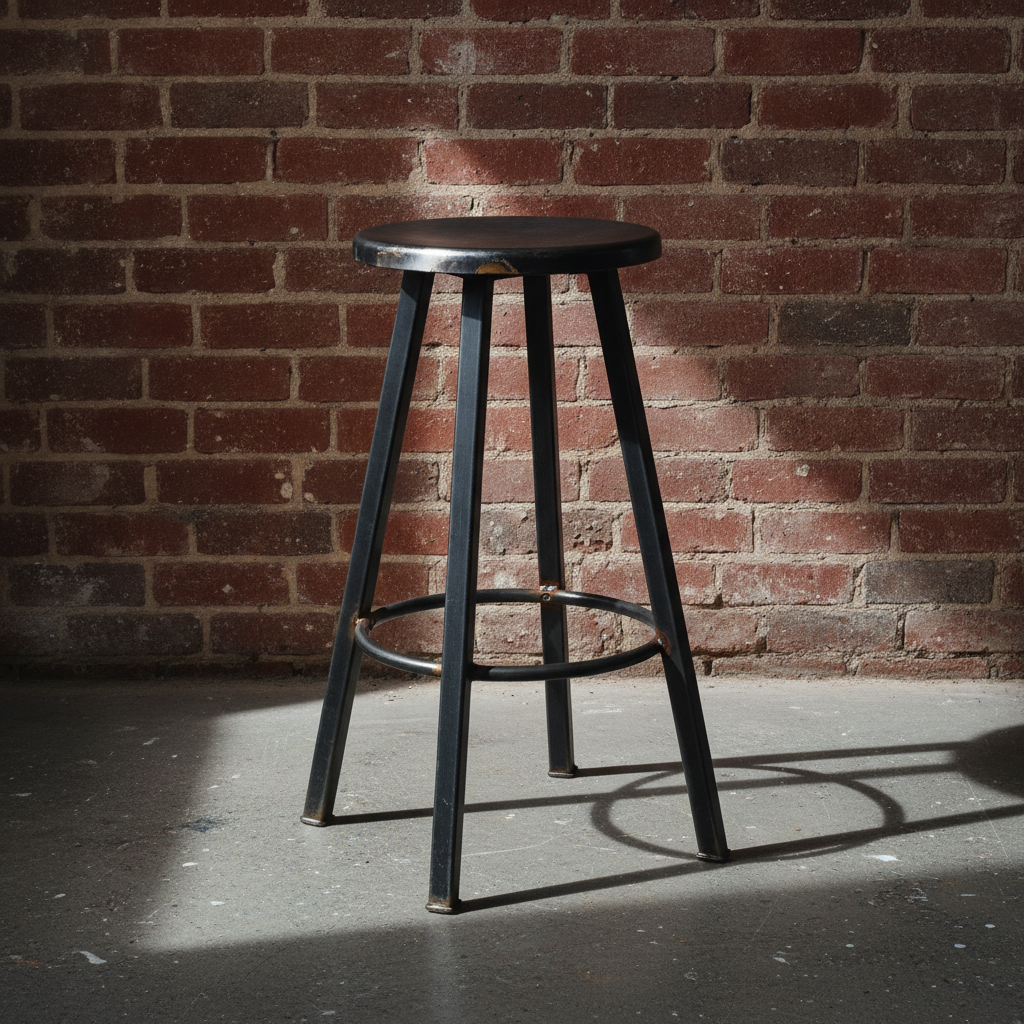
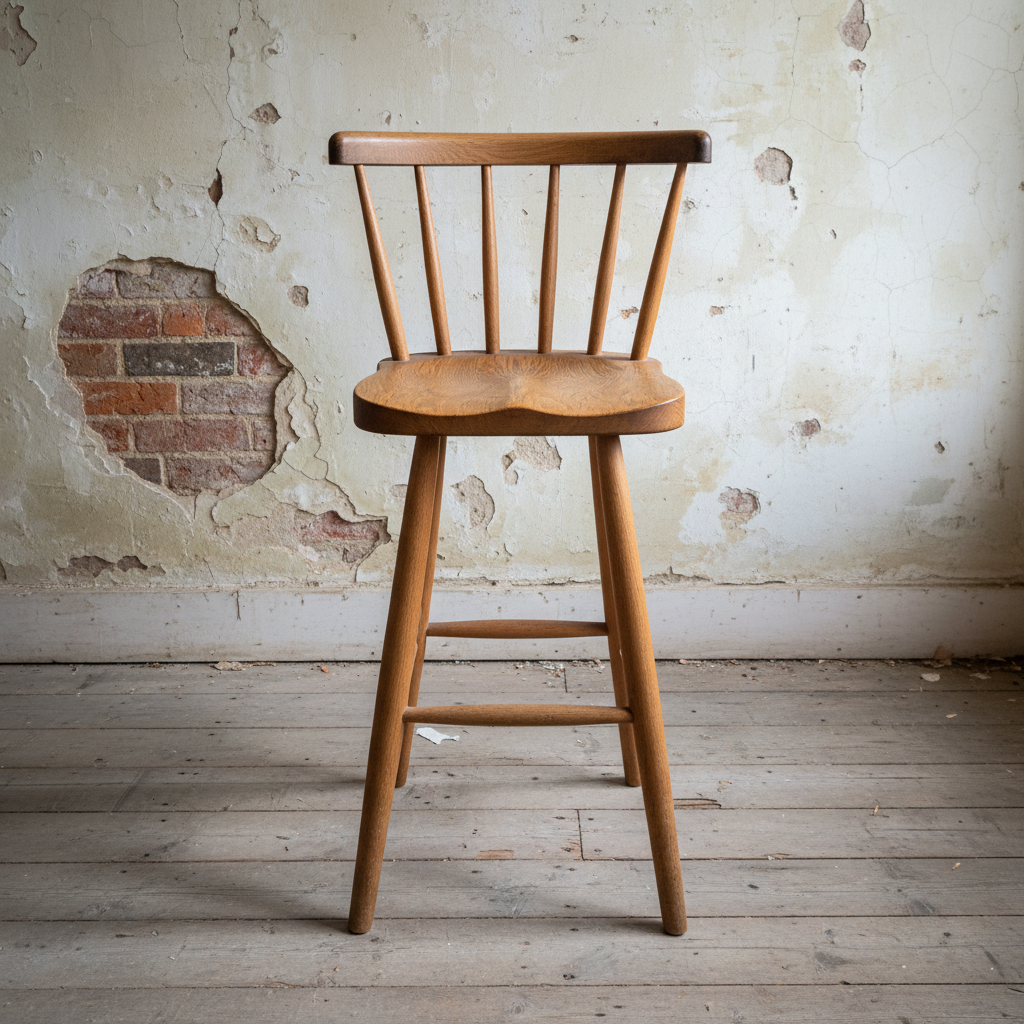
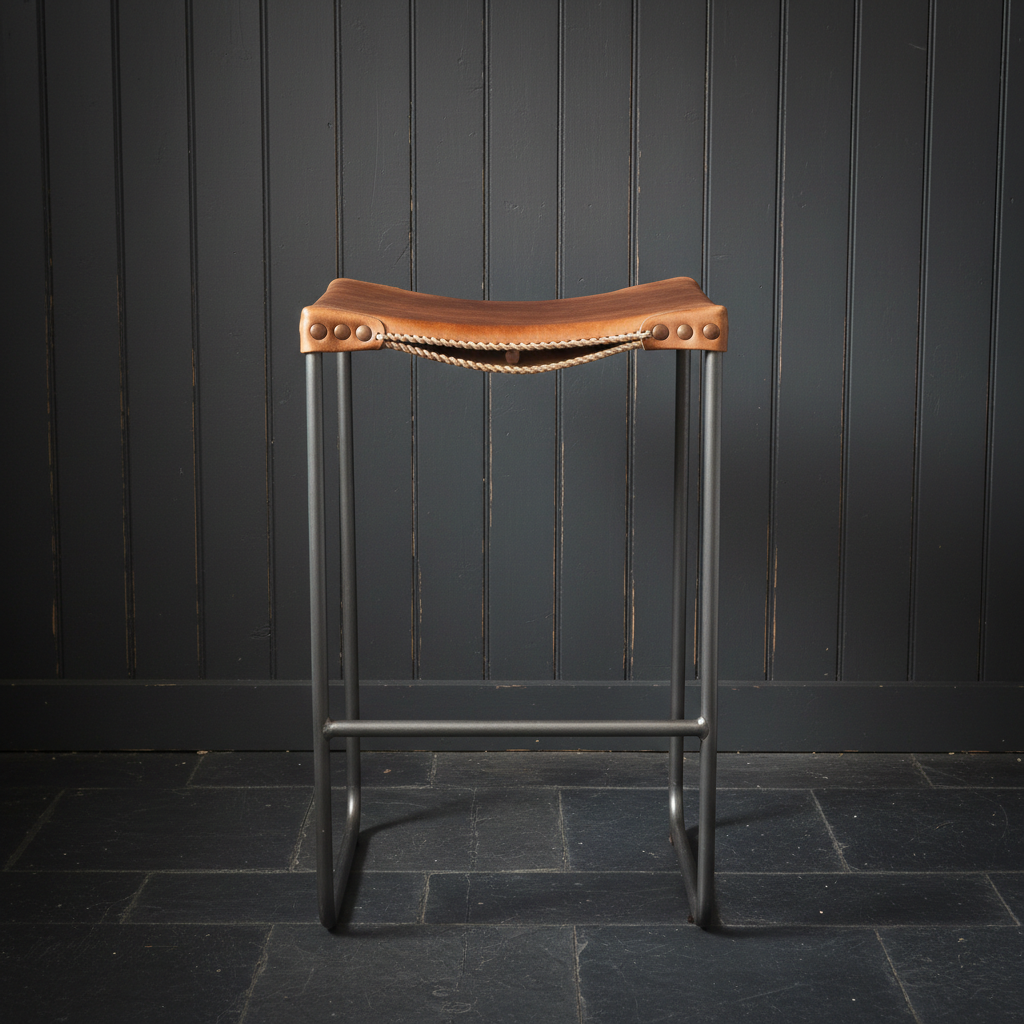
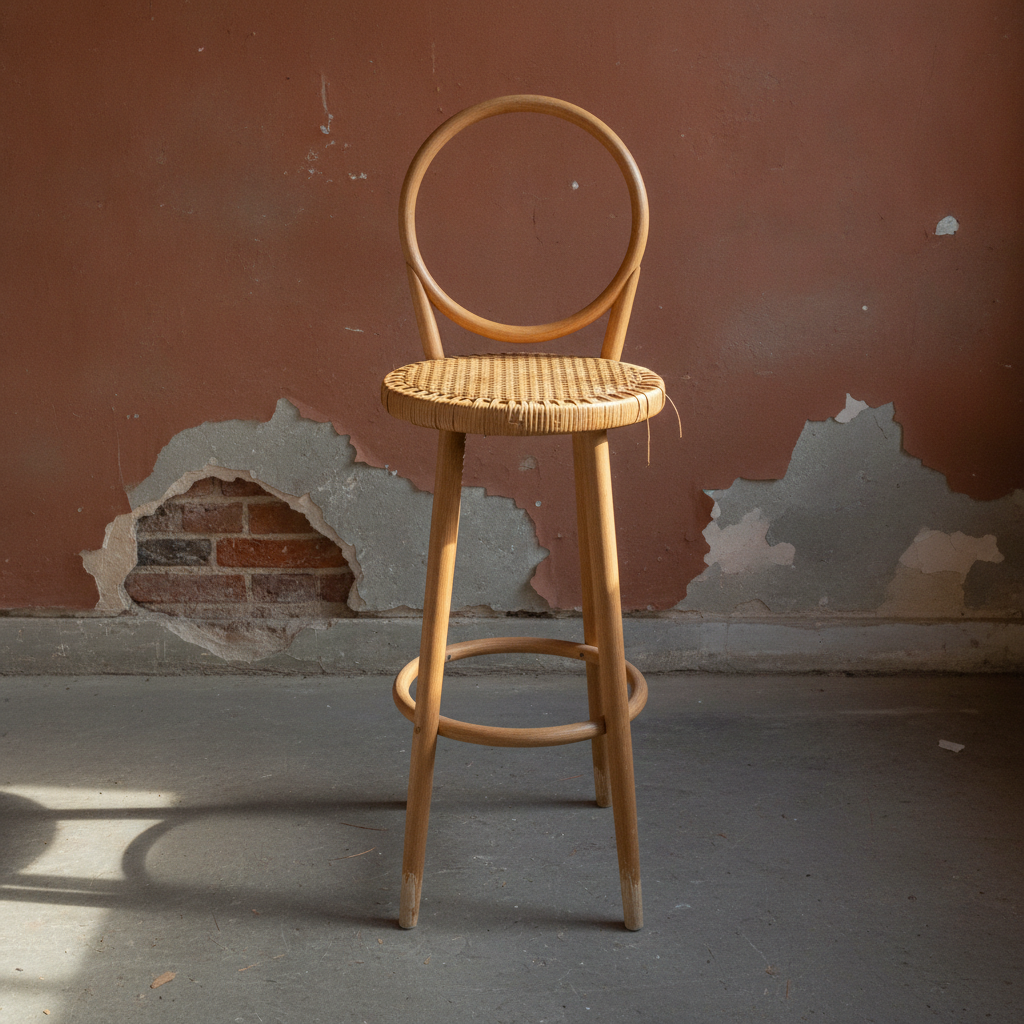
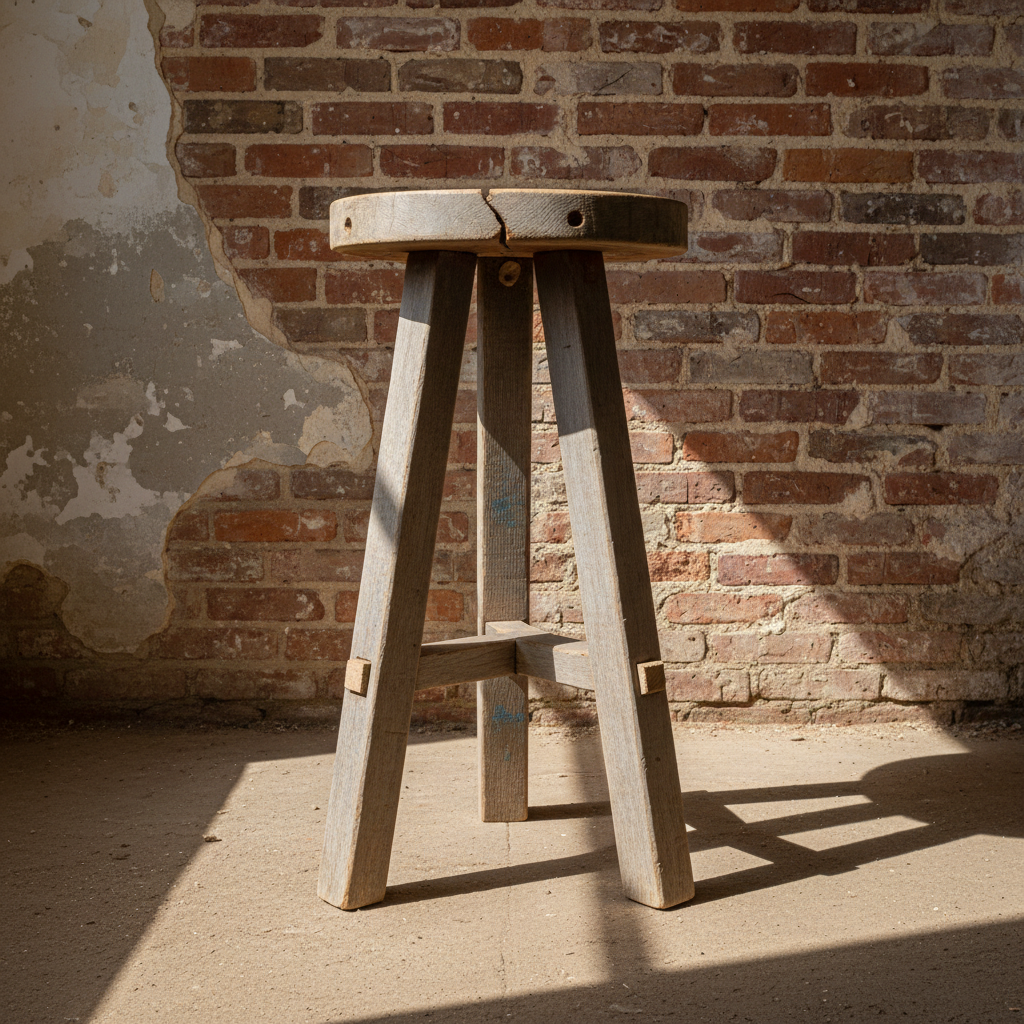
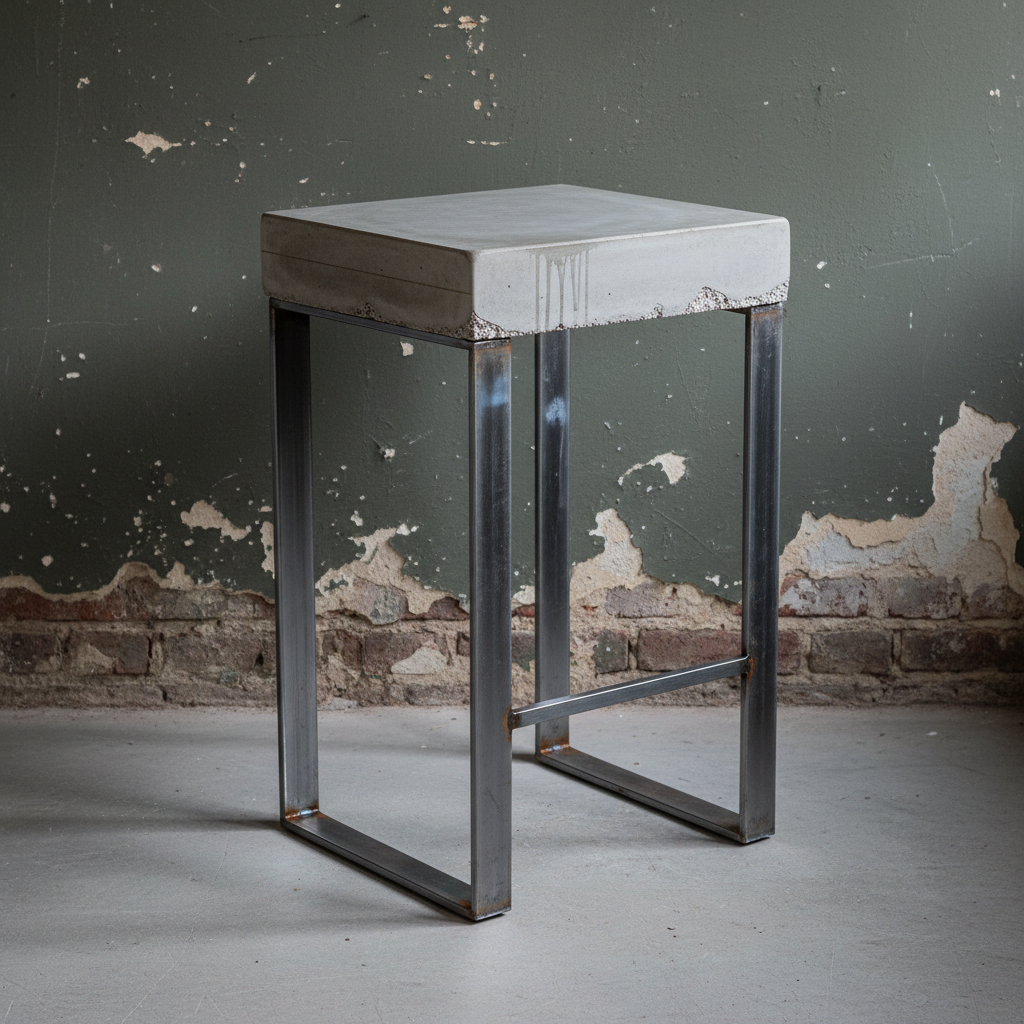
What the AI Bar Stool Design Generator Gets Right and Wrong
A stool is a small object made almost entirely of repeated parts and visible joints, standing in open air. Nearly everything worth knowing from this run came out of those three facts.
Legs that converge get counted
Four steel legs leaning in to one welded point came back as four. Three oak legs crossing at one point came back as three. This is the same result the bird feeder page got from three poles crossing, and it is now the most reliable counting form this project has found. The reason seems to be that a convergence gives every part the same destination, so none of them can quietly go missing behind the others. If the number of legs matters to your design, build it around a point they all meet at rather than around four verticals standing independently.
A row is better than a ring, but it is not exact
Five spindles were asked for, in one single row, left to right, evenly spaced, with open air between every pair — the wording that has produced correct counts before. Six arrived. Set against six radial chandelier arms arriving as eight, a row is clearly the safer arrangement, but off by one is still off. Treat a stated count on a row as a strong steer rather than a specification, and count on a zoomed crop before the picture goes to anyone who will care.
One row of rivets becomes two
Three copper rivets were specified once, across the front edge of a leather seat. Three arrived on the left corner and three on the right. Nothing in the prompt asked for the second group. Fixings appear to be placed by structural plausibility rather than by instruction, so a detail named at one spot propagates to every matching spot — which is the exact mirror of the failure where two identical plates specified at two spots merged into one long plate. Name a fixing once and you may get it twice; name it twice and you may get it once.
An open shape closes itself
Two steel runners were each described as a tall narrow U standing on two feet. Both came back as closed rectangular loops. This is the fourth form of the same failure on this site, after an open clearance arc became a circle and a bent strap became a carrying handle. A shape with two free ends is unstable in this model and wants to be completed. If an opening is the point of the design, describe the two ends and the gap between them as objects in their own right rather than naming the letter the shape resembles.
The famous chair arrives uninvited
The first cane attempt asked for a closed timber ring on a steam-bent beech frame over a woven cane seat, and returned the bentwood cafe chair back that everyone has sat on — two uprights curving over into an open loop. No designer, no brand and no chair was named anywhere in the prompt. The material and the construction together were enough, the same way kaiju pulls this model to one specific monster. Changing the species to turned ash and refusing the loop by name fixed it. Naming a material combination is naming a design, whether or not you meant to.
A smooth finish eats the toolmarks
An oak seat was asked for with the curved marks of the adze still in the hollows, and came back sanded perfectly smooth. This is the third time the evidence of how a thing was made has gone missing — after a laser burn line that arrived clean and a routed finger pull that vanished under paint. The model photographs surfaces, not processes. If a toolmark is the selling point of your design, make it big enough to read as a silhouette, light it hard from the side, and expect to ask twice.
How It Works
Pick the build
Six presets: matt black welded steel with four legs meeting at a point and a footrest ring, turned oak with a saddle seat and a spindle back, a tan bridle leather sling on bent steel rod, woven cane with a closed ring back on turned ash legs, an elm slab on three oak legs pegged right through, and a poured concrete pad on two steel sled runners. Each one already carries the camera height, the lighting and the anti-clutter wording that produced the pictures in the gallery above.
Add your kitchen
Put the specifics in the box: your material and finish, the seat height you need — sixty-five for a counter, seventy-five for a bar — how wide the seat is, whether it has a back and what the frame does between the floor and the seat. Then describe the wall and the floor, because a stool stands in open air and those two surfaces are carrying most of the realism. Something damaged with a material showing through keeps it photographic; flat intact plaster turns it into a render.
Check it, then download
About thirty seconds later you have a stool standing in a room. Before you judge the look, check four things on a zoomed crop: did the legs come back at the number you asked for, which they will if they converge on a point; did a fixing you named once get repeated at the matching spot on the other side; did an opening you asked for stay open; and did the seat hold the height you stated rather than drifting toward a generic silhouette. Then download at up to 4K.
Writing a Prompt That Produces a Believable Bar Stool Design
Four habits that separate a stool worth showing a client from one you regenerate, all learned from the seven generations behind the six results above.
Spend your best sentence on the wall
A stool has air on every side of it, so the wall behind and the floor under it carry the realism. Every frame on this page stands against something that has been through something: mortar crumbled out of the joints, lime plaster fallen away to brick, terracotta paint blistered off in sharp curling patches, charcoal boarding worn through to bare timber. Damage with a material exposed under it beats any intact finish, and it beats texture too — a moulding is a shape the model draws perfectly, a broken edge is not.
Make the legs meet at a point
Four legs converging on one welded plate came back as four. Three legs crossing under a slab came back as three. Five spindles standing in a row came back as six. A convergence gives every part the same destination and the model keeps track of them; independent verticals and radial arrangements drift. If the leg count is part of the design rather than an afterthought, say where they all meet and the number will usually follow.
Drive the peg right through
Furniture renders usually float, with legs meeting seats at no visible joint at all. The one fixing that has never failed on this site is a peg driven right through a part with both sawn ends standing proud — you can see it go in one side and come out the other, so there is nothing to hide and nothing to guess. The elm slab in the gallery is the cleanest joinery on the page for exactly that reason. Name the peg, the part it passes through and the fact that both ends show.
Refuse the label surface by surface
Every real bar stool has a label stapled under its seat, and an unguarded prompt will invent one complete with garbled lettering. Seven generations here came back with none, and the wording that did it names the carriers one at a time: nothing under the seat, nothing on the seat edge, nothing on any leg, stretcher, foot or footrest, nothing on any screw or rivet head. A blanket no-text instruction does not survive a subject like this; an itemised one does.
Who Uses an AI Bar Stool Design Generator
Anyone fitting an island or a breakfast bar
Stools are bought in pairs or threes and almost always from a cut-out photograph that hides the only two things that matter: how tall they look against your worktop and whether the silhouette reads light or heavy in a small kitchen. Generating the same stool at sixty-five and at seventy-five centimetres against your own wall settles both before anything is ordered.
Furniture makers and welders
Six builds in an afternoon is a product range to photograph a lookbook around before a single one exists, and finding out which silhouette people respond to costs nothing. Settling the frame, the seat height and the footrest on screen is cheaper than finding out in steel — just do not take the joinery as advice.
Interior designers presenting a scheme
A cut-out product shot on a mood board says nothing about how a stool sits in a room. A photograph of the proposed stool standing on a real floor, against a real wall, with a real shadow behind it is worth more in a client meeting than a page of catalogue crops, and it takes about thirty seconds to make.
Cafe and bar owners
Seating is the single biggest visual decision in a small room and the hardest to undo once twelve of them are bolted down. Comparing welded steel, a leather sling and woven cane against the same wall, in the same light, at the same height, is a few minutes of work and no money at all.
Renovators working from a half-stripped room
Old kitchens have crumbling brick, blistered paint and floors that have seen things. Describing the room you actually have produces a far more useful picture than any showroom shot, because it shows the stool in the space as it is rather than as it will be in two years — and this model happens to be at its most convincing against exactly those surfaces.
Design students and portfolio builders
Furniture coursework lives or dies on presentation, and a grey rendered model reads as a grey rendered model. Describing the same stool as a photographed object — real steel, raking light, a wall with damage in it, a visible joint — gives a project board something that looks like it already exists.
AI Bar Stool Design Generator FAQ
Related Design Tools
AI Chair Design Generator
The same object with its legs cut down and a proper back on it, and the page where a straight row of seven spindles came back as exactly seven — worth reading next to the six-from-five result here.
AI Kitchen Island Design Generator
The thing most bar stools are bought to go under. Worktop material, the overhang the stools tuck into and the clearance that decides whether counter height or bar height is the right call.
AI Home Bar Design Generator
The counter, the front and the shelves behind it, built into a real room at domestic size — the other half of the decision once you know which stool silhouette you are putting in front of it.
See the Stool Against Your Own Wall Before You Buy Three of Them
Six builds — welded steel, turned oak with a spindle back, a tan leather sling, woven cane with a ring back, pegged reclaimed timber and poured concrete on steel runners — each photographed at your seat height, on your floor, against your wall, in about thirty seconds. Up to 4K. Free to start, from $2.99.
Design a Bar Stool FreeAn AI Bar Stool Design Generator for Seat Heights, Silhouettes and Joints You Can Actually See
A bar stool is one of the hardest small pieces of furniture to judge from a picture, because nearly every picture of one is a cut-out on a white background. The listing gives a seat height in centimetres and a seat width in centimetres and leaves you to imagine the only two things that matter: whether the silhouette reads light or heavy in your room, and whether the stool will look right or ridiculous next to your worktop. That is the gap an AI bar stool design generator fills. Describe the build, the material, the seat height, what the frame does between the floor and the seat and what the wall behind it is made of, and about thirty seconds later you have a photograph of the stool standing there. Every preset on this page is written that way, and the six results above are published exactly as they came back, retries and drifts included.
The six builds cover the shortlist most people are actually choosing between. Matt black welded steel with four legs meeting at a single point and an unbroken footrest ring, the industrial default. Turned oak with a hand-hollowed saddle seat and a spindle back, for anyone who wants a back to lean on. A tan bridle leather sling on bent steel rod, which is the build that photographs best and ages best. Woven cane with a closed ring back on turned ash legs, at counter height rather than bar height. An elm slab on three oak legs, each one pegged right through with both sawn ends standing proud. And a poured concrete pad on two raw steel sled runners, for a kitchen that has already committed to concrete.
What came back teaches more than a feature list. On a stool the first lesson is about counting, and this run sharpened a rule this series has been building for months: a stated number holds when the parts converge on a point. Four steel legs leaning in to one welded plate arrived as four, three oak legs crossing under a slab arrived as three, and five spindles standing in a straight row arrived as six. A row beats a ring — six radial chandelier arms came back as eight on a sister page — but only a convergence is exact. The second lesson is about fixings: three rivets specified once across the front edge of a leather seat arrived three on the left and three on the right, because a detail named at one structurally plausible spot propagates to every matching spot.
Two more findings are worth carrying to any furniture prompt. Shapes complete themselves: two steel runners each described as an open U both came back as closed rectangular loops, the same failure as an open clearance arc closing into a circle, so if an opening is the point of a design you have to describe its two free ends as objects rather than naming the letter it resembles. And naming a material combination is naming a design — a closed timber ring asked for on a steam-bent beech frame over a cane seat returned the bentwood cafe chair back everyone has sat on, with no designer and no brand mentioned anywhere in the prompt. Against all that, the text ban held perfectly: seven generations with no maker label under a seat, no stamped plate on a leg and no price tag anywhere, because the prompt refuses each surface by name. Inside those limits this is a genuinely good way to spend twenty minutes before spending on three stools — the height gets settled, the household agrees on something it can point at, and the silhouette gets chosen against the wall it will actually stand in front of.