
AI Chair Design Generator
A chair is almost entirely silhouette, and a silhouette is the one thing a drawing or a product listing will not show you. This AI chair design generator turns a description into a finished chair photographed in a real room in about thirty seconds: an oak spindle back, a painted rush-seat ladder-back, a steel and plywood stacker, a boucle tub armchair, a leather sling on an ash frame, and a chair carved from one solid block. All six results are below exactly as they came back, with what the prompt asked for and what actually arrived.
Design a Chair FreeTry the AI Chair Design Generator — Free
Pick a build, then use the box for what is specific to you — oak, painted softwood, plywood, boucle, leather or a solid block, how many spindles or slats across the back, how high the seat sits, how far the legs splay, and above all the wall and floor you already have. Each preset already carries the counted row of parts, the stated seat and back heights, the clad wall and the low side-on camera that produced the pictures below.
AI Chair Design Generator
Choose a build, name your timber, your seat and your back, and get a photorealistic chair standing in a real room. Up to 4K.
Six Chairs From the AI Chair Design Generator, Shown Exactly As They Came Back
Nothing here was retouched. The captions say what the prompt asked for, what arrived, and which wording fixed what — including the counts that held, the ones that did not, and the details a pale finish ate.
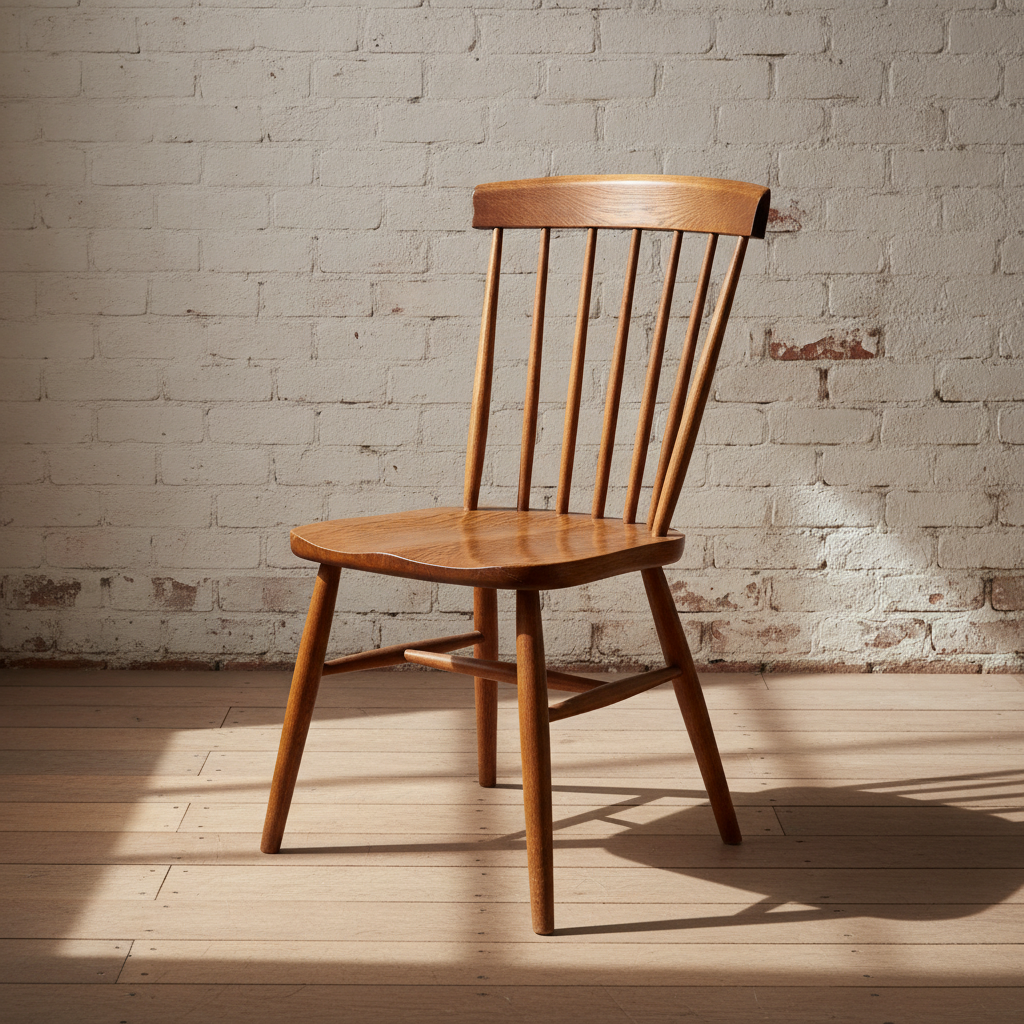
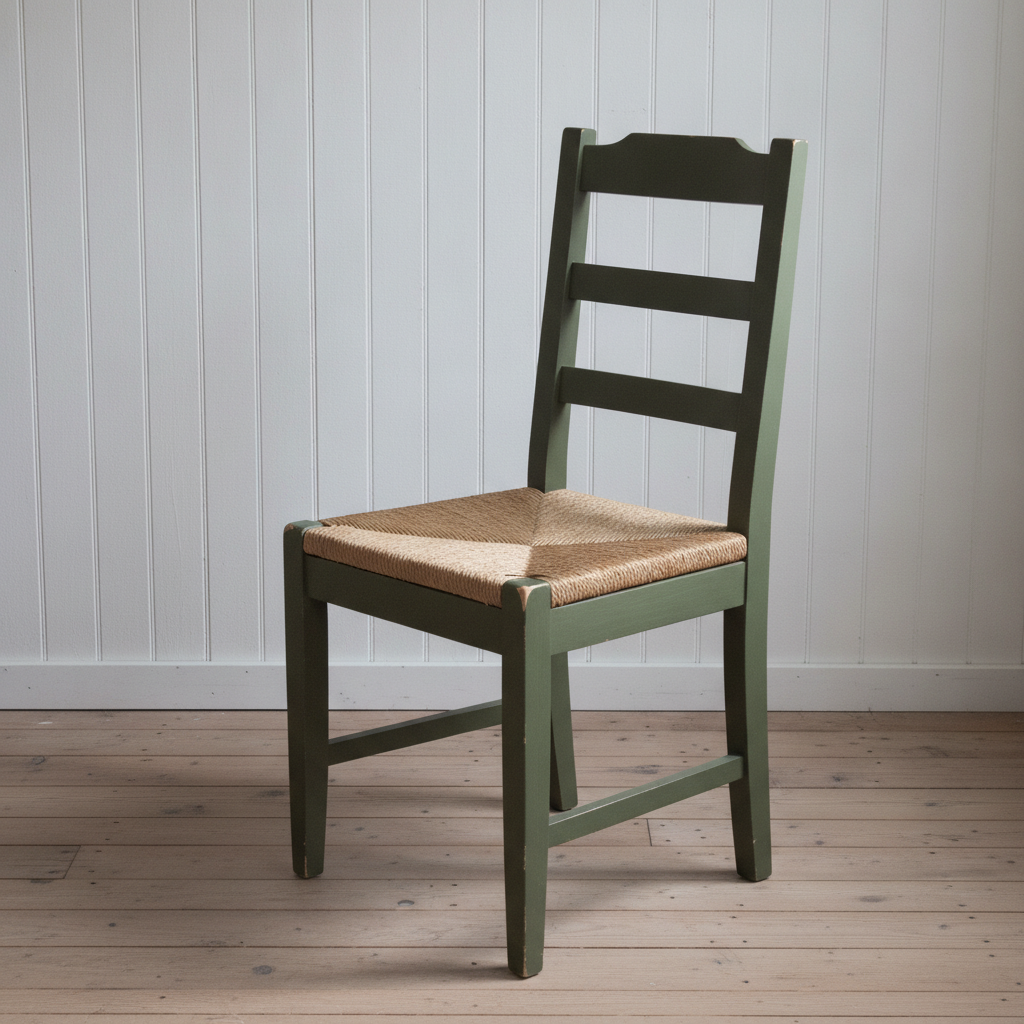
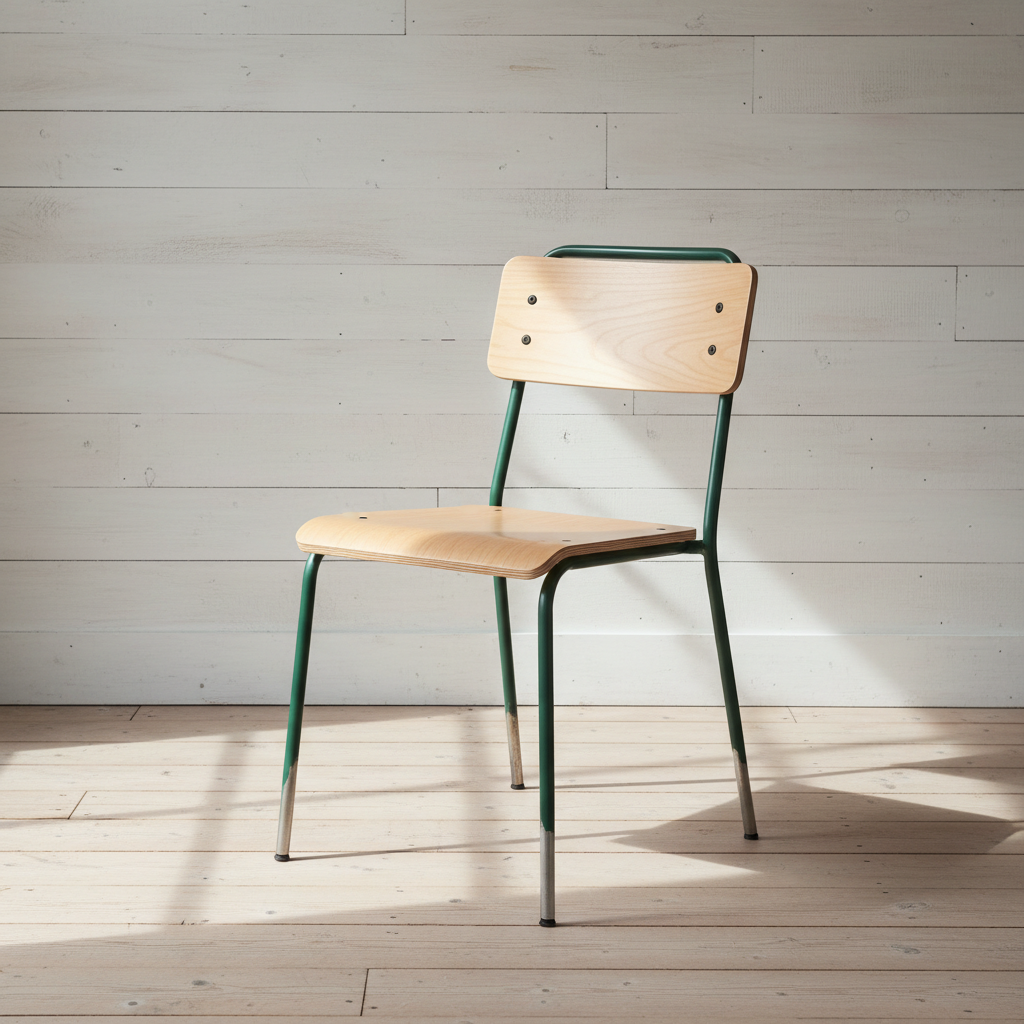
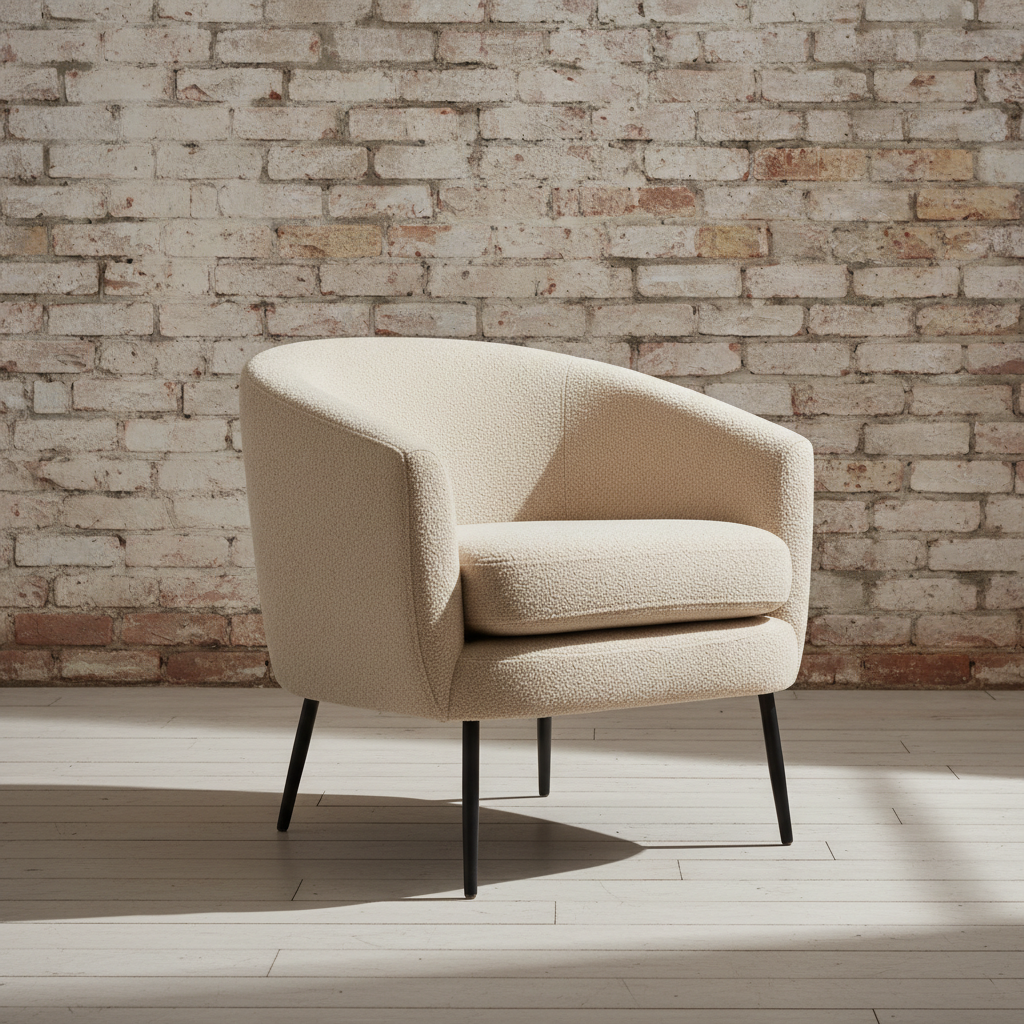
What the AI Chair Design Generator Gets Right and Wrong
A chair is a small object made of a lot of repeated parts, with no branding on it anywhere. Nearly everything interesting in this run came from those two facts.
A number holds on a row, not on a fixing
Seven spindles were asked for and seven spindles arrived, which is the most reliable count this project has had out of any furniture page. Three slats arrived too. But two bolts holding the plywood back came back as four, and the pattern across the batch is consistent: a stated number holds when the parts are one named row that defines the shape of the piece, and drifts when the parts are a secondary fixing nobody looks at. Count the structural row with confidence. Count the screws, rivets, bolts and feet yourself, every time, before anyone builds from the picture.
Chair type beats stated dimensions
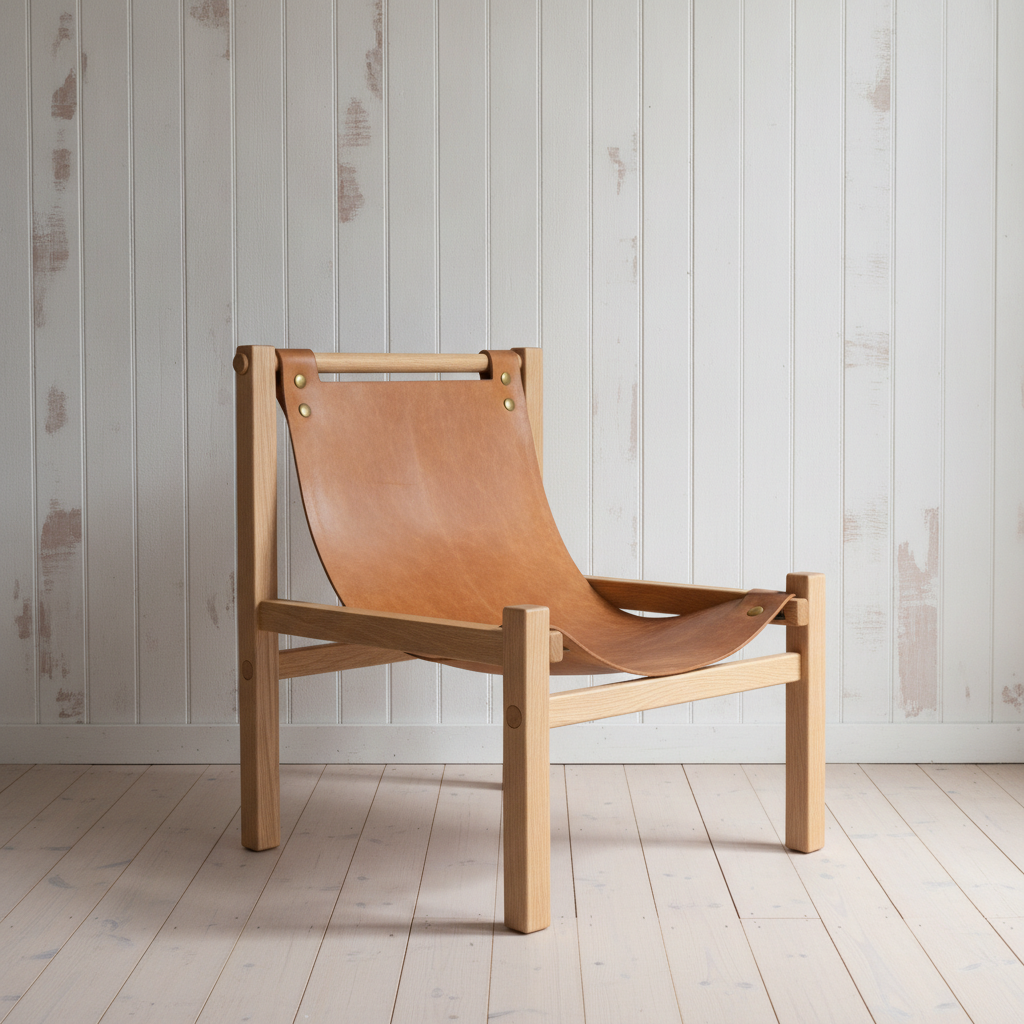
Every preset here carried the same two measurements in centimetres: a seat forty-five above the floor, a back top eighty-five above the floor. The leather sling ignored both and arrived as a low lounge chair, because a hide slung between two dowels on a square frame is a lounge chair and the model knows it. Numbers rescue a piece whose proportions are otherwise undefined, but they do not override what the build itself implies. If you want a dining-height version of a lounge silhouette, say dining chair in the first sentence and let the measurement back it up, rather than the other way round.
The model picks which axis carries a cut
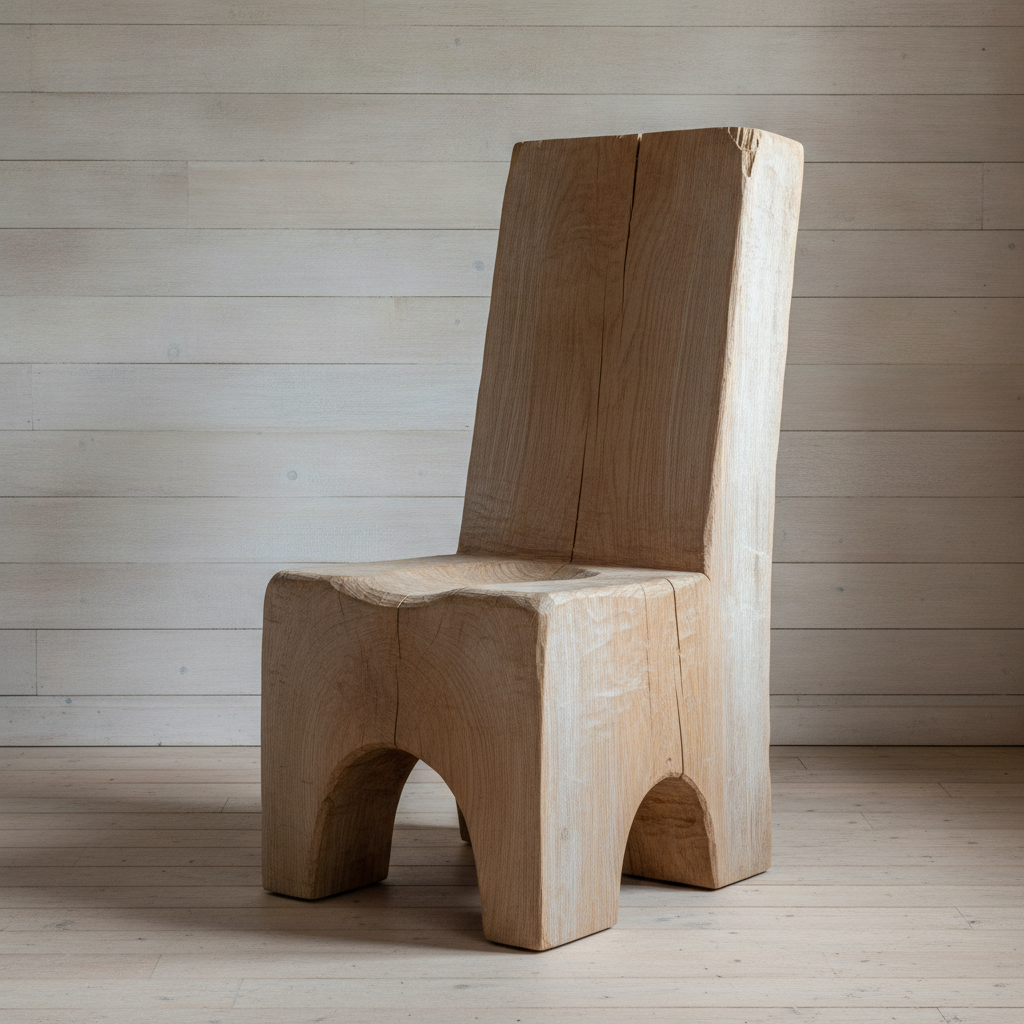
The carved block was told to meet the floor on two solid feet, one under the front and one under the back, each running the entire width, with an arch of open air cut away between them. The feet arrived, the arch arrived, the whole thing reads as one piece — but the cut is on the other axis, so the feet run front to back instead. When the instruction is a relationship between parts rather than a part itself, the model preserves the relationship and chooses freely which way round to apply it. Say which face the arch is cut into and what is visible through it.
A pale finish erases the detail under it
The carved block asked for deep chisel and chainsaw facets in rows across the back, and for the timber to be bleached silver grey on the lit side. It got the bleaching and lost most of the facets. The same thing happened to the boarding behind the ladder-back, where thin patchy whitewash with board-to-board tone variation came back as flat even paint. Any pale or opaque finish is a detail eraser on this model. If a tool mark, a wear mark or a joint has to read on a pale piece, ask for it big enough to be a silhouette rather than a texture.
Wear lands where the model thinks wear belongs
A paint chip was requested on the front edge of the left back upright of the ladder-back. Chips arrived instead on the top corners of the back, which is of course where a real chair gets knocked. The dulled grip mark on the spindle chair top rail landed correctly because that is also where a real hand goes. The rule is that wear instructions are treated as a style, not as a location: ask for honest wear and you will get it, ask for it on a specific square centimetre and you will usually get it somewhere else that makes more physical sense.
The prop ban held completely
Six frames, zero leaks. No cushion, no throw, no book, no plant, no cup, no second chair, no socket, no switch plate, and no lettering anywhere — on a product category where every real photograph is styled to death. Two things did it. Every text and clutter carrier was refused by name rather than in a blanket clause, and the wall was claimed positively: completely bare from the floorboards up, no socket, no faceplate, no trunking. A chair is also an unusually safe subject for this model, because unlike a television or an appliance it carries no branding in real life for the model to invent.
How It Works
Pick the build
Six presets: an oak dining chair with seven turned spindles and a dished solid seat, an olive painted ladder-back with three slats over a woven rush seat, a stacking cafe chair in bent steel rod and flat birch plywood, a boucle tub armchair whose arms and back are one continuous band, a tan leather sling slung between two dowels on an ash frame, and a chair carved from one solid block of oak. Each one already carries the joinery, camera and lighting wording that made the pictures in the gallery above.
Add your room
Put the specifics in the box: your timber or fabric, how many spindles or slats you want across the back, how high the seat sits, how far the legs splay, and above all the wall and floor behind it. Boarding, shiplap, painted brick, panelling. The wall matters more than anything else you can type, because indoors a clad surface with readable joints and real tone variation is what keeps the result looking like a photograph rather than a render, and flat pale plaster is what pushes it the other way.
Check it, then download
About thirty seconds later you have a chair photographed in a room. Before you judge the look, check three things: did the counted row of spindles or slats come back at the number you asked for, do the fixings match that count or did two bolts become four, and did the chair hold the seat height you stated rather than drifting into a lounge chair. Then download at up to 4K.
Writing a Prompt That Produces a Buildable Chair Design
Four habits that separate a design worth showing a maker from one you regenerate, all learned from the six results in the gallery above.
Give the counted row its own sentence
Seven spindles and three slats both came back correct, which almost never happens with counts on this model. What the successful sentences have in common is that they name the row as one group, give the number, say where each part starts and ends, and state what is visible between them — a gap of bare open air between every pair of spindles, so the wall is visible straight through the back. Describe the row as a thing with a span, not as a quantity of objects.
Name the chair type before the dimension
A measurement cannot overrule what a build already means. The sling chair carried a stated forty-five centimetre seat and arrived as a lounge chair anyway, because that is what a slung hide on a square frame is. Open with the category — a dining chair, a desk chair, a low lounge chair — and let the centimetres confirm it rather than contradict it. The same sentence should carry the back height, because the ratio between the two is what the eye actually reads as proportion.
Ask for wear, not for wear in one spot
Honest wear is what makes these look photographed rather than rendered, and this model is good at it — the dulled grip along the top rail, the rush frayed silver at the front corners, the leather darkened where a body presses. What it will not do is put a mark on a named square centimetre: a chip asked for on the front edge of the left upright arrived on the top corners instead. Name the kind of wear and the surface, then let it choose the spot.
Say which face a cut goes into
The carved block was told it meets the floor on two full-width feet with an arch cut away between them, and it chose to cut the arch on the other axis so the feet run the other way. Any instruction that is a relationship between two parts leaves the model free to pick which side carries it. Close that gap by naming the face — an arch cut into the front face of the block, with the floorboards visible through it from the front — so there is only one way to draw it.
Who Uses an AI Chair Design Generator
People buying six of something
A dining chair is the one purchase you make six times at once, which makes it the one worth getting right. The retailer photograph is shot square on against white with nothing beside it, so the back height and the leg splay — the only two things you will notice every day — are exactly what it hides. Generating the same chair against your own wall settles both.
Woodworkers choosing a project
A chair is the build most hobby woodworkers are circling and most are putting off, usually because the decision is aesthetic rather than technical. Seeing a seven-spindle back next to a three-slat ladder-back in the same timber and the same room answers the question that a plan drawing cannot, before any stock is bought.
Anyone upholstering or painting an old chair
The real question is whether olive paint, a rush seat or a boucle cover will look right in the room it already lives in. Generating the same frame in three finishes takes a few minutes and costs nothing, which is a better way to decide than a paint tester on a chair leg.
Interior designers and stylists
A cut-out product shot on a mood board says nothing about scale or stance, and a chair is almost entirely stance. A photograph of the proposed piece in a room with a real clad wall, a real floor and a named light direction is worth more in a client presentation than a page of catalogue crops.
Furniture makers building a range
Six builds generated in an afternoon is a product range to shoot a lookbook around, and it costs nothing to find out which silhouette people respond to before any of them exist. Settling the leg taper, the back height and the seat material on screen is cheaper than getting it wrong in ash.
Students and portfolio builders
Furniture design coursework lives or dies on presentation, and a rendered grey model reads as a rendered grey model. Describing the same chair as a photographed object — real timber, real light, honest wear — gives a project board something that looks like it exists.
AI Chair Design Generator FAQ
Related Design Tools
AI Furniture Design Generator
The whole room of it — casework, tables, storage and seating in one tool, for when the question is a range rather than a single chair.
AI Dining Room Design Generator
The room six of these chairs have to live in. Table size, clearance, wall finishes and the light direction that decides whether any of it reads as a photograph.
AI TV Stand Design Generator
The opposite problem: a piece three times wider than it is tall, where counts hold badly and the front splits itself unless you describe it positively.
See the Chair in Your Own Room Before You Buy Six of Them
Six builds — an oak spindle back, a painted rush-seat ladder-back, a steel and plywood stacker, a boucle tub armchair, a leather sling on ash and a chair carved from one solid block — each photographed in your own room, against your own wall, in your own light, in about thirty seconds. Up to 4K. Free to start, from $2.99.
Design a Chair FreeAn AI Chair Design Generator for Spindle Counts, Seat Heights and Anyone Buying Six at Once
A chair is the most designed object in a house and the hardest one to judge from a picture. It has no interesting function to describe, no feature list worth reading and no technology in it; what it has is a silhouette, a stance and a set of proportions, and those are exactly what a product photograph removes when it shoots the thing square on against a white sweep with nothing beside it to measure by. A listing gives three dimensions in centimetres and tells you nothing about whether a back of seven spindles will look right or busy, whether splayed legs read as rustic or as spidery, or whether a dark painted frame will disappear against a dark floor. That is the gap an AI chair design generator fills. Describe the build, the material, the back, the legs, the wall behind it and where the light comes from, and about thirty seconds later you have a photograph of the chair standing there in a room. Every preset on this page is written that way, and the six results above are published exactly as they came back, drifts and retries included.
The six builds cover the shortlist most people are actually choosing between. An oak dining chair with a row of seven turned spindles over a dished solid seat, which is the chair most people picture when they say they want a proper wooden one. An olive painted ladder-back with three slats and a woven rush seat, the cheapest and most forgiving build here and the one worth copying if this is a first chair. A stacking cafe chair in bent steel rod and flat birch plywood, for a kitchen that needs chairs to disappear when they are not in use. A boucle tub armchair whose arms and back form one continuous curved band, for the corner of a bedroom. A tan leather sling on a square ash frame, which is almost no joinery and almost all stance. And a chair carved from one solid block of oak, for weight, tool marks and no joinery at all.
What came back teaches more than a feature list, and on a chair the lesson is about counting. Repeated parts are what a chair is made of, and this model counted them better here than on any other furniture page in this series: seven spindles asked for and seven delivered, three ladder slats asked for and three delivered. The successful sentences all have the same shape — they name the row as a single group, give the number, say where each part begins and ends, and state what shows between them. The counts that failed were the ones nobody looks at: two bolts holding a plywood back arrived as four. A stated measurement behaves the same way, holding on five builds out of six and losing to the one silhouette that already means something else, where a hide slung between two dowels came back as a low lounge chair regardless of the centimetres in the prompt.
The rest of what moved is worth knowing before you start. A pale finish erases the detail underneath it, so the bleached grey block lost most of the chisel facets it was asked to show, and a requested chip of paint landed on the top corners of a chair back rather than on the named edge, because wear goes where the model thinks wear belongs. An instruction that describes a relationship between two parts — an arch cut away between two feet — leaves the model free to choose which axis carries it, and it duly chose the other one. Against that, the clutter ban held perfectly across all six frames, with no cushion, no book, no plant, no socket and no lettering anywhere, which makes a chair an unusually clean subject for this model: unlike a television or an appliance, it carries no branding in real life for the model to invent. Inside those limits this is a genuinely good way to spend twenty minutes before spending on oak, ash and a free weekend — the proportions get settled, the household agrees on something it can point at, and the maker gets a photograph instead of an argument.