
AI Chandelier Design Generator
A chandelier is the only thing in a house that hangs in mid-air, and a photograph of one against a white sweep tells you nothing about how it will look over your table. This AI chandelier design generator turns a description into a finished fitting photographed in a real room in about thirty seconds: aged brass candle arms, a tiered crystal basket, a forged iron orb, a woven rattan dome, a cluster of opal glass globes and a reclaimed oak beam. All six results are below exactly as they came back, including the three that had to be run twice and why.
Design a Chandelier FreeTry the AI Chandelier Design Generator — Free
Pick a build, then use the box for what is specific to you — brass, iron, crystal, cane or oak, how many arms or globes, how wide the fitting spreads, how far it drops below the ceiling, and above all the wall behind it. Each preset already carries the low eye-height camera, the stated width and drop, the worn or broken wall that keeps the result photographic and the enumerated ban on bulb markings that produced the pictures below.
AI Chandelier Design Generator
Choose a build, name your metal, your glass and your wall, and get a photorealistic chandelier hanging in a real room. Up to 4K.
Six Fittings From the AI Chandelier Design Generator, Shown Exactly As They Came Back
Nothing here was retouched. The captions say what the prompt asked for, what arrived, and which wording fixed what — including the counts that held, the one that did not, and the three frames that only became photographs when the wall behind them changed.
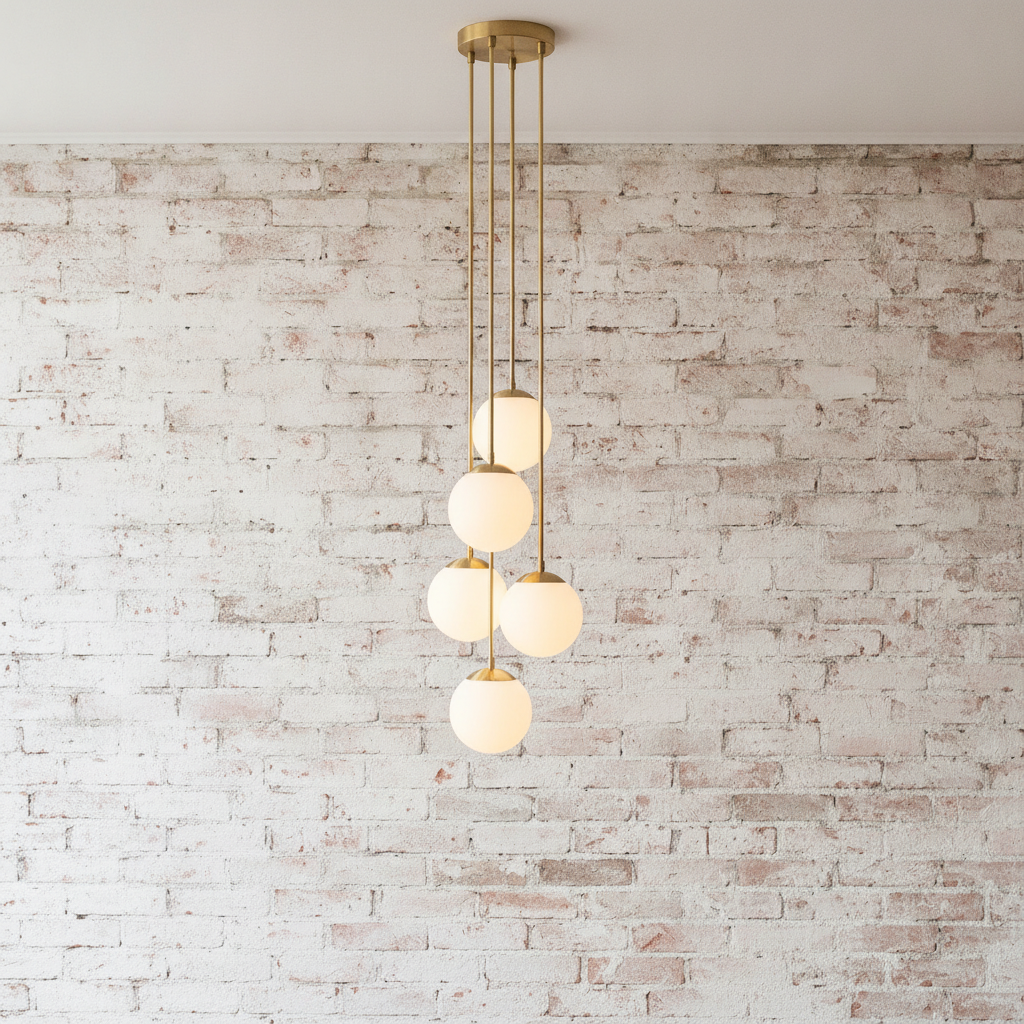
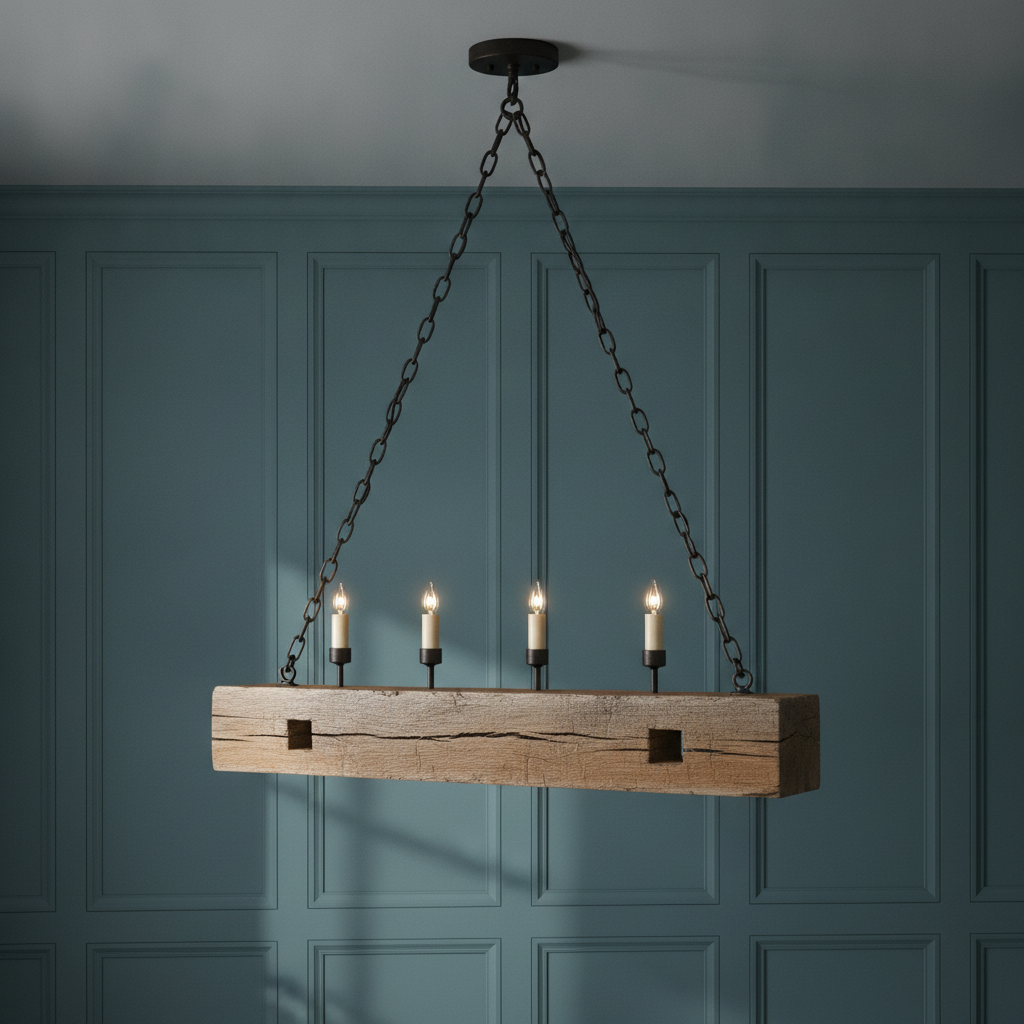
What the AI Chandelier Design Generator Gets Right and Wrong
A chandelier is a small object made of repeated parts, hanging in empty air with nothing around it. Nearly everything interesting in this run came from those two facts.
A ring is not a row
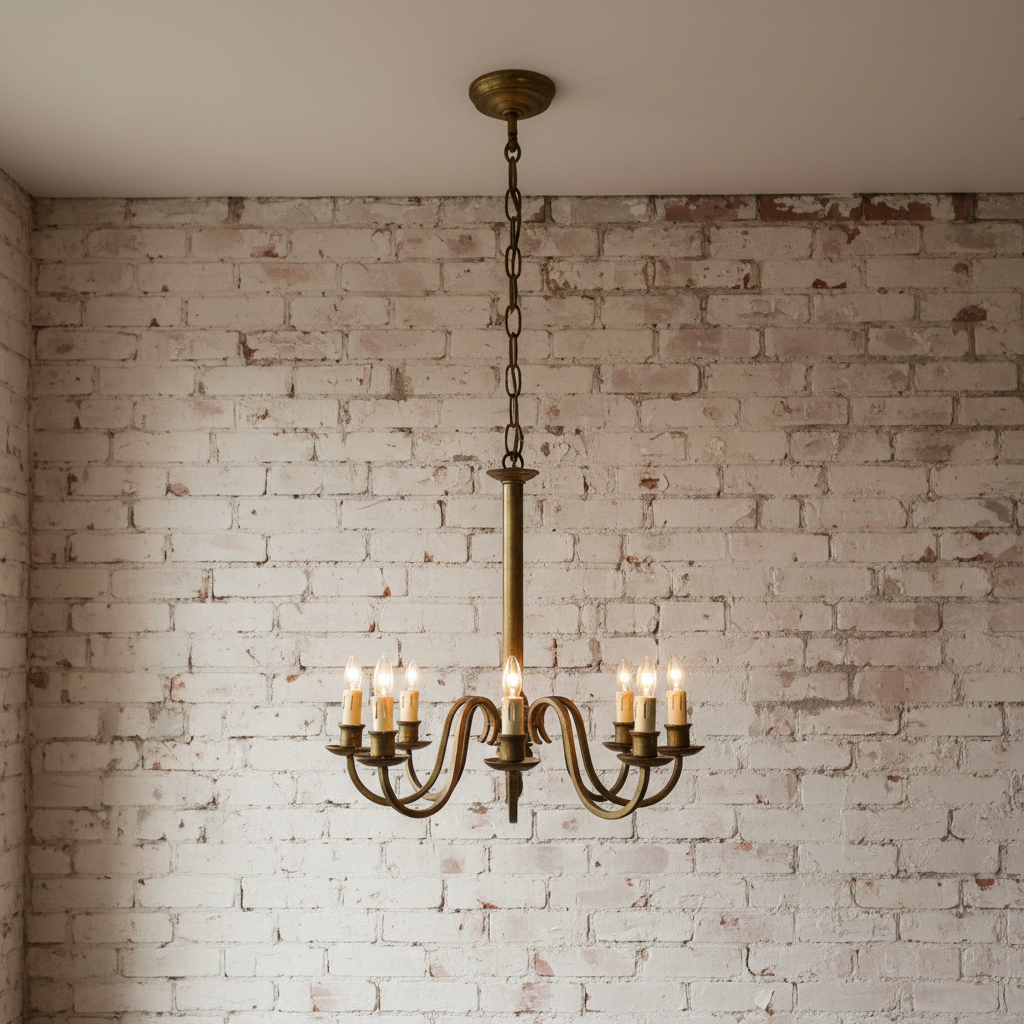
Six arms were asked for on a ring around a brass column, in exactly the sentence shape that has reliably produced correct counts elsewhere: one named group, a stated number, evenly spaced, with a gap of open air between every pair. Seven candle sleeves came back and the hidden arms make eight likely. In the same batch a straight row of four candle holders along a beam arrived as four, and five globes on five rods arrived as five. The split is clean and it is worth planning around: when the parts run left to right across the picture the model counts them, and when they run around an axis and half of them are foreshortened or hidden behind the stem, it does not.
A pale wall turns the photograph into a render
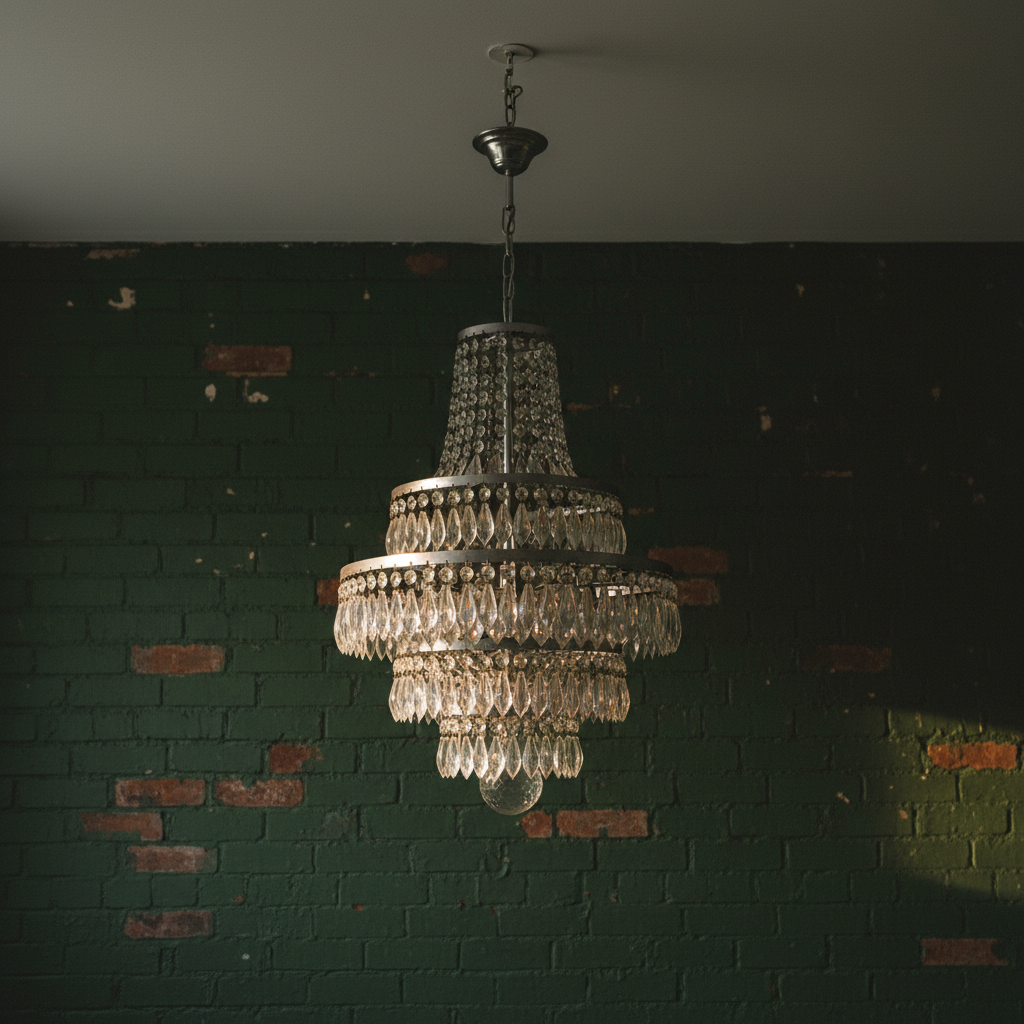
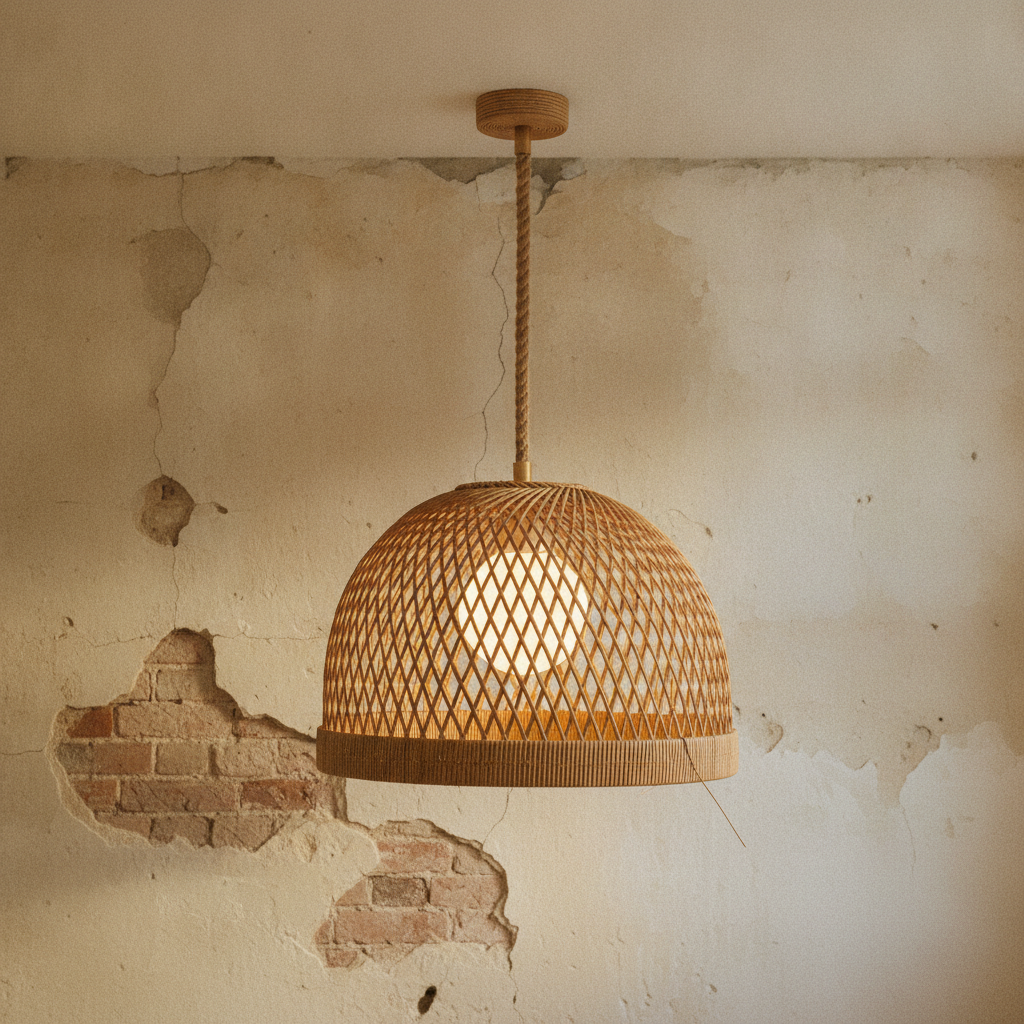
Three of the first six frames came back as flawless CGI product shots, and they were the three hung against pale surfaces — blue-green panelling, whitewashed tongue-and-groove and pale limewashed boarding. The three that read as photographs were hung against worn painted brick. Re-running the identical crystal, orb and rattan fittings with nothing changed except the wall produced two outright photographs and one clear improvement. A light fitting hangs in mid-air with nothing else in the frame, so the wall behind it is the only thing in the picture carrying texture, and if that wall is clean and pale there is nothing left to look real.
Damage beats texture
The single most effective background in this run was lime plaster crumbling away in patches to show soft red brick underneath, followed by brick painted deep moss green with the paint flaking back to red. Both beat the technically more detailed surfaces — panelling with mouldings, boarding with readable joints — because a moulding is a shape the model can draw perfectly and a broken edge is not. If one instruction has to carry realism on a page like this, make it damage with an exposed material under it, not a finish.
Realism and a count compete for the same prompt
The crystal retry is the clearest trade in the batch. The first attempt, against flat panelling, got the three tiers exactly right and looked like a catalogue render. The second, against flaking green brick, looks like a photograph and arrived with four tiers. Nothing in the fitting description changed between the two. A busier, dirtier, more atmospheric scene appears to buy its realism partly out of the budget that was holding the structure exact, which is worth knowing before you regenerate a design whose count you have already got right.
A position holds on the axis you name first
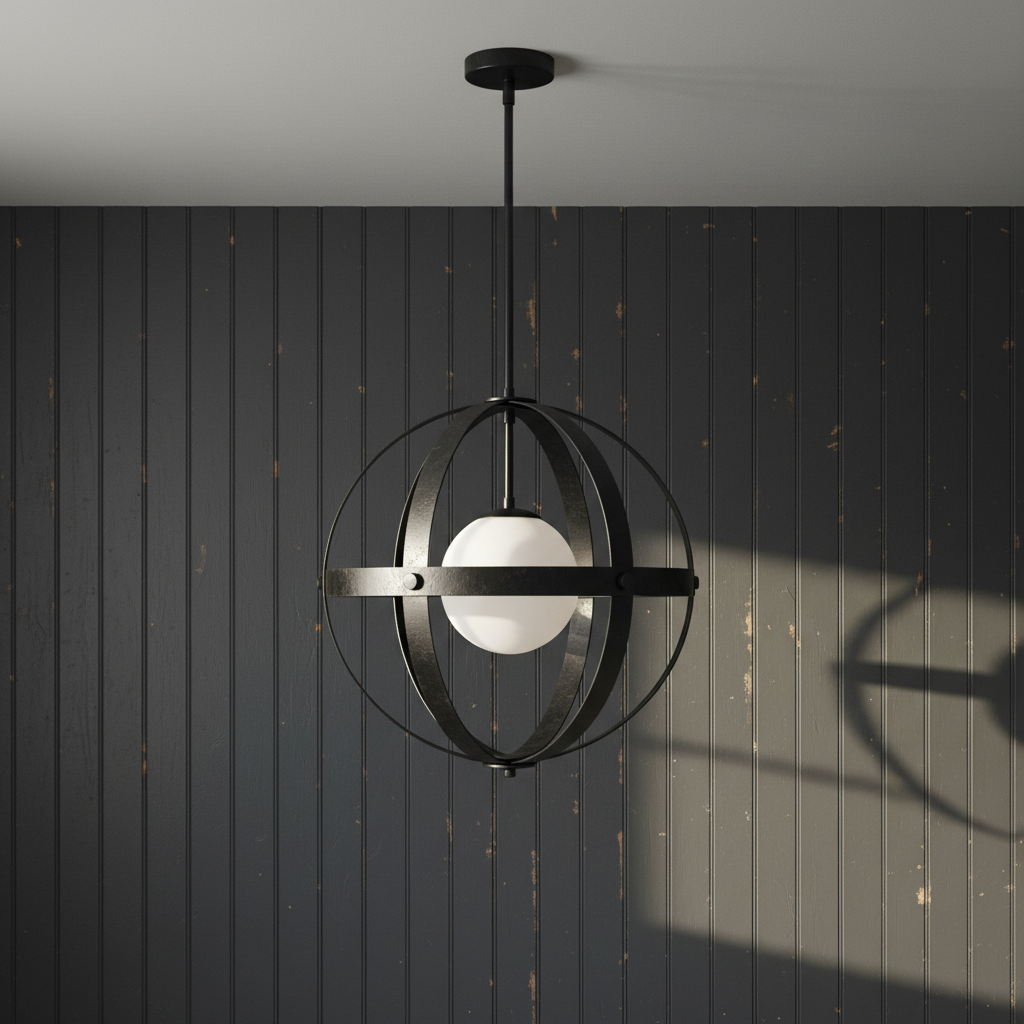
The orb globe was given two positions in one sentence: on the same vertical line as the hanging rod, and exactly level with the equator band. The vertical level landed and the horizontal line did not, so the globe hangs squarely at mid-height and noticeably left of centre. The first attempt, which named the centre without splitting it into axes, missed on both. Split a position into two named axes and you will reliably get one of them — so put the axis that would be most obviously wrong first, and check the other one yourself.
The bulb text ban held completely
Not one bulb in twelve generations carried an etched wattage, a printed marking or a stamped base, and no ceiling plate picked up a maker’s plate or a sticker. On a subject where every real bulb has text on it somewhere, that is a better result than this model usually gives, and the wording is the reason: the ban names the bulb glass and the metal base separately rather than banning text in general. It is the same enumerate-the-carrier technique that fails only when the object is defined by its branding, which a chandelier never is.
How It Works
Pick the build
Six presets: aged brass candle arms springing from a ring around a column, a silvered basket hung with tiers of cut crystal droplets, an open sphere of forged iron bands around a single opal globe, a rattan dome woven in a tight diagonal basket weave, five opal globes dropping on brass rods at five heights, and a reclaimed adzed oak beam carrying candle holders on two iron chains. Each one already carries the camera, lighting and anti-clutter wording that made the pictures in the gallery above.
Add your room
Put the specifics in the box: your metal and finish, how many arms or globes you want, how wide the fitting spreads, how far it drops below the ceiling and how high it hangs above the floor — and above all the wall behind it. The wall matters more than anything else you can type here, because a chandelier hangs in empty air and the background is the only surface in the picture carrying texture. Worn painted brick, flaking paint or plaster broken away to the brick keeps it photographic; flat pale plaster or clean panelling turns it into a render.
Check it, then download
About thirty seconds later you have a fitting hanging in a room. Before you judge the look, check three things on a zoomed crop: did the arms or globes come back at the number you asked for, which they will on a straight row and often will not on a ring; is anything meant to sit centred actually centred on both axes; and did the fitting hold the width and drop you stated rather than collapsing into a tighter silhouette. Then download at up to 4K.
Writing a Prompt That Produces a Believable Chandelier Design
Four habits that separate a fitting worth showing a client from one you regenerate, all learned from the twelve generations behind the six results above.
Spend your best sentence on the wall
On most subjects the background is scenery. On a hanging light it is the whole picture, because nothing else in the frame has any texture in it. The three frames here that failed were all hung against pale, intact surfaces, and the fix in every case was damage with a material showing through: plaster crumbled away to brick, green paint flaking back to red. Describe the wall as something that has been through something, and the fitting will look photographed almost regardless of what it is.
Count on a row, never on a ring
Four candle holders along a beam and five globes on five rods both came back correct. Six arms around a column came back as seven or eight. Parts arranged radially get foreshortened, overlapped and hidden behind the stem, and the model loses them. If the number genuinely matters, build the design around a linear arrangement, or state the count, generate twice and count on a zoomed crop before the picture goes anywhere near a client.
Split a position into two axes, best one first
Asking for a globe at the exact centre of an iron sphere achieved nothing. Splitting it — on the same vertical line as the rod, and exactly level with the equator band — got the level right and the line wrong. One axis out of two is the realistic expectation, so lead with whichever error would be most obvious in the finished picture, and say what should be equal on each side rather than only naming the centre.
Refuse the bulb glass and the base separately
Every real bulb has an etched wattage or a stamped base, which is exactly the kind of detail this model invents when it is unsure. Twelve generations came back with none, and the wording responsible names the carriers one at a time: no printed, etched or stamped marking on the bulb glass, nothing on the metal base, no plate or sticker on the ceiling rose, the chain or any arm. A blanket no-text instruction does not survive this subject; an itemised one does.
Who Uses an AI Chandelier Design Generator
Anyone replacing one fitting
A chandelier is a single purchase that changes the whole room, bought from a photograph taken against a white background that hides the two things you will actually live with: how far it drops and how wide it spreads. Generating the same fitting against your own wall colour settles both before anything is ordered or wired.
Interior designers presenting a scheme
A cut-out product shot on a mood board says nothing about how a fitting sits in a room. A photograph of the proposed chandelier hanging at the right height against a real wall with a real shadow is worth more in a client meeting than a page of catalogue crops, and it takes about thirty seconds.
Metalworkers and lighting makers
Six builds generated in an afternoon is a product range to shoot a lookbook around, and it costs nothing to find out which silhouette people respond to before any of them exist. Settling the spread, the drop and the finish on screen is cheaper than finding out in brass.
Renovators working from a dark room
Old rooms have low ceilings, odd heights and walls that are already half stripped. Describing the wall you actually have — plaster off, brick showing, paint flaking — produces a far more useful picture than any showroom shot, because it shows the fitting in the room as it is rather than as it will be in two years.
Stagers and short-let hosts
Lighting is the cheapest thing that makes a room photograph well, and the choice between brass arms, a rattan dome and a cluster of opal globes is almost entirely about the picture it makes. Comparing all three above the same table in the same light is a few minutes of work and no money.
Design students and portfolio builders
Lighting coursework lives or dies on presentation, and a grey rendered model reads as a grey rendered model. Describing the same fitting as a photographed object — real metal, raking light, a wall with damage in it — gives a project board something that looks like it exists.
AI Chandelier Design Generator FAQ
Related Design Tools
AI Lamp Design Generator
Everything that stands rather than hangs — table, floor, pendant and wall lamps, designed around the pool of light they throw rather than the ceiling they drop from.
AI Dining Room Design Generator
The room a chandelier is usually bought for. Table size, clearance above it, wall finishes and the light direction that decides whether any of it reads as a photograph.
AI Chair Design Generator
The other half of the same room, and the page where a stated count held: seven spindles asked for and seven delivered, because a straight row counts and a ring does not.
See the Chandelier Over Your Own Table Before You Wire Anything In
Six builds — aged brass candle arms, a tiered crystal basket, a forged iron orb, a woven rattan dome, a cluster of opal globes and a reclaimed oak beam — each photographed against your own wall, at your own ceiling height, in your own light, in about thirty seconds. Up to 4K. Free to start, from $2.99.
Design a Chandelier FreeAn AI Chandelier Design Generator for Arm Counts, Drops and Rooms That Are Still Half Stripped
A chandelier is the hardest fitting in a house to judge from a picture, because it is the only one that hangs in mid-air. There is no worktop under it for scale, no wall behind it in the catalogue photograph and nothing in the frame to tell you whether sixty centimetres across is generous or mean over your table. A listing gives a width, a drop and a bulb count and leaves you to imagine the rest, which is exactly the part nobody can imagine. That is the gap an AI chandelier design generator fills. Describe the build, the metal, the glass, the number of arms, the height it hangs at and the wall behind it, and about thirty seconds later you have a photograph of the fitting hanging there. Every preset on this page is written that way, and the six results above are published exactly as they came back, retries and drifts included.
The six builds cover the shortlist most people are actually choosing between. Aged brass candle arms, the fitting most people picture when they say chandelier, with unlacquered brass gone dark in the hollows and wax set down the sleeves. A tiered crystal basket of cut pendalogue droplets, the formal option, hung here against flaking green brick rather than a ballroom. A forged iron orb with one opal globe suspended inside it, which is the modern compromise between a cage and a pendant. A rattan dome woven in a tight diagonal basket weave, the cheapest and warmest build here. A cluster of five opal glass globes dropping on brass rods at five different heights. And a reclaimed oak beam on two iron chains carrying four candle holders, for a long table and a low ceiling.
What came back teaches more than a feature list, and on a hanging fitting the first lesson is about the wall. Three of the first six frames arrived as flawless CGI product shots, and all three had been hung against pale, intact surfaces: clean panelling, whitewashed boarding, pale limewash. Nothing about the fittings was wrong. Re-running the identical crystal, orb and rattan designs with nothing changed except the background — brick painted moss green with the paint flaking back to red, charcoal boarding worn through at the edges, lime plaster crumbled away to the brick underneath — produced two outright photographs and one clear improvement. A chandelier hangs in empty air, so the only surface in the picture that can carry texture is the one behind it, and damage with a material exposed under it beats any intact finish.
The second lesson is about counting, and it sharpens a rule this series has been building for months. A stated number holds when the parts form a straight row and fails when they run around an axis: four candle holders along a beam arrived as four, five globes on five rods arrived as five, and six arms around a brass column arrived as seven visible sleeves with an eighth probably hidden behind the stem. Positions behave the same way — split into two named axes, one of them lands. Stated spreads lose to whatever the silhouette already means, so a cluster asked to spread seventy centimetres came back as a tight column. Against all that, the text ban held perfectly: twelve generations with no etched wattage, no stamped bulb base and no invented maker's plate anywhere, because the prompt refuses each carrier by name. Inside those limits this is a genuinely good way to spend twenty minutes before spending on brass, crystal or an electrician — the drop gets settled, the household agrees on something it can point at, and the fitting gets chosen in the room it will actually hang in.