
AI Sofa Design Generator
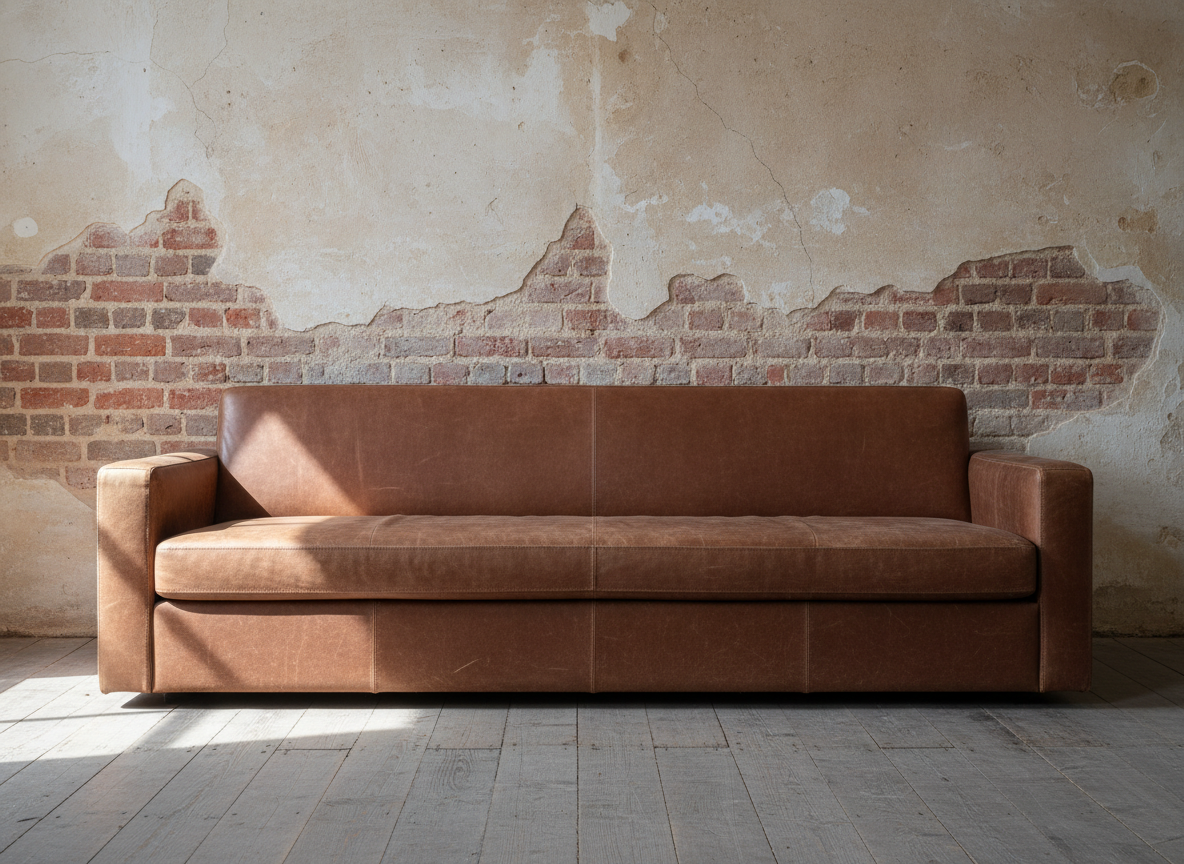
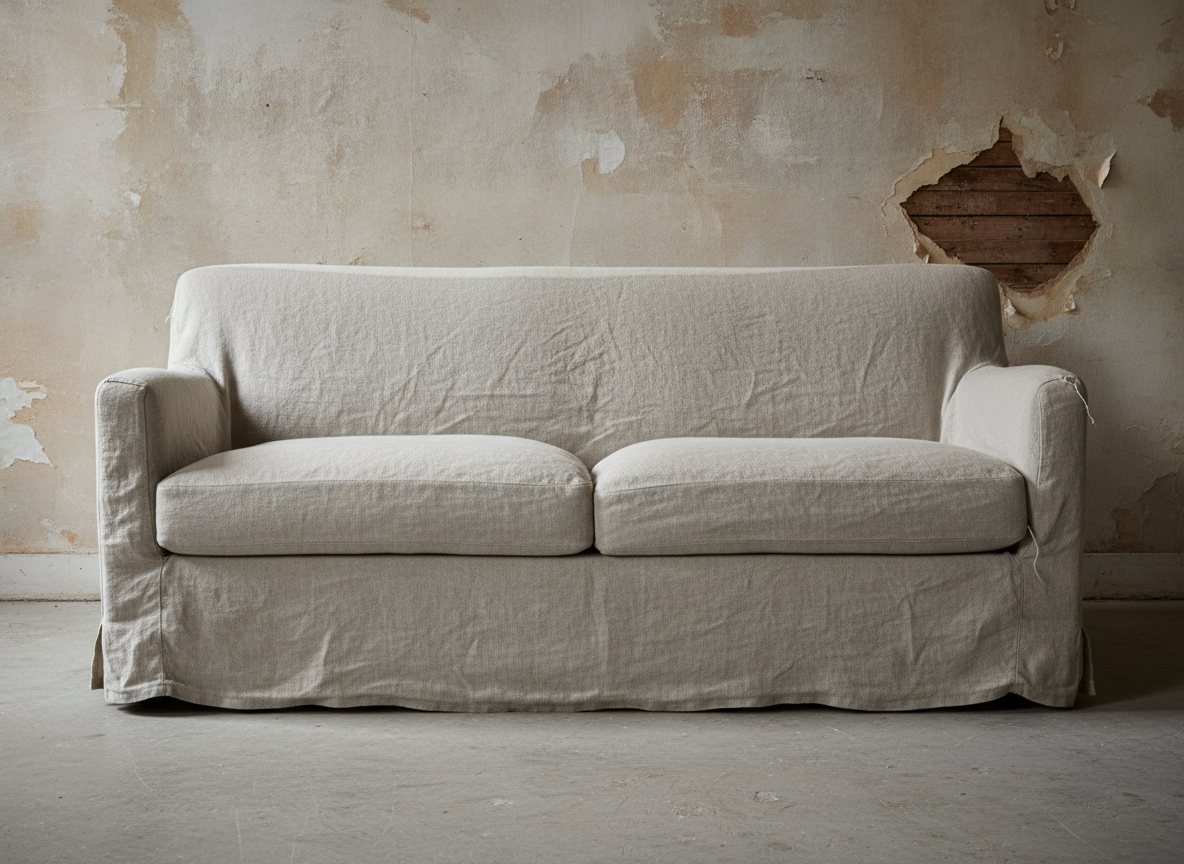
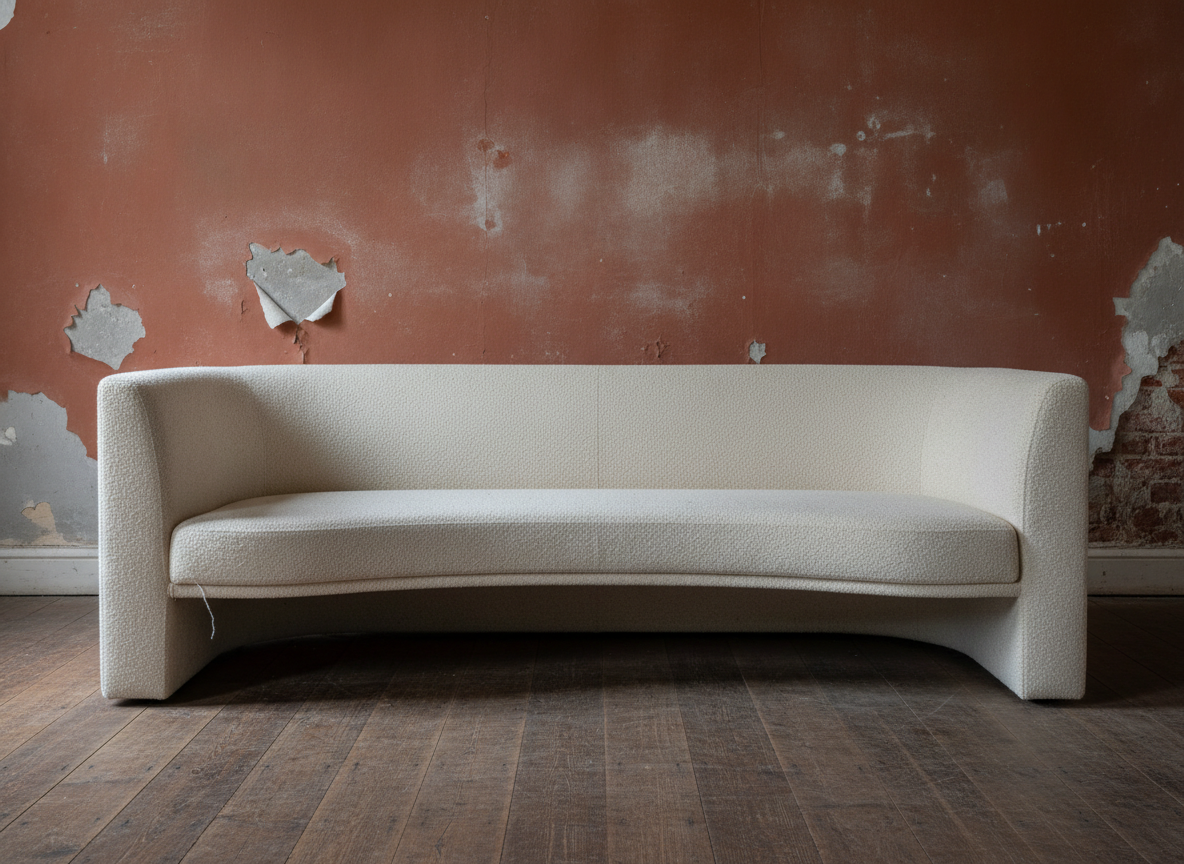
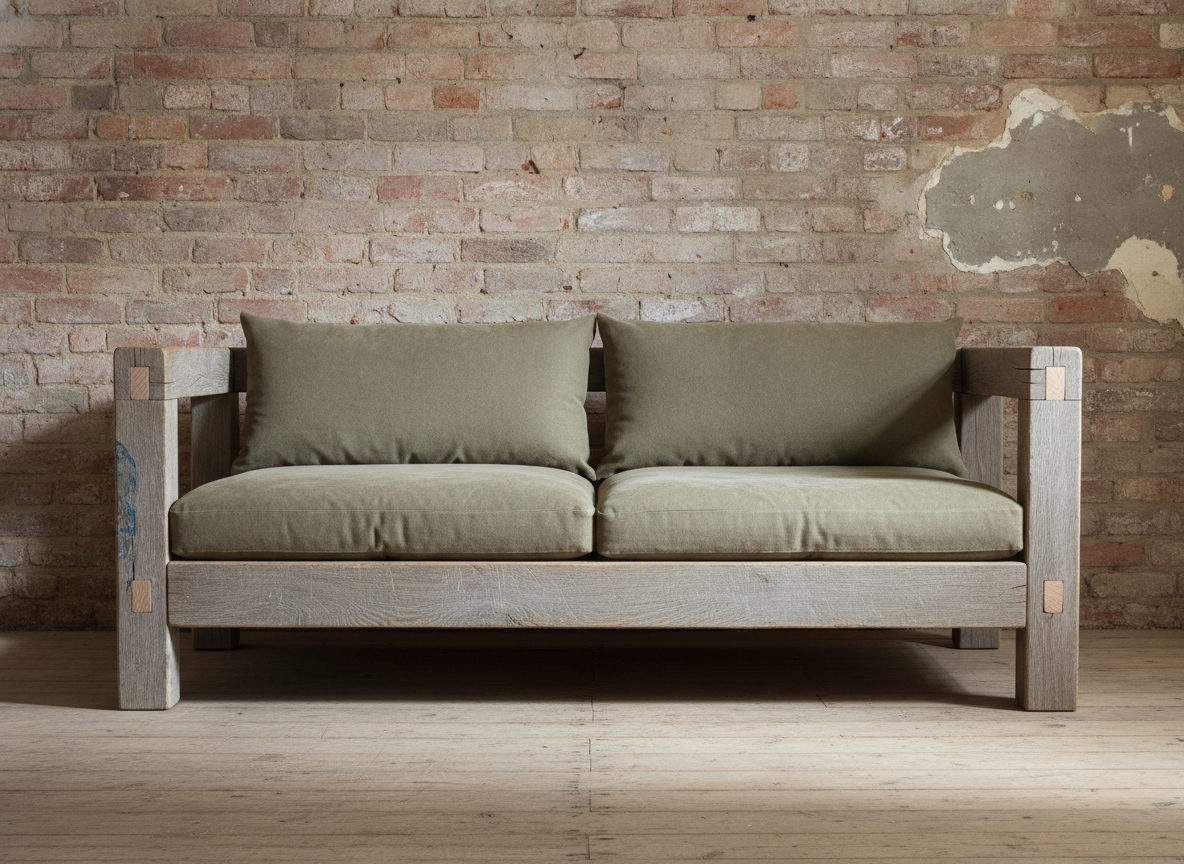
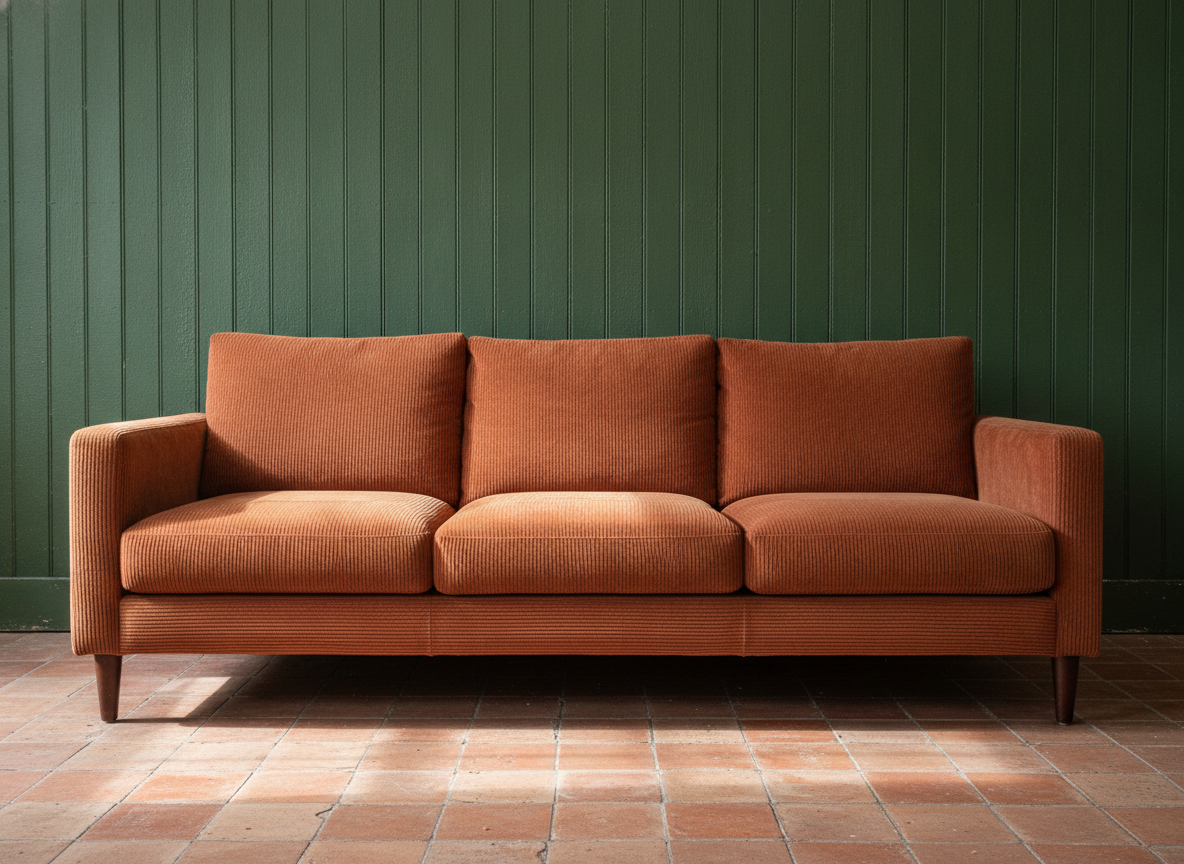
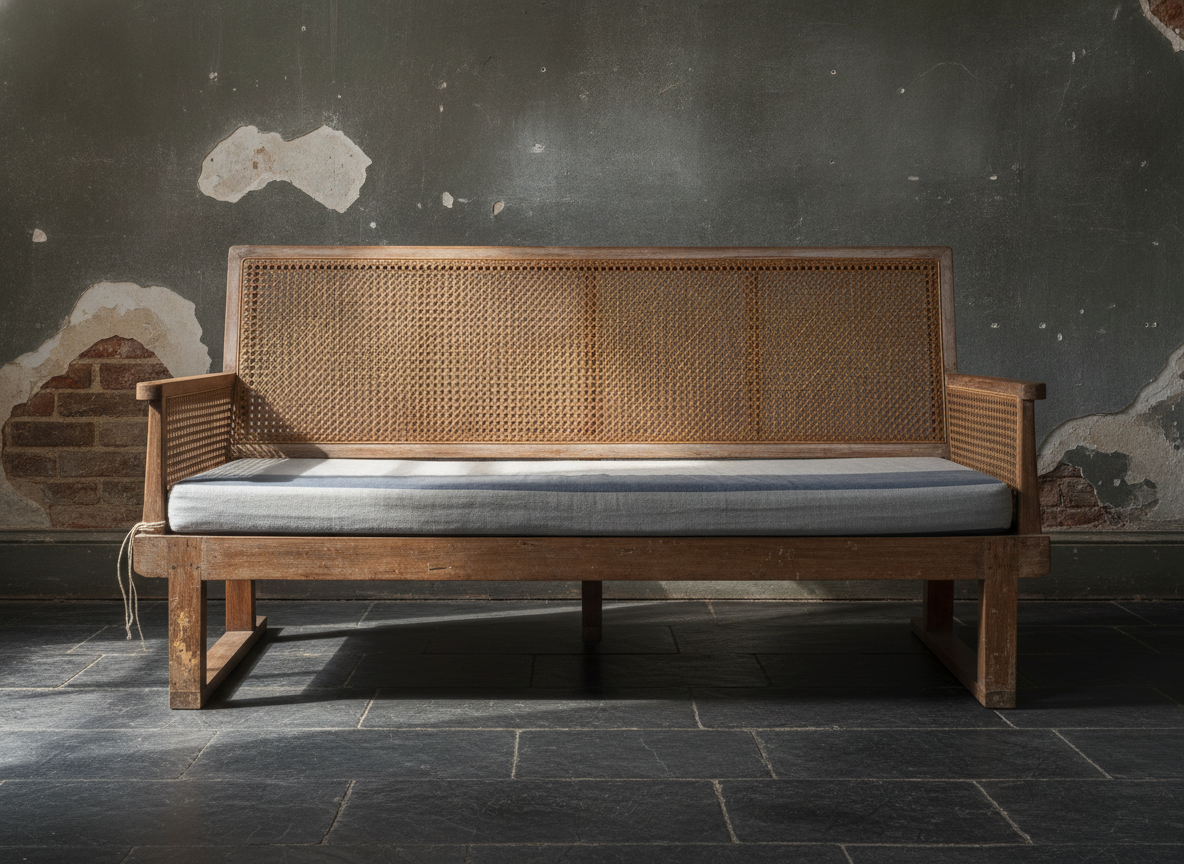
A sofa is the biggest thing you will buy for a room and the hardest to picture in it, because every photograph of one is shot in a styled set with nothing of your house in it. This AI sofa design generator turns a description into a finished sofa photographed against a real wall in about thirty seconds — a worn leather bench, a loose linen slipcover, a curved boucle band, a pegged reclaimed oak frame, ribbed corduroy and cane with teak. All six results are below exactly as they came back, including the plinth that never arrived and the leg nobody asked for.
Design a Sofa FreeTry the AI Sofa Design Generator — Free
Pick a build, then use the box for what is specific to you — the covering and its colour, the length and the height to the top of the back, how many cushions sit in the row, whether it stands on legs, a plinth or a skirt, and above all the wall and floor it stands against. Each preset already carries the camera distance, the stated proportions, the damaged wall that keeps the result photographic and the itemised ban on care labels that produced the six pictures below.
AI Sofa Design Generator
Choose a build, name your covering, your length and your wall, and get a photorealistic sofa standing in a real room. Up to 4K.
Six Sofas From the AI Sofa Design Generator, Shown Exactly As They Came Back
Nothing here was retouched and nothing was run twice. The captions say what the prompt asked for, what arrived and what drifted — the counts that held, the open curve that finally stayed open, the plinth that vanished and the support that invented itself.
What the AI Sofa Design Generator Gets Right and Wrong
A sofa is a long, soft, low object made of a few big surfaces and a short row of repeated cushions. Almost everything learned from this run comes out of those four facts.
Small row counts are reliable
Two seat cushions, two seat cushions plus two back cushions, three seat cushions plus three back cushions: every count in this set arrived exactly as stated. Set against the five spindles that came back as six on the bar stool page and the six chandelier arms that came back as eight, a pattern finally resolves. A row of two, three or four parts is dependable; beyond about four the model stops counting and starts estimating. If your design needs five of something in a row, either break it into two groups or expect to count on a crop and run it again.
The open shape fix works
A shape with two free ends has closed itself four separate times on this site — a clearance arc became a circle, two sled runners became rectangular loops. The fix proposed in response was to stop naming the letter the shape resembles and describe the two free ends and the gap between them as objects in their own right, with a stated width. The curved boucle band is that fix tested, and it held first try: the band sweeps round and stops with its two ends facing each other across an opening as wide as the seat. Name the hole, not the shape around it.
A part in a second material disappears
A plinth of dark oiled oak, set back under a leather sofa, did not render at all — the leather simply carries down to a shadow at the floor. The same instinct that merges two identical parts into one seems to apply to materials: a small component in a different material, placed underneath the main body and in shadow, gets absorbed into whatever surrounds it. If a base is meant to read as a different material, give it its own light and its own height rather than setting it back into the dark.
Supports get invented where a span sags
Two teak runners were specified at the two ends of a long sofa, with open air between them. Both arrived, and so did a third leg in the middle that nobody asked for. A frame told explicitly to have no legs and no feet came back on four short feet. This is the same instinct that added stretchers to a stool and a cross between three legs: the model places supports where a structure looks like it needs them, and a negative instruction does not override that judgement. Design the span so it looks adequately supported, or expect help.
Paint keeps refusing to wear
Boarding was asked for painted bottle green and worn right through to bare timber along several board edges. It came back immaculate. Painted brick has drifted to bare brick three times, a painted finish erased a routed finger pull, and now painted boarding has simply ignored its damage. The working rule is that a painted surface will give you the paint or the damage but not both. Where wear matters, ask for the material underneath to be exposed over a large area rather than along an edge, or pick an unpainted surface.
A frame straightens the weave inside it
A tight diagonal basket weave rendered correctly on a round cane stool seat. The same words, applied to a rectangular cane panel set into a teak frame, produced ordinary orthogonal cane webbing running straight up and across. The frame around the weave appears to set its direction, which fits the pattern where strong surrounding geometry overrides a stated detail. If the direction of a weave is part of the design, put it in a shape that does not already have an axis, or say explicitly that the strands run at forty-five degrees to the frame around them.
How It Works
Pick the build
Six presets: a mid-brown leather bench with one unbroken seat cushion, a loose oatmeal linen slipcover with a skirt to the floor, a curved cream boucle band open across the front, a square-sawn reclaimed oak frame pegged right through at every corner, rust ribbed corduroy on tapered beech legs, and cane panels in a teak frame on two sled runners. Each one already carries the camera distance, the lighting and the anti-clutter wording that produced the pictures in the gallery above.
Add your room
Put the specifics in the box: the covering and its colour, the length in centimetres, the height to the top of the back and a ratio or a familiar comparison to hold the proportions, the number of seat cushions, and what the sofa stands on. Then spend a sentence on the wall and the floor, because a block of fabric this large needs something behind it that has been through something. A surface with damage and a material showing through keeps the picture photographic; clean plaster turns it into a render.
Check it, then download
About thirty seconds later you have a sofa standing in a room. Before you judge it, check four things on a zoomed crop: did the cushion row come back at the number you asked for, which it will up to about four; did a part named in a second material actually render or get absorbed into the body; has a support been invented in the middle of a long span; and did a surface you asked to be worn come back immaculate, which painted surfaces routinely do. Then download at up to 4K.
Writing a Prompt That Produces a Believable Sofa Design
Four habits that separate a sofa worth showing a client from one you regenerate, all learned from the six results above.
Spend your best sentence on the wall
A sofa fills the bottom half of the frame with one smooth surface, so everything that makes the picture read as a photograph is behind it. The six walls here are lime plaster fallen away to brick, wallpaper scraped back to bare lath, terracotta paint blistered off in curling patches, brick with the mortar crumbled out, painted boarding and blistered limewash. Damage with a material exposed underneath beats texture every time — a moulding is a shape the model draws perfectly, a torn edge is not.
Keep the cushion row short
Every count in this set held: one bench cushion stayed one, two stayed two, three stayed three, and the back cushions matched the seat cushions beneath them. That is the opposite of what happens past about four parts, where five spindles became six and six arms became eight on sister pages. A two or three seater is inside the reliable range, so say the number plainly, say the cushions are the same size, and say there is a shadowed seam between each pair.
Describe the gap, not the shape
Open shapes close themselves in this model — an arc becomes a circle, a U becomes a loop. The curved sofa here stayed open because the prompt never said U or horseshoe. It said the band sweeps round and its two ends finish facing each other, and the gap between those ends is as wide as the seat and is bare open air with the floor visible through it. Give the opening a size and a thing you can see through it, and it survives.
Refuse the care label by surface
Every real sofa carries a care label on a seam along its bottom edge, and an unguarded prompt will invent one complete with garbled lettering. Six generations here came back with none, because the wording names the carriers one at a time: nothing on any seam, nothing on any cushion, nothing on the back panel or the bottom edge, nothing stapled underneath, nothing stamped on a leg or a foot, nothing on a zip pull. A blanket no-text instruction does not survive upholstery; an itemised one does.
Who Uses an AI Sofa Design Generator
Anyone about to spend four figures on a sofa
The single largest and least returnable object in a living room, chosen from photographs shot in a styled set that looks nothing like your house. Generating the same length and height in leather, linen and corduroy against a wall like your own wall costs nothing and settles the argument about whether the room wants something low and long or short and upright.
Upholsterers and furniture makers
Six coverings on one afternoon is a range to photograph a lookbook around before any fabric is cut, and finding out which silhouette people respond to is free. Just do not read the frame as a drawing — a sofa told to have no feet came back on four, and a leg invented itself in the middle of a long span.
Interior designers presenting a scheme
A cut-out product shot on a mood board says nothing about how a sofa sits in a room. A photograph of the proposed piece against a real wall, at a stated length, with a real shadow under it, is worth more in a client meeting than a page of catalogue crops, and it takes about thirty seconds to make.
Landlords, stagers and short-let hosts
Seating sets the tone of every listing photograph, and the decision is usually made from a thumbnail. Comparing a loose linen slipcover against a leather bench in the same room, in the same light, at the same length, is a few minutes of work before anything is delivered up two flights of stairs.
Renovators working from a half-stripped room
Old houses have plaster off, paper scraped back and floors that have seen things. Describing the room you actually have produces a far more useful picture than any showroom shot, and this model happens to be at its most convincing against exactly those surfaces — the wall scraped back to bare lath here is the most believable thing on the page.
Design students and portfolio builders
Furniture coursework lives or dies on presentation, and a grey rendered model reads as a grey rendered model. Describing the same sofa as a photographed object — real leather, raking light, a wall with damage in it, a visible peg through a joint — gives a project board something that looks like it already exists.
AI Sofa Design Generator FAQ
Related Design Tools
AI Living Room Design Generator
The whole room the sofa has to live in — wall colour, floor, light and the way the furniture is arranged around it, rather than one piece standing on its own against a bare wall.
AI Coffee Table Design Generator
The thing that goes in front of whatever you choose here, and the page to read on how a low object with a visible underside behaves — including what happens to a base in a second material.
AI Chair Design Generator
The same problem at one quarter the size, where leg counts and spindle rows are the whole design — worth reading next to the cushion counts here for how far a stated number can be trusted.
See the Sofa Against Your Own Wall Before It Comes Up the Stairs
Six builds — a worn leather bench, a loose linen slipcover, a curved boucle band, a pegged reclaimed oak frame, ribbed corduroy and cane with teak — each photographed at your length, on your floor, against your wall, in about thirty seconds. Up to 4K. Free to start, from $2.99.
Design a Sofa FreeAn AI Sofa Design Generator for Lengths, Coverings and Silhouettes You Can Actually See
A sofa is the hardest thing in a house to buy from a picture. It is the largest object in the room, it costs more than anything else in it, it is the one piece nobody wants to send back, and every photograph of one is taken in a styled set with a rug, a plant and a wall colour that has nothing to do with your house. The listing gives a length in centimetres and a seat depth in centimetres and leaves you to imagine the only two things that matter: whether the silhouette reads low and long or short and upright in your room, and whether the covering looks like something you want to sit on every evening for ten years. That is the gap an AI sofa design generator fills. Describe the build, the covering, the length, the height to the top of the back, the number of cushions and what the wall behind it is made of, and about thirty seconds later you have a photograph of it standing there. Every preset on this page is written that way, and the six results above are published exactly as they came back, drifts included.
The six builds cover the shortlist most people are actually choosing between. A long low bench of aged mid-brown leather with one unbroken seat cushion and square block arms, which is the shape that ages best and photographs best. A loose oatmeal linen slipcover cut deliberately too big, wrinkled and bagging, with a flat skirt to the floor. A curved band of cream boucle that sweeps from the front of one arm round to the front of the other. A square-sawn reclaimed oak frame with a hazel peg driven right through every corner joint. Rust-coloured ribbed corduroy with three cushions on short tapered beech legs. And cane panels in an old teak frame on two sled runners, with one thin indigo mattress cushion along the seat.
What came back teaches more than a feature list. The headline result is about counting, and it is good news for a sofa specifically: every count in this set arrived exactly as stated — one bench cushion stayed one, two stayed two, three seat cushions and three back cushions stayed three and three. Sister pages in this series have watched five spindles in a row become six and six chandelier arms become eight, so the rule that now fits all the evidence is that a row of up to about four parts is dependable and anything longer is an estimate. Nearly every sofa is a two or three seater, which puts the most important number in the design comfortably inside the reliable range. The second result is a fix that finally worked: a shape with two free ends has closed itself four times on this site, and the curved boucle band stayed open first try because the prompt described the two ends facing each other and gave the gap between them a width and something visible through it, instead of naming the letter the shape resembles.
Three drifts are worth carrying to any furniture prompt. A part specified in a second material and tucked underneath can disappear completely — an oak plinth beneath a leather sofa simply became a shadow, so if a base is meant to read as a different material it needs its own light and its own height. Supports get invented wherever a span looks like it needs one: a third leg appeared in the middle of a long sled base, and a frame told explicitly to have no legs and no feet came back on four short feet. And painted surfaces keep refusing to wear — boarding asked for with the paint worn through to bare timber came back immaculate, which is the fourth time paint has eaten its own damage on this site. Against all that, the text ban held perfectly: six generations with no care label on any seam, no brand tag along the bottom edge and no stamped plate on a foot, because the prompt refuses each carrier by name. Inside those limits this is a genuinely good way to spend twenty minutes before spending four figures — the length gets settled, the household agrees on something it can point at, and the covering gets chosen against the wall it will actually stand in front of.